Maintenance · 8 min read
Lithium vs Lead-Acid Golf Cart Batteries: Costs, Lifespan and Fit
Lithium golf cart batteries cost more up front but weigh less, need no watering and typically last longer. Here is how to decide and what to check before upgrading.
By the Buggies For Sale team · Updated
If your golf cart is slowing down or running short of range, it may be time for new batteries. The big decision is whether to replace lead-acid with lead-acid or move to lithium. This guide compares both.
How lead-acid batteries work
Lead-acid golf cart packs use several heavy 6V, 8V or 12V batteries in series. They are the traditional choice. They need regular watering (for flooded types), careful charging and periodic replacement.
How lithium batteries work
Lithium packs use a sealed battery management system and lighter cells. They hold voltage steadier through the round and need no watering. Many carts now ship with lithium as standard.
Key differences
- Upfront cost. Lithium costs more.
- Weight. Lithium is much lighter, which can improve handling.
- Maintenance. Lithium needs no watering.
- Lifespan. Lithium typically lasts for many more cycles than lead-acid.
- Charging. Lithium can usually be topped up at any time without harm.
What lithium packages do we stock?
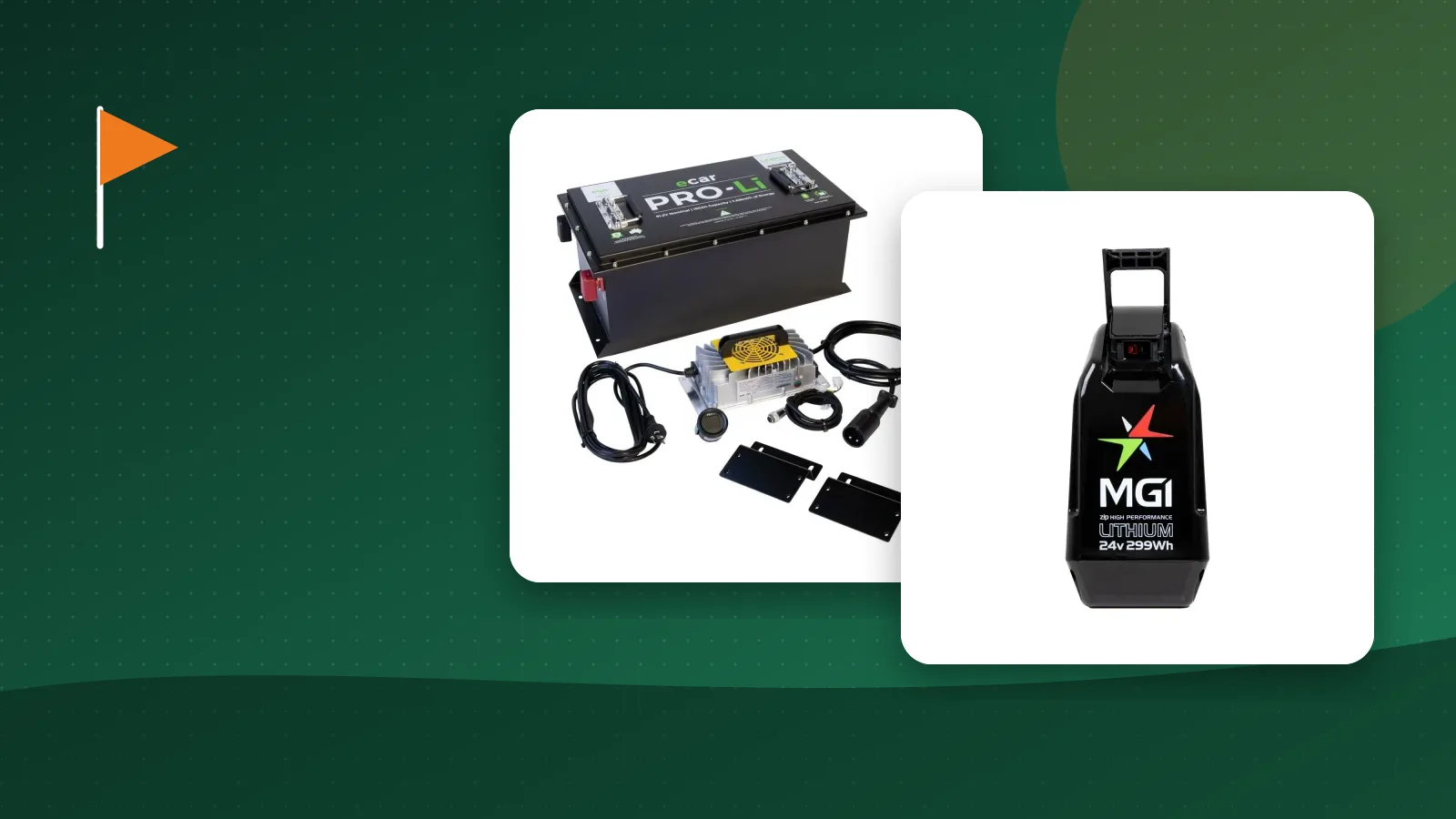
We stock PRO-Li lithium packages for Club Car Precedent, EZGO RXV, Yamaha G22 and ECAR 627 carts in Core 105Ah and Plus 150Ah options, plus MGI lithium batteries for buggies. See our lithium golf cart batteries.
Core or Plus?
The Core 105Ah package suits personal use with around two to three rounds per charge. The Plus 150Ah package is built for heavier use and longer days.
Do I need a new charger?
Often yes. Lithium needs a compatible charger and some packages come with one. Browse chargers or ask us.
Installation and warranty
Lithium conversions should be installed by a qualified person. Keep installation photos, because they may be required for warranty registration.
Safety
Charge in a ventilated space and avoid damaged cells. A fireproof charging box adds an extra layer of protection for indoor charging.
Which should you choose?
If you use your cart regularly, lithium usually pays back through lower maintenance and longer life. If you rarely use it and want the lowest cost, lead-acid can be fine. Ask us for help choosing the right package for your cart.


