Buying guides · 7 min read
Golf E-Scooters and Electric Golf Boards: Prices, Rules and Tips
What a golf e-scooter is, how it differs from a golf buggy, what it costs and the course rules to check before you ride one onto the fairway.
By the Buggies For Sale team · Updated
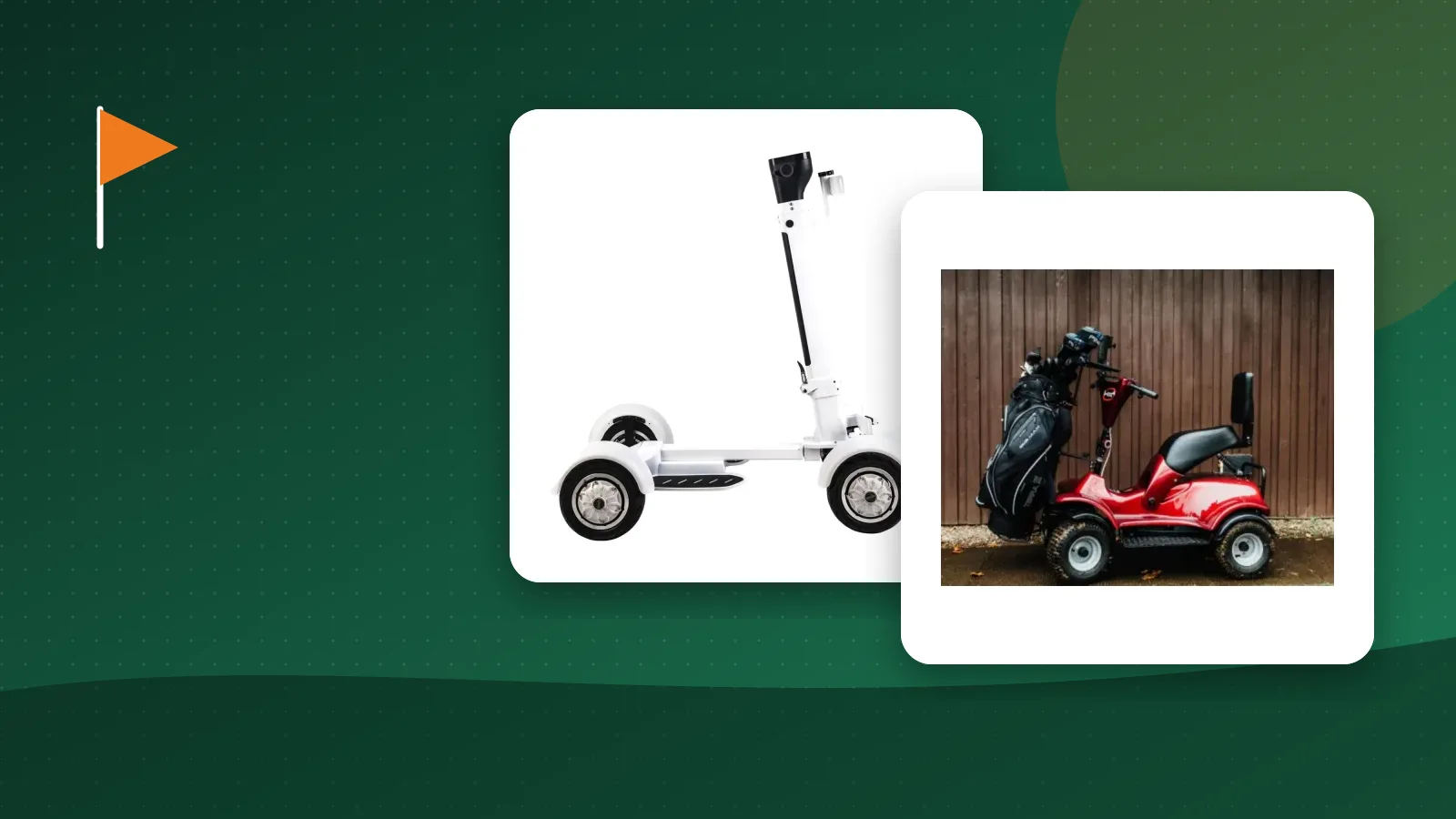
A golf e-scooter is a stand-up or ride-on electric vehicle built to carry a golfer and their bag around the course. They sit between a motorised trolley and a full golf cart: faster than walking, smaller than a cart, and a lot of fun. This guide explains the main types, what they cost, how they compare with a golf buggy and what to check with your club before you ride.
What counts as a golf e-scooter?
- Electric golf boards: a stand-up board with a bag rack, steered with the handlebars and controlled by a thumb throttle.
- Ride-on golf buggies: small seated vehicles with a motor, a seat and a bag carrier.
- Standard electric scooters: not designed to carry clubs. Most clubs do not allow them on the course.
See the golf scooters category for the models we list.

Golf e-scooter vs electric golf buggy
An electric golf buggy follows you or is pushed or steered by hand, and you still walk. A golf e-scooter carries you, which suits long courses and golfers who want to save energy or have limited mobility. A buggy is lighter and usually allowed on more courses. Compare with our guide to electric vs push golf buggies.
Check your club first
Many golf clubs have rules about personal powered vehicles. Some require a medical certificate for ride-on vehicles, some only allow club carts, and some allow approved golf boards. Golf Australia's website, golf.org.au, is a good starting point for the sport, but the rule that matters is your own club's. Ask before you buy.
What to look for
- Battery size and range: enough for 18 holes on your course, with some spare.
- Carrying capacity: your weight plus your bag. Check the rated load.
- Brakes and stability: a good brake and a wide stance matter on slopes.
- Folding and transport: can it go in your vehicle?
- Warranty and spares: batteries, tyres and chargers should be available in Australia.
Prices and what affects them
Cost depends on battery size, motor, build quality and brand. Boards and ride-ons cost more than motorised trolleys, but less than a full golf cart. Our golf buggies for sale page lists the full range, so you can compare a board, a ride-on and a remote control buggy.

Safety tips
- Wear flat shoes with grip and take care on wet grass and slopes.
- Slow down before bunkers, greens surrounds and cart paths.
- Keep to the paths your club specifies and follow signage.
- Charge fully before play and carry the charger for long days.
Types of golf e-scooter in more detail
Electric golf boards look like a skateboard with a handlebar and a bag rack. They are quick and agile, and they suit golfers who like standing and moving. Seated ride-on buggies have a small chassis, a seat and sometimes a front basket. They suit golfers who want to sit and rest between shots. Hybrid designs fold for transport and have adjustable handlebars. Choose between standing and sitting based on comfort, knee and back health and how long your rounds last.
Battery range and charging
Range depends on rider weight, terrain, speed and battery capacity. A course with long distances between holes needs more capacity than a compact one. Lithium batteries are common, and many can be charged in a few hours. Carry the charger if you play multiple rounds a day. Check how the battery is secured and whether it can be removed for charging and transport.
Transport and storage
A golf e-scooter is larger than a trolley. Check dimensions against your vehicle and storage space, and see whether it folds or whether the handlebar and bag rack come off. Some boards fit in the boot of a sedan, while seated ride-ons may need a ute, a trailer or a van. Plan how you will lift it, because many weigh more than a golf buggy.
Learning to ride
Start in an open flat area and practise accelerating gently, braking smoothly and turning in wide arcs. Learn where the brake is, how the throttle responds and how the vehicle behaves on slopes. Practise carrying your bag, because the added weight changes balance. Wear a helmet and flat shoes with good grip. Take extra care on wet grass.
Rules, insurance and etiquette
Courses may restrict where and when personal powered vehicles can be used, and some require a doctor's note for ride-on vehicles. Ask your club, and check whether your personal accident or liability insurance covers use of a powered vehicle on a golf course. On the course, keep to paths around greens and tees, give way to walkers, and avoid wet areas that could be damaged.
Alternatives
If your club does not allow golf e-scooters, consider an electric golf buggy or a remote control buggy. They keep you walking and are allowed at most courses. If you need a seated ride, a golf cart may be a better option and clubs often have carts for hire. Compare our electric golf buggies, remote control golf buggies and golf carts to see which suits your needs.
Questions before you buy
- Is it allowed at my club, and is a medical certificate needed?
- What is the rated rider weight including my bag?
- How long does a full charge take?
- What warranty and support are provided in Australia?
- Can I get spare batteries, tyres and chargers?
A note on mobility and comfort
For golfers with limited mobility or joint pain, a stand-up board may not suit, while a seated ride-on can make golf possible again. Consider comfort features such as an adjustable seat, a stable footplate and easy-to-reach controls. If you are not sure which type suits you, talk to your doctor or physiotherapist, and speak to your club about its policy. Many clubs support members with mobility needs and can advise on approved vehicles. Trying one before you buy is the best way to be sure it feels stable and comfortable.
Comparing a golf e-scooter with a golf cart
A golf cart carries two or more people, has a roof and windscreen options and is available for hire at many courses. It is bigger, heavier and more expensive to buy and transport. A golf e-scooter is smaller and easier to store, and it suits solo golfers who want to move quickly. If you play with a partner and want to share a vehicle, a cart is better. If you play alone and want a compact vehicle, an e-scooter may be enough. Check the cost of club cart hire against buying your own.
Care and maintenance
Wipe the board or chassis after each round and check tyre pressure. Keep the battery contacts clean and dry. Check brakes and steering before every use. Store the scooter indoors, away from heat. Charge after every round and avoid leaving the battery fully discharged. Replace worn tyres and brake pads promptly. A simple routine keeps the scooter reliable and safe.
Accessories that help
Bag straps, a bottle holder, a scorecard holder and a rain cover are popular. A basket or small storage box keeps your phone and keys safe. A flag or reflective strip improves visibility at dusk. Make sure each accessory is compatible with your model and does not exceed the load rating.
Buying checklist
Before you pay, confirm your club's policy in writing, check the rider weight rating, test the brakes and the throttle response, and check how the vehicle folds or breaks down for transport. Ask how many holes a battery covers and how long it takes to charge. Check the warranty and whether spare batteries, tyres and chargers are sold in Australia. If possible, ride the model on grass before you commit, because behaviour on turf is different from a showroom floor. Take your golf bag so you can check that it fits and stays secure.
Costs of ownership
Running costs are low: electricity, tyres, brake pads and occasional servicing. The biggest future cost is the battery, which wears over time and may need replacing after several years of regular use. Ask the seller about the expected battery life and the cost of a replacement. Budget for a cover and a charger, and for transport if the vehicle does not fit your car. Keep receipts and service records, because they help with resale. A well-looked-after golf e-scooter holds value better than a neglected one.
Final thoughts
Golf e-scooters are fun, practical and increasingly popular, but they are not for every course or every golfer. Decide whether you want to stand or sit, check your club's rules, and match the battery to your course. If you are unsure, begin with a lighter option such as an electric golf buggy and move up if you need more. Our team can explain the trade-offs and help you pick the right model.
Bottom line
A golf e-scooter can make a round easier and a lot more fun, but you must confirm the rules with your club first. If you want the lightest option that is accepted almost everywhere, look at a motorised or remote control buggy instead.
