Price guides · 9 min read
How Much Is a Go Kart in Australia? Price Guide for Petrol and Electric Karts
How much is a go kart in Australia? See price ranges for petrol, electric and kids karts, what drives the cost, and what extras to budget for.
By the Buggies For Sale team · Updated
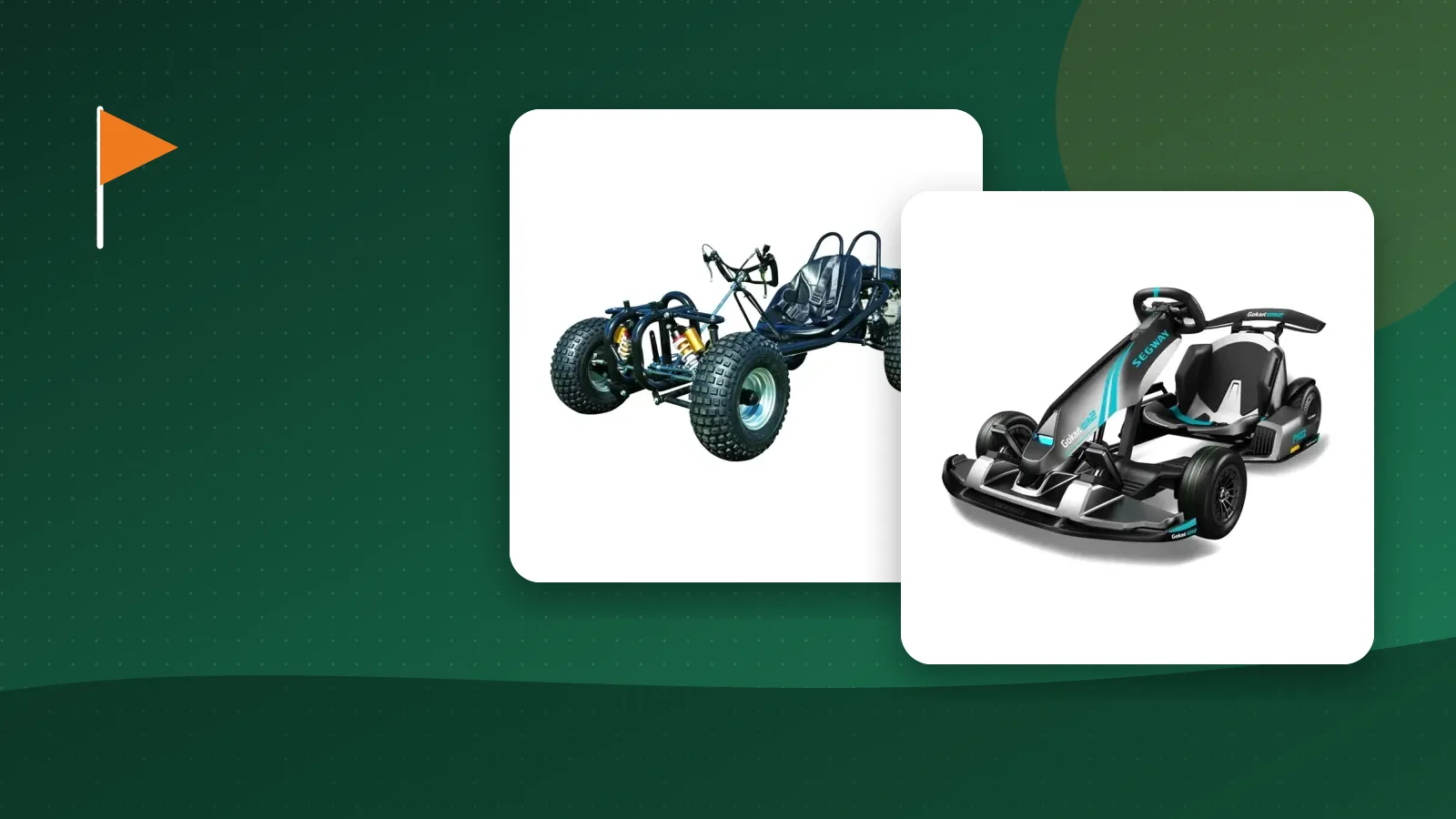
If you have been searching for how much a go kart costs, the honest answer is that it depends on the engine or motor, the size of the rider, the build quality and what comes in the box. A go kart can cost little more than a good bike or as much as a small second-hand car. This guide walks through the price ranges we list in Australia, explains what pushes the price up or down and lists the extra costs people forget until after they have paid. Every price below is in Australian dollars including GST, taken from the products we currently list.
The short answer: what a go kart costs
Across the go karts we list, prices run from about $1,420 for the HelmetKarts HA-270X 270cc go kart up to $3,135 for the Kayo S125 go kart. In between you will find the GMX Drift 200cc electric start go kart at $1,469, the Crazy Kart electric drift kart at $1,861, the Crossfire Blazer 200R kids go kart buggy at $2,939 and the Segway Ninebot GoKart Pro 2 at $2,842. Our go karts page shows every model and the current price.
Those prices are a snapshot of one catalogue, not a guarantee of what every seller charges, so treat them as a starting point. What the numbers do show is the shape of the market. The cheapest karts are simple petrol machines with a single seat, and the price rises as you add electric power, better build, more speed or a youth-focused design.

What drives the price of a go kart
Five things explain most of the difference between a low-priced kart and a high-priced one.
- Power source: petrol karts use an engine measured in cc, and electric karts use a motor and battery measured in watts and watt-hours. Electric karts often cost more up front because the battery is expensive.
- Engine or motor size: a larger engine or motor means more speed and a higher price. The HelmetKarts 270cc is listed at a top speed of 60 km/h, the GMX Drift at 25 km/h and the Segway Ninebot GoKart Pro 2 at 43 km/h.
- Frame and build: heavier, better-welded frames and better suspension cost more. The Crossfire Blazer 200R is listed at 130 kg and the GMX Drift at 110 kg, while the Segway is listed at just 48 kg.
- Features: electric start, reverse, adjustable seats, roll protection and brakes all add to the price.
- Brand and support: well-known brands usually cost more, but also tend to have better spare-part supply and a clearer service path.
Petrol go karts
Petrol karts are the traditional choice. They are simple, easy to refuel and give strong acceleration for the money. The Kayo S125 is the premium petrol option in our range at $3,135. The GMX Drift 200cc at $1,469 uses a 196cc engine with electric start, and the HelmetKarts 270cc at $1,420 is the lowest price in the range with the highest quoted top speed. Petrol karts need regular servicing: oil, air filter, spark plug, chain and tyre pressure.
Running costs are modest but real. You will buy fuel, oil and the occasional replacement part, and a petrol engine makes noise, which matters if you live near neighbours. Our go kart parts and frames and engines and carburettors pages list common spares, for example a 25 mm centrifugal clutch at $107.
Electric go karts
Electric karts are quiet, clean and simple to run. There is no fuel to store, no oil to change and no carburettor to tune, and instant torque makes them feel quick off the line. The Segway Ninebot GoKart Pro 2 is listed at $2,842 with a 450W motor, a 432Wh battery, a top speed of 43 km/h and a range of up to 25 km. The Crazy Kart electric drift kart at $1,861 is built for sliding rather than racing. For more on the Segway, see our Ninebot GoKart Pro 2 guide, and for a wider look at battery karts see our guide to electric go karts.
Electric karts run on lithium packs, and the lithium-ion battery article on Wikipedia is a good primer on how they behave. They have a limit that petrol karts do not: range. You can refuel a petrol kart in a minute, but a flat battery means waiting to recharge. If you plan long sessions, ask about spare batteries, and check the charging time on the product page.

Kids go karts
A kids go kart usually costs less than an adult kart, but not always. The Crossfire Blazer 200R kids go kart buggy is listed at $2,939 with a 200cc engine, which is a serious machine and not a toy. For younger riders there are smaller options in our kids buggies range, including electric ride-ons from a few hundred dollars. Match the machine to the child's age, size and experience, and insist on supervision and a helmet. The ACCC and state regulators publish safety information on children's ride-on products, and general background on karts is in the go-kart article on Wikipedia.
Costs people forget
The price on the product page is not the whole cost. Add these before you decide on a budget.
- Safety gear: a certified helmet, gloves, closed shoes and long clothing. Helmets are not optional.
- Delivery: freight to your door. We deliver Australia-wide, free on orders over $1,000 to major metro and depot corridors, and a flat $95 below that.
- Assembly: some karts arrive partly assembled. Check the product page for assembly notes and set aside time, or ask a mechanic.
- Fuel and oil or charging: small, but ongoing.
- Servicing and parts: tyres, chains, brake pads, clutches and batteries wear out. Budget a little each year.
- Storage and transport: a kart needs a dry place to live, and if you take it to a track you will want a trailer or a ramp. Our loading ramps and trailer accessories help.
- A place to ride: karts are generally not road vehicles. You need private land, a club track or a permitted area, and you should check local rules before buying.
New or second-hand?
A second-hand kart can save money, but it carries risks that are easy to underestimate. Wear on the chain, clutch, brakes and frame is hard to judge by eye, an old battery on an electric kart may hold far less charge than it did when new, and spare parts for discontinued models can be hard to find. If you do buy second-hand, check the frame for cracks and bends, run the engine or motor, test the brakes and ask about service history. A new kart arrives with fresh parts, a known specification and clear support, which is worth something when you are buying for a child.
How to set a sensible budget
Start with the rider. A kart for a teenager or adult who will use it weekly justifies a higher spend on build quality and brakes. A kart for a child who may outgrow it in two years is a smaller commitment. Then choose the power source: petrol for strong performance and quick refuelling, electric for low noise and low maintenance. Add about ten per cent of the kart price for gear and spares, and keep a margin for freight if your order is under $1,000.
Finally, decide where you will ride. A backyard or farm track does not need a fast kart, so a smaller engine or motor will do. A club track with other riders may call for a faster machine and stronger brakes. Buying more speed than the space allows is an easy way to waste money.
Ways to keep the cost down
You do not need to spend the most to get a good kart, but you do need to spend wisely. Buy for the rider you have today and the track you actually have, not for a rider and a track you might have in three years. A kart that is too powerful for the space is expensive and frustrating, and a kart that is too small gets outgrown quickly. Combine purchases where you can: ordering a kart, a helmet-compatible accessory and a few spares together can bring an order over $1,000 and unlock free delivery to major metro and depot corridors instead of the flat $95 freight charge.
Look after what you buy. Check the chain tension, tyre pressure and brakes before each session, clean the kart after dusty or muddy rides and keep a simple service log. Small habits like these are cheaper than replacing a worn clutch, chain or battery. Finally, ask before you buy. A short call to +61420128746 about fit, assembly and spares can save a costly mistake, and it costs nothing.
Buying a go kart from us
We list go karts in Australian dollars including GST and confirm stock and freight before you pay. Payment is by bank transfer (Osko or EFT), PayID or crypto, with 10% off automatically at checkout when you choose crypto. There is a $250 minimum order. If you are unsure which kart fits the rider, call +61420128746 or message us on WhatsApp with the rider's age and where you plan to ride, and we will help you narrow it down. You can also browse our wider off-road buggies range.
Bottom line
So, how much is a go kart? Expect roughly $1,400 to $3,200 across the models we list, with petrol karts at the lower end and premium or electric karts at the higher end. Decide the rider and the riding place first, pick petrol or electric, then compare the specifications. Add the cost of safety gear, delivery and spares, and you will have a realistic number to work with.

