Buying guides · 8 min read
Kids Ride-On Buggies: Choosing a Safe, Fun First Buggy
How to choose a kids ride-on buggy: age, voltage, speed limits, safety features and the difference between electric toys and petrol youth buggies.
By the Buggies For Sale team · Updated
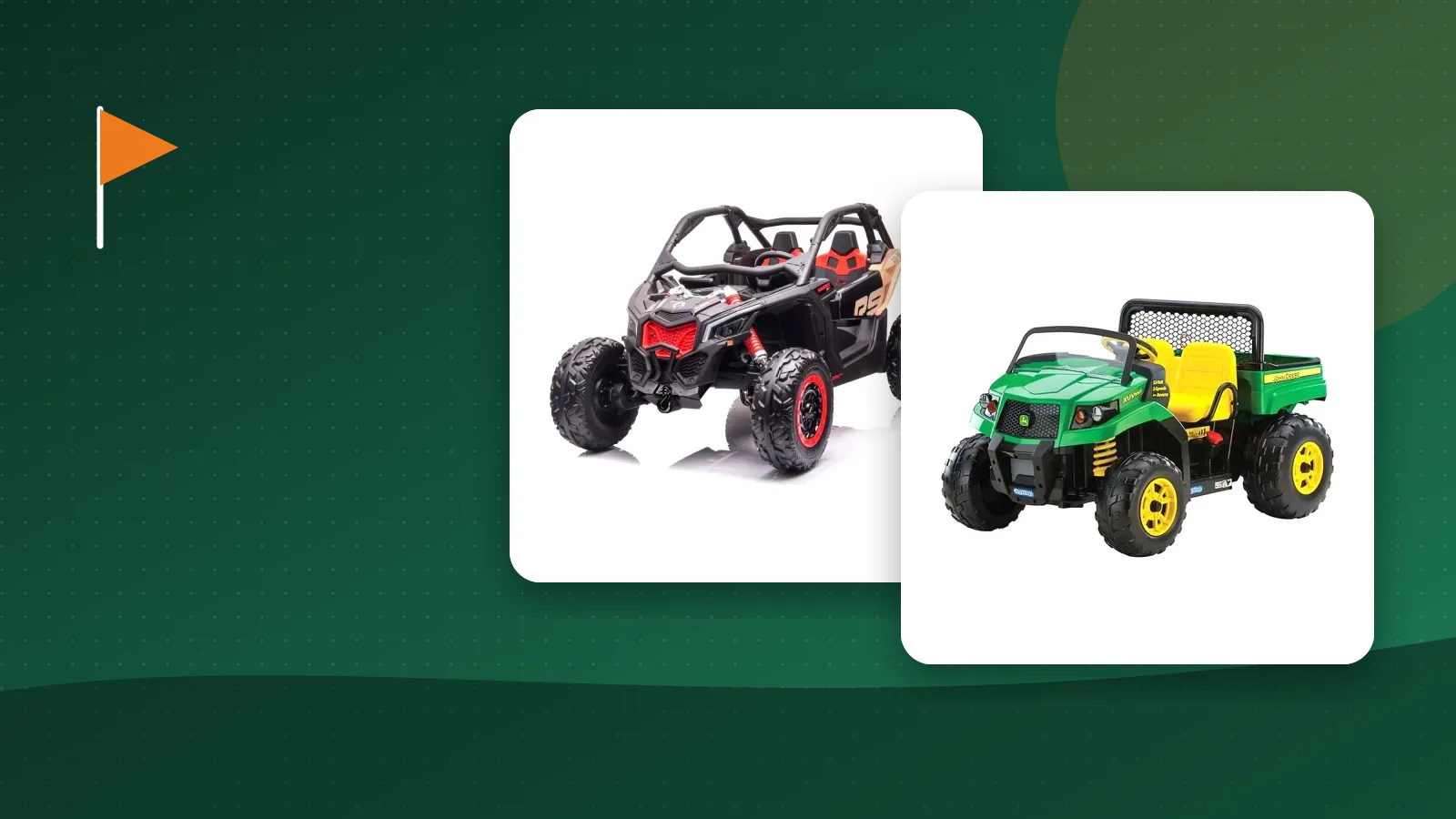
A kids ride-on buggy is a small powered vehicle that a child can drive in the yard, on a farm or at a park where they are allowed. The range goes from battery-powered toys to small petrol youth buggies, and the right pick depends on the child's age, size and experience. This guide explains the types, the safety features to look for and how to get the best value.
Types of kids ride-on buggy
### Electric ride-on toys
Electric ride-ons use a 6V, 12V or 24V battery. Lower voltage models are slower and suit younger children. Higher voltage models are faster, often with two seats, and suit older children. Many are licensed replicas of real vehicles, like the Can-Am and John Deere models below.


### Kids golf carts
A small ride-on golf cart is a charming first vehicle that suits flat lawns and paths. See mini and junior golf carts.
### Petrol youth buggies and go karts
Small-engine buggies, such as the Kayo S70 kids buggy, are for older, more experienced kids with adult supervision. Browse kids buggies for the range.
Choosing by age
Always follow the manufacturer's age range. As a rough guide, toddlers suit very low-speed 6V toys, pre-schoolers suit 12V ride-ons, and older children can handle 24V models or youth buggies with a speed limiter. Consider the child's confidence and size, not just their age.
Features that matter
- Speed limiter or low/high speed settings: lets you start slow and increase as the child gains confidence.
- Parental remote control: some models have a remote so an adult can stop or steer.
- Seat belts: useful for faster models and two-seaters.
- Soft-start motors: reduce jerky starts.
- Tyre type: rubber or EVA tyres give more grip than hard plastic.
- Battery life and charge time: check the run time per charge.
Safety rules
- Supervise children at all times.
- Use a helmet on larger or faster models.
- Keep ride-ons away from pools, roads, steps and slopes.
- Check the battery and charger for damage and use only the supplied charger.
- Follow weight limits and age guidance.
The Australian government's product safety site, productsafety.gov.au, publishes advice for children's products and recalls, and is worth checking for any ride-on toy you buy.
Electric vs petrol for kids
Electric ride-ons are quiet, simple and safe to start. Petrol youth buggies give more speed and power but need more supervision and maintenance. For most families, an electric ride-on is the right first step. When your child is ready for more, read our guide to electric go karts.
Gift timing and delivery
Our prices include GST and we deliver Australia-wide. The minimum order is $500, so you can combine a ride-on with accessories. Delivery is free over $1,000. You can pay by bank transfer (Osko or EFT), PayID, or Bitcoin or USDT with an extra 10% off at checkout.
Voltage and speed explained
Ride-on toys are sold in 6V, 12V and 24V versions. 6V models are slow and gentle, and suit toddlers. 12V models are faster and suit pre-schoolers and young school-age children. 24V models are stronger and suit older children, and many are two-seaters. The voltage is only one factor, because motor size, gear ratio and weight also affect speed. Check the stated top speed and the rider weight limit. If a model has more than one speed setting, start on the slowest.
Features parents value
- Parental remote: lets an adult stop or steer the buggy.
- Soft start: prevents sudden jerks.
- Seat belts: useful on faster models.
- Lights and sound: add fun but also visibility.
- Suspension and EVA tyres: improve comfort and grip on lawns and paths.
- Doors and roll bars: add protection and a realistic feel.
Where children can ride
Ride-ons work best on flat grass, concrete and paved paths. Avoid roads, driveways with traffic, steps, slopes and areas near water. Set boundaries, supervise at all times and remove obstacles. In parks, check the rules, and teach children to give way to pedestrians. Wet grass and sand can reduce traction and drain batteries faster.
Charging and battery care
Use the supplied charger and follow the instructions. Charge before first use for the time specified, and recharge after each session. Do not leave the battery charging for days, and avoid deep discharge. Store in a cool, dry place. If the buggy will not be used for a while, charge the battery every few weeks. If a battery or charger is damaged, stop using it and contact the supplier.
Assembly and warranty
Most ride-ons arrive in a box and need assembling. Set aside time, read the instructions and check that all parts are present. Keep the packaging for the warranty period. Register the product if required and keep your receipt. Ask about spare parts, because tyres, motors and batteries can wear out.
When your child outgrows the buggy
Children grow quickly, so choose a model with room to grow, such as an adjustable seat or a higher weight limit. When they outgrow it, you may be able to pass it on to younger siblings or friends. For older children, look at youth electric go karts and youth quads. Read our electric go kart guide and see our kids buggies for the next step.
Gift ideas and accessories
Helmets, gloves, knee pads and a high-visibility vest are great add-ons. A spare battery means longer play. A weatherproof cover protects the buggy outdoors. Always include a helmet with larger ride-ons.
Questions to ask
- What is the age range and weight limit?
- What is the speed, and can it be limited?
- How long does the battery last, and how long does it take to charge?
- Is a parental remote included?
- Are replacement parts available?
Quick buying summary
Choose a model that matches your child's age, size and confidence. Look for speed control, seat belts and a parental remote on faster models. Use it on flat, safe surfaces under supervision with a helmet where recommended. Charge the battery properly and store it well. Keep the manual and packaging for warranty. When your child outgrows it, consider the next step, such as a youth go kart. If you want to compare a few options, see our kids buggies and mini and junior golf carts.
Picking up good habits early
Ride-ons are a great place to teach road sense and responsibility. Teach children to put on a helmet before they start, to look around before moving, to stop when told and to give way to people and pets. Explain boundaries and let them practise stopping on command. Praise careful driving. Show older children how to charge the battery and put the buggy away. These habits carry over to bikes, scooters and, later, go karts and quads.
Cleaning and storage
Wipe the buggy with a damp cloth and dry it. Avoid hosing electrical parts. Check the wheels for grass or hair wrapped around axles. Store the buggy indoors or under a cover, away from rain and strong sun, which can fade plastics and weaken tyres. Keep the charger in a dry place. A well-cared-for ride-on can be passed on to a younger child.
Signs it is time to replace parts
Watch for slow speeds, short run time, grinding noises, cracked wheels or a battery that does not hold charge. Replace worn parts promptly. If the battery is swollen or the charger is damaged, stop using them. Check the manufacturer's parts list and ask the supplier about replacement parts.
Budget and value
Prices rise with voltage, features and licensed branding. A simple 12V model may be enough for a young child, while a 24V two-seater costs more but lasts longer as the child grows. Check what is included: charger, remote, seat belts and assembly tools. Think about resale value, because popular licensed models are easy to pass on. If you have more than one child, a two-seater may be better value than two single seaters.
Safety checklist
- Read the manual and follow the age and weight limits.
- Use a helmet, closed shoes and gloves on larger models.
- Keep the buggy away from roads, pools, slopes and steps.
- Charge with the supplied charger and never leave it charging unattended.
- Check wheels, steering and brakes before each ride.
- Supervise at all times and teach children to stop on command.
What to do if something breaks
Stop using the buggy and check the manual. Many problems, such as a loose wire or a worn tyre, are easy to fix. Do not open the battery or charger. Contact the supplier for parts or repairs, and keep the receipt for warranty. If the problem involves the battery or charger, stop using them immediately. Our team can help with advice on 0420 128 746.
Keep the original box if you can, since it makes storage and moving house easier and helps if the buggy ever has to be returned for warranty repair.
Bottom line
Choose the vehicle that matches the child's age and size, with a speed limiter and safety features, and supervise every ride. If you want help choosing, call 0420 128 746.
