Off-road guides · 9 min read
Offroad Buggy Buyer Guide for Australia (2026)
Dune buggies, side by sides, go karts and utility buggies compared: engine size, seating, safety gear and what to check before you buy an off-road buggy.
By the Buggies For Sale team · Updated
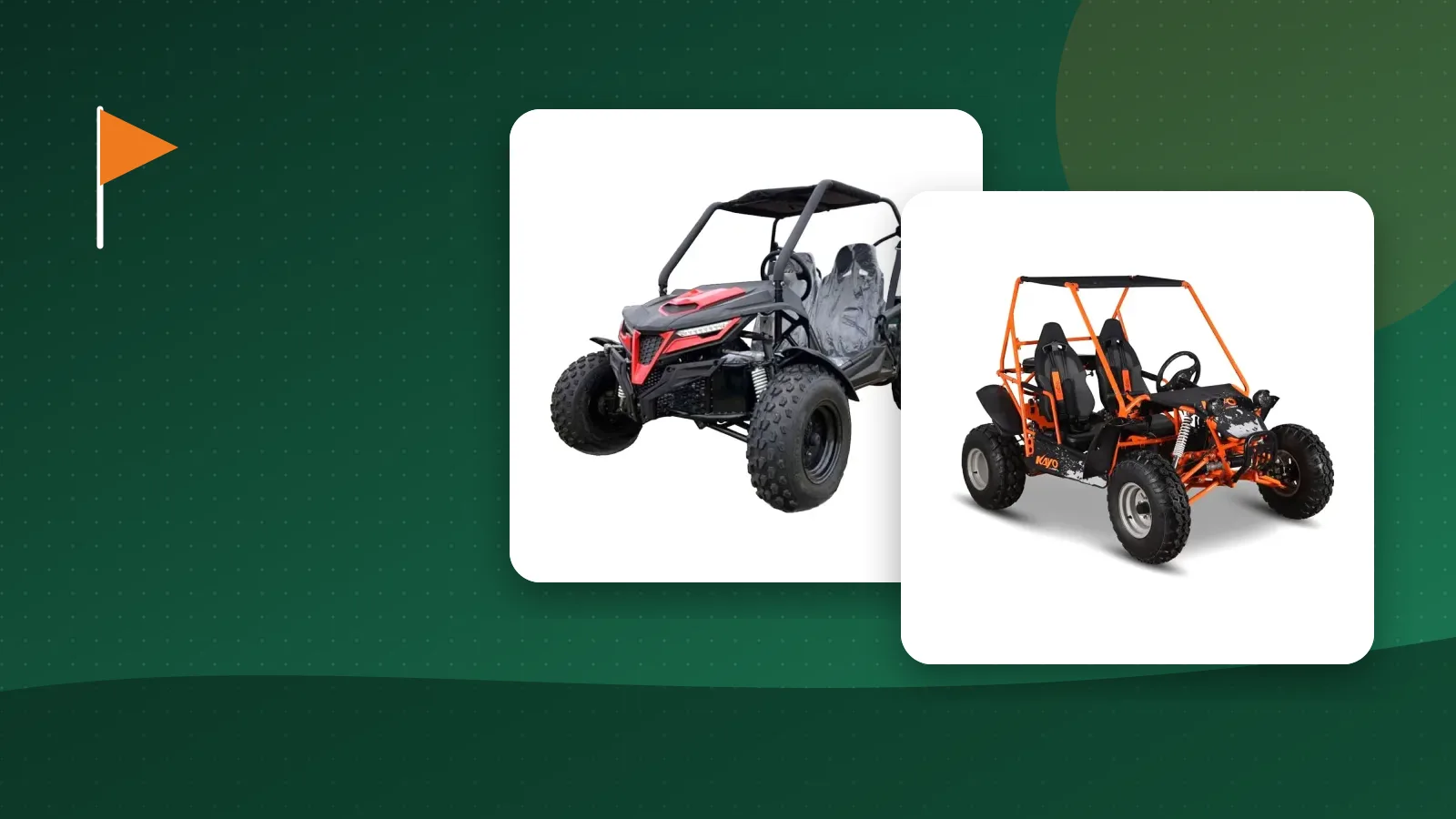
An off-road buggy is a small, tough vehicle designed for farms, trails, sand, bush tracks and weekend recreation. The category is wide, so it helps to know the main types before you compare prices. This guide covers dune buggies, side by sides, go karts and youth buggies, and explains what to check before you commit.
The main types of off-road buggy
### Dune buggies and sand buggies
A dune buggy is a lightweight, open-framed vehicle, often built around a simple tubular chassis and a small petrol engine. The general history and design are summarised in the dune buggy overview. Modern Australian-market buggies typically have a roll cage, harness-style seat belts and a CVT automatic transmission. See our dune buggies range.

### Side by sides (UTVs)
A side-by-side has two or more seats beside each other, a steering wheel and a cargo bed or rear seats. They suit property work and trail riding. Read our explainer on UTVs, ATVs and dune buggies if you are not sure how they differ. Browse side-by-sides and UTVs.
### Go karts
Go karts are compact and fun, but they are lower to the ground and designed for tracks and flat private land. See go karts and our guide to electric go karts.
### Youth buggies
Smaller engines or electric motors with limiters let younger riders learn with supervision. Always check the age guidance. See kids buggies.
How to choose
### Engine size and power
Smaller engines suit farm jobs, kids and gentle terrain. Larger engines suit hills, sand and heavier loads. More power is not always better: it adds cost, weight and fuel use.
### Seating and load
Count the people you need to carry and check the rated load of the cargo area. A buggy that is overloaded wears out faster and is less stable.
### Drive and transmission
Automatic CVT drives are simple and popular. Some buggies have forward, neutral and reverse gearing. Check that reverse is available if you will drive in tight spaces.
### Suspension and tyres
Long-travel suspension and tyres matched to the terrain make a bigger difference to comfort and control than most other features. Sand, mud, rocks and gravel suit different tread patterns.
### Safety equipment
Look for a roll cage, seat belts, nets or doors, and a sturdy brake system. Wear a helmet and eye protection, and supervise young drivers. Safe Work Australia has practical guidance for rural workplaces on quad bikes and off-road vehicles.
Registration and where you can drive
Rules differ by state and territory, and an off-road buggy is generally for private land and permitted off-road areas, not for public roads. Check your state or territory rules and any local council or land manager requirements before you buy.
Assembly, delivery and aftercare
Many buggies arrive partly assembled. Check the assembly notes on the product page and whether you need tools or a workshop. We supply parts and accessories, including off-road parts such as air filters, carburettors and loading ramps.
Budget
Entry-level youth buggies cost the least, and larger dune buggies and side-by-sides cost more. Compare what is included, such as seat belts, roll cage, lights and a warranty. All our prices include GST, delivery is free over $1,000 and $95 flat below, and the minimum order is $500.
Match the buggy to your terrain
Terrain decides which features matter. On sand, you want wide, soft tyres, a good cooling system and a sealed air filter. In mud and clay, look for aggressive tread and good ground clearance. On rocky or hilly tracks, suspension travel, low-range gearing and strong brakes become important. On flat farm tracks, a simpler and cheaper buggy may be all you need. Describe your terrain to a seller and ask which models suit it.
Cooling, filters and dust
Off-road engines work hard in heat and dust. A clean air filter protects the engine, and a clear radiator or cooling fins prevent overheating. After dusty or sandy rides, clean or replace the air filter and wash the vehicle. Check belts and CVT components, which wear faster in dirty conditions. Our off-road parts include air filters, carburettors and brake parts.
Brakes and suspension
Brakes are the most important safety system on any buggy. Check pads, discs and brake fluid regularly. Suspension takes a hammering, so check shock absorbers, bushes and mounts for wear. A buggy with sagging suspension handles badly and puts stress on the frame. Replace worn components before a trip, not during it.
Towing and carrying loads
If you plan to carry tools or tow a trailer, check the rated capacity of the buggy, the hitch and the brakes. Spread loads evenly and keep the centre of gravity low. Secure everything in the tray so it cannot shift. On slopes, reduce load and speed, and avoid turning across the slope.
Seasonal care and storage
Before storing the buggy for winter or a wet season, wash it, change the oil if it is due, stabilise the fuel or run the tank low and charge the battery. Cover it or store it in a shed. Check the tyres and lift the vehicle if it will sit for a long time. Before the next season, check fluids, belts, brakes and lights.
Security and insurance
Off-road buggies are targets for theft. Lock them in a shed, use a wheel lock or chain, and record the serial number. Ask your insurer about cover for vehicles used on private land, and check whether liability is included for visitors.
Questions to ask before buying
- What is the warranty, and what voids it?
- How is the buggy delivered, and how much assembly is needed?
- Where can I get parts, and how quickly?
- What is the payload and towing capacity?
- What safety gear is included?
Next steps
Browse our side-by-sides and UTVs, dune buggies and kids buggies. For a comparison of the main vehicle types, read our guide to UTVs, ATVs and dune buggies.
Maintenance schedule at a glance
Make a habit of checking the basics before every ride: tyre pressure, brakes, steering, fuel or charge level, oil level and that nothing is loose. After each ride, wash off mud, check for damage and look at the air filter. Every few outings, inspect belts, chains, bearings and suspension components. At the end of the season, give the buggy a full service, replace worn items and store it properly. A consistent routine is cheaper than repairs and keeps the buggy safe. Keep a simple logbook with dates and hours so you know when each job is due.
If you are new to off-road vehicles, ask the seller or a local workshop to show you how to check the air filter, tension the drive belt and adjust the brakes. A thirty-minute lesson can save many hours of frustration and helps you spot trouble early.
Choosing between new and used
A new buggy has a warranty and a clean history. A used buggy may cost less but needs a careful check of frame welds, suspension, brakes and engine. Look for rust, cracks, bent parts and signs of heavy use. Start the engine cold and listen for rough running. Ask about service history and why it is being sold. If you are not confident, take a mechanic with you.
Safety culture on your property
Set rules for everyone who rides: helmets on, seat belts done up, no passengers where there are no seats, no riding after drinking and no riding on public roads. Keep keys secure when the buggy is not in use. Teach new riders slowly, starting on flat ground. Make a habit of checking the buggy before each ride, and keep a first aid kit and a phone or radio in the buggy. These simple habits reduce risk for everyone.
Parts and spares worth keeping
Keep a small kit: spare spark plug, air filter, drive belt if applicable, tyre repair kit, fuses, a basic toolkit and zip ties. A spare set of brake pads and a spare light bulb are also handy. Knowing where your nearest parts supplier is, or ordering online ahead of time, keeps downtime short.
Environment and etiquette
Keep to tracks, avoid wet or fragile ground and give way to walkers, riders and livestock. Close gates behind you and take your rubbish home. Keep noise down near houses and campsites. Check fire restrictions and carry a small extinguisher in dry months. Responsible riding keeps tracks open and relationships with landowners good, and it makes riding more enjoyable for everyone.
Final buying tips
Take your time, compare at least three models and write down the questions you want answered. Ask for the specification in writing, confirm the delivery process and make sure you understand what is included. Check what safety equipment you will need and add it to the budget. If you are comparing a petrol buggy with an electric one, think about noise, running costs and where you will charge or refuel. When you are ready to buy, a clear invoice, a warranty document and a parts contact make ownership much easier.
Bottom line
Match the buggy to the job and the rider: a youth buggy for learning, a dune buggy for sand and fun, a side-by-side for work and trails. If you want help comparing models, call 0420 128 746.

