Off-road guides · 7 min read
What Is a UTV? Side by Side vs ATV vs Dune Buggy Explained
What is a UTV? UTV, side by side, ATV, quad, dune buggy: the names overlap. This guide explains the differences so you can pick the right off-road vehicle.
By the Buggies For Sale team · Updated
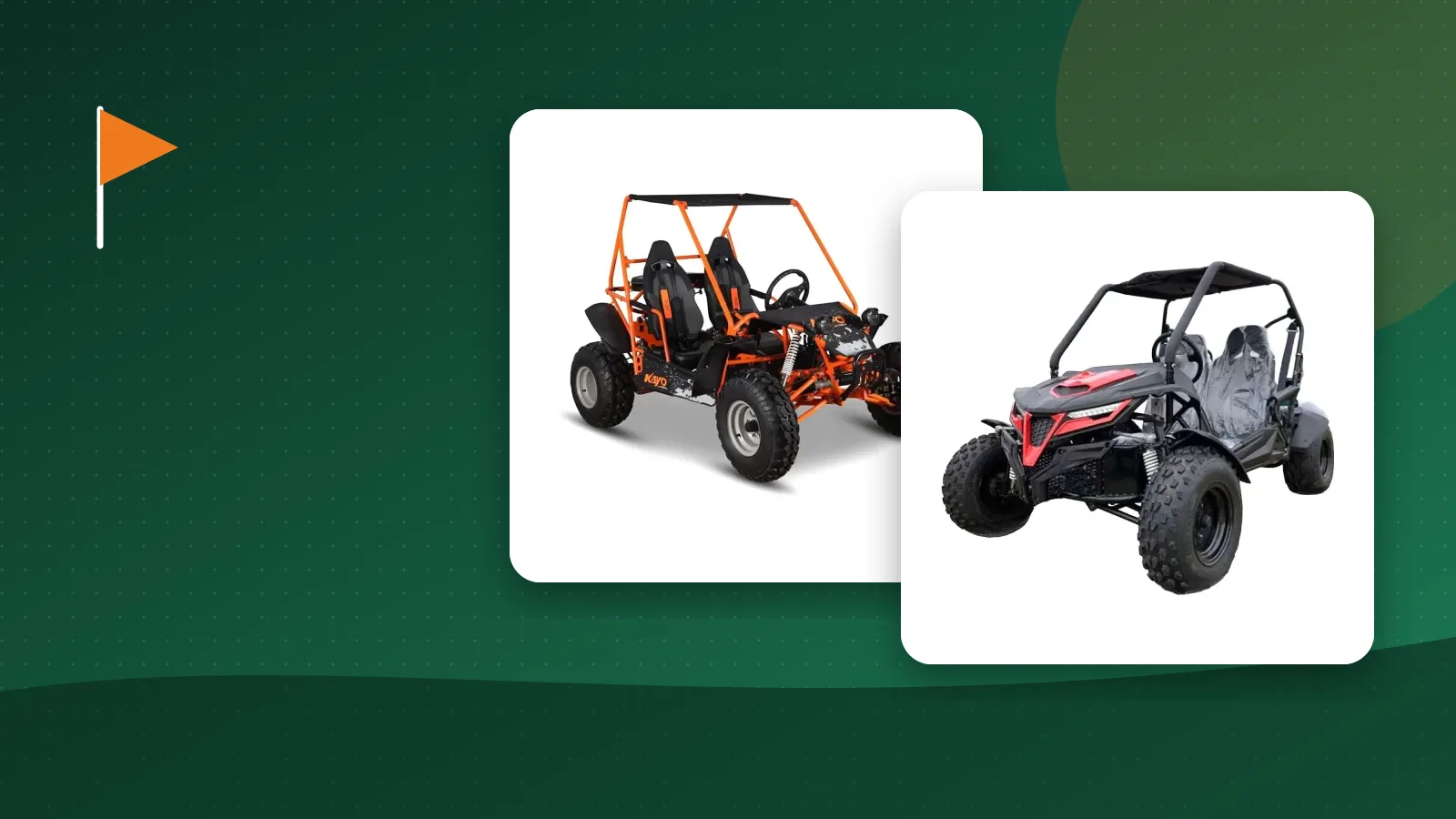
Off-road vehicles come with a confusing set of names. Is a UTV a buggy? What is a side by side? How is an ATV different? This guide sorts it out.
What is a UTV?
A UTV (utility task vehicle) is an off-road vehicle with seats, a steering wheel and a load bed. It is often called a side by side because the driver and passenger sit next to each other. UTVs are built for work and play on farms, properties and trails.
What is an ATV or quad bike?
An ATV (all-terrain vehicle), also called a quad bike, is ridden like a motorbike: you straddle it and steer with handlebars. ATVs are lighter and more agile than UTVs but carry fewer people and less load.
What is a dune buggy?
A dune buggy is a light, open off-road vehicle with a tubular frame, built mainly for sand and recreation. Some buggies are single seat, others have two seats. Browse our dune buggies such as the Trailmaster Cheetah.
What is a go kart?
A go kart is a small, low-slung vehicle built for fun and racing on tracks or private land. See our go karts.
Quick comparison
- UTV / side by side: two or more seats, steering wheel, load bed, good for work and trails.
- ATV / quad: straddle seat, handlebars, agile, good for farm tracks.
- Dune buggy: light, open frame, good for sand and recreation.
- Go kart: small, low, good for tracks and private land.
Which should you buy?
Choose a UTV or side by side if you need to carry people or loads. Choose a quad for agility and light work. Choose a dune buggy or go kart for recreation. For children, see our kids buggies and follow manufacturer age guidance.
Rules and safety
Rules for registration and use differ by state, and off-road vehicles are generally for private land or permitted areas. Always wear a helmet and appropriate gear. Check with your state authority before using one on public land.
See our range
Browse our side by side buggies and UTVs and the wider off-road buggy range.
Safety differences you should know about
A quad bike is ridden like a motorbike, while a side-by-side has seats, seat belts and usually a roll cage. These differences change how each vehicle behaves and how riders are protected. Safe Work Australia publishes practical guidance on quad bike safety, including training, helmets and choosing the right vehicle for the job.

Which one suits a farm?
For small jobs, a quad can be quick and economical. For carrying people, tools or feed, a side-by-side is more stable and practical. Compare cargo capacity, seating and towing capacity before you choose.

Which one suits recreation?
Dune buggies are light and fun on sand and tracks. Side-by-sides suit families who want seat belts and a cage. Youth quads and kids buggies suit younger riders under supervision.

Read more in our off-road buggy guide and ATV buggy comparison, or see the dune buggy overview for background.
Common names and what they mean
The off-road world uses overlapping names. UTV stands for utility task vehicle, and in Australia the term is used for side-by-sides with a cargo tray. SSV or side-by-side describes the seating layout: driver and passenger sit beside each other. ROV means recreational off-highway vehicle, which usually points to sport-oriented models. ATV and quad bike describe a straddle-seat vehicle with handlebars. Buggy is a looser term for a small, open-frame vehicle with a steering wheel, which includes dune buggies, go karts and youth buggies. Knowing these terms helps you compare listings fairly.
Seating, controls and protection
A side-by-side has a steering wheel, pedals, seat belts and a cage. You sit rather than straddle, and you get a protective frame around the occupants. A quad has handlebars and a thumb or twist throttle, and you shift your weight to turn and balance on slopes. Dune buggies are light, open vehicles with a roll cage, harnesses and a small engine. Go karts have an even lower seating position and are meant for tracks and flat private land. Each layout suits different jobs and different risk levels.
Engines, transmissions and drive
Most modern buggies use a CVT automatic transmission, which is simple and forgiving. Some have manual gears or a selectable low range for towing and climbing. Four-wheel drive is available on many side-by-sides and farm quads, and two-wheel drive is common on dune buggies and kids vehicles. Engine sizes range from small youth engines up to larger multi-cylinder engines. Electric models are growing in number and offer quiet running and instant torque.
Loads, towing and tools
A utility side-by-side often has a tipping cargo tray, a towing hitch and a rated payload. Check the specification before you rely on it for fencing, feed or tools. Quads can carry loads on racks and tow light implements, but they are less stable under heavy loads on slopes. Dune buggies usually carry people and light gear only. If you plan to tow, check the vehicle's towing capacity and brakes.
Budget and running costs
Entry-level youth vehicles are the least expensive. Dune buggies and go karts sit in the middle. Full-size utility side-by-sides cost the most, particularly models with four-wheel drive, power steering and bigger engines. Running costs include fuel or electricity, servicing, tyres and insurance. Include parts availability in your decision, because a vehicle off the road for weeks is no use. Our off-road parts range covers common consumables.
Which one for which job
- Farm and property work: a utility side-by-side or farm quad.
- Family trail riding: a side-by-side with seat belts and a cage.
- Sand and dunes: a dune buggy with wide tyres.
- First vehicle for a child: a youth quad, kids buggy or electric ride-on with a speed limiter.
- Track fun: a go kart.
Safety essentials for all types
Helmets, eye protection, gloves and boots should be worn on every ride. Use seat belts where fitted, keep within the vehicle's rated load and never carry passengers on a vehicle designed for one rider. Take it slow on unfamiliar terrain and avoid steep side slopes. Supervise children at all times, and make sure the vehicle matches their age and size. Safe Work Australia has further guidance for rural workplaces in its quad bike safety pages.
Next steps
If you are comparing models, start with our side-by-sides and UTVs, dune buggies and mini quads and small ATVs. For deeper comparisons read our off-road buggy guide and ATV buggy guide. If you are unsure which one suits your property, call us on 0420 128 746 and tell us how you will use it.
A simple decision path
Start with who will ride. If children will drive, look at youth quads, kids buggies and electric ride-ons. If you carry passengers, pick a side-by-side or a four-seat buggy. Next, think about the load: tools, feed and fencing suit a utility side-by-side, while sand and trails suit a dune buggy. Finally, think about where it will be stored and how it will be moved, because size and weight matter if you use a trailer or a small shed. Write down the answers and use them to filter listings. This simple path avoids buying a bigger or smaller machine than you need.
Costs beyond the purchase price
Include registration where it applies, insurance, protective gear, a trailer or ramps, accessories and servicing in your plan. Safety gear is not optional, so add helmets, goggles, gloves and boots for each rider. A cargo box, winch or roof can add more cost than expected. For a work vehicle, include the cost of downtime if it breaks, and ask how quickly parts arrive.
Resale and long-term value
Vehicles from well-known brands with parts support hold their value better. Keep service records, wash the vehicle regularly and avoid heavy modification that cannot be reversed. If you may sell in a few years, choose neutral colours and keep original parts. Photograph the vehicle in good light with a clean background when you sell, and be honest about condition.
Quick comparison table in words
- Quad (ATV): straddle seat, handlebars, one rider, nimble and economical, best for light farm tasks and trails.
- Side-by-side (UTV): steering wheel, seat belts, cage, two or more people, best for work, towing and family trails.
- Dune buggy: lightweight, open frame, roll cage, best for sand and recreation.
- Go kart: low and compact, best for tracks and flat private land.
- Youth buggy or quad: smaller engines or electric motors, best for supervised learning.
Use this list as a first filter, then compare specific models by engine size, payload, seating, warranty and price. If two options look equal, choose the one with better parts support in Australia.
If you are still undecided, visit a supplier or ask for a video walk-around of the models you like, and write down the questions that remain. Seeing the seating, controls and cargo area makes the differences between these vehicle types much clearer than any list of specifications.