Off-road guides · 8 min read
ATV Buggy vs Quad vs Side-by-Side: Which One Do You Need?
An ATV buggy can mean a quad, a youth ATV or a side-by-side. Compare each type, the safety points to check and which suits a farm, a family or a trail.
By the Buggies For Sale team · Updated
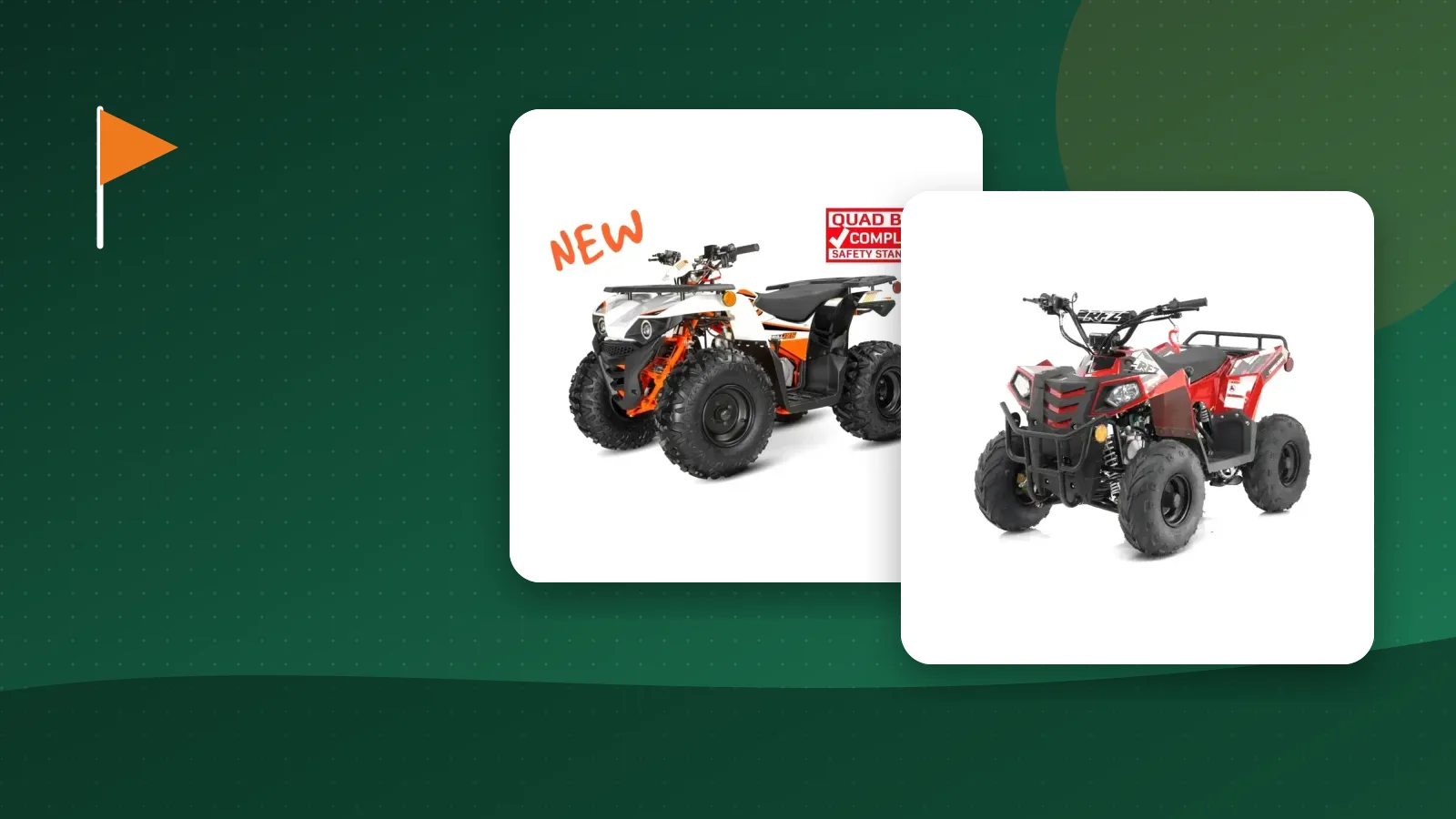
People use the words ATV, quad, buggy and side-by-side as if they mean the same thing. They do not, and the difference matters for safety, price and what you can actually do with the vehicle. This guide compares the main types of ATV buggy, explains who each suits and lists the safety points to check before you buy.
What is an ATV?
An all-terrain vehicle (ATV), or quad bike, is a motorised vehicle with four low-pressure tyres and handlebar steering that the rider straddles. The ATV overview on Wikipedia describes the category. A buggy, in contrast, usually has a steering wheel and seats you sit in, often with a roll cage.
The main types
### Quads and youth ATVs
Quads suit farm work, trail riding and recreation. Youth quads have smaller engines or electric motors, speed limiters and age guidance. See mini quads and small ATVs.

### Side-by-sides (UTVs)
A side-by-side has a steering wheel, seats side by side, seat belts and a roll cage. They carry more people and gear and suit property work and family trail riding. Browse side-by-sides and UTVs or read our UTV vs ATV vs dune buggy guide.

### Dune buggies and go karts
Lighter, sportier and aimed at recreation. See dune buggies and go karts.
Which type suits you?
- Farm work and light towing: a farm quad or side-by-side, depending on load and seating.
- Family recreation: a side-by-side or buggy, because passengers sit inside a cage with seat belts.
- First vehicle for a child: a youth ATV or kids buggy with a speed limiter, under supervision.
- Sand and dunes: a dune buggy with wide tyres.
Safety points
Quad bikes have a higher rollover risk than vehicles with seats and a cage, and safety authorities publish guidance for riders and workplaces. Safe Work Australia's page on quad bikes covers training, helmets, and risk controls for farms. Whatever you buy:
- Wear a helmet, eye protection, gloves and sturdy boots.
- Do not carry passengers on a vehicle designed for one rider.
- Keep children on vehicles that match their age and size, supervised at all times.
- Follow the manufacturer manual on slopes, loads and towing.
What to compare
- Engine or motor size, and whether it is petrol or electric.
- Transmission: automatic, semi-automatic or manual.
- Seating, cargo capacity and towing capacity.
- Warranty, spare parts and assembly requirements.
Parts and accessories
Get the basics ready at purchase: spare filters, a loading ramp and the right protective gear. Our off-road parts page has carburettors, brake parts and ramps.
Understanding engine sizes and classes
Youth quads use small engines, often 50cc to 125cc, and some have speed limiters. Mid-sized quads, around 150cc to 300cc, suit teens and adults on trails and farms. Larger quads and side-by-sides use bigger engines for towing and heavy work. Engine size alone does not tell you how a vehicle performs, because weight, transmission and gearing matter. Match the engine to the rider's age, size and experience, and keep within the manufacturer's recommended age ranges.
Automatic or manual
Automatic transmissions are common on youth and farm quads because they are easy to use. Semi-automatic models have a foot shifter without a clutch lever. Manual models give more control but need practice. Reverse gear is helpful on farms and in tight spaces. Check which transmission you are buying, and whether the vehicle has forward, neutral and reverse.
Safety features to look for
Look for features such as speed limiters on youth models, a tether kill switch, a sturdy brake system, good lighting, and for side-by-sides, a roll cage and seat belts. Guards, nets and doors add protection. Check that the vehicle has spark arrestors if you will use it where required. Read the manual before the first ride, and make sure riders know how to stop and how to use the controls.
Training and supervision
Training is one of the most effective safety measures. Many states and industry bodies provide quad bike and side-by-side training courses. For children, supervised practice in an open area teaches skills in a controlled environment. Insist on helmets and protective gear every time, and keep to the age and weight limits. Review the safety guidance published by authorities such as Safe Work Australia.
Accessories for work and play
Racks and cargo boxes carry gear. Winches, snow ploughs and sprayers turn a quad into a work tool. Windscreens, hand guards and roofs improve comfort. Always check that accessories are rated for your model, and that they do not exceed the weight limit or change the centre of gravity in a way that reduces stability. Our off-road parts and accessories cover common wear items.
Maintenance
Check oil, coolant, tyre pressure, brakes and chain or shaft drive regularly. Wash after muddy rides and lubricate cables and joints. Replace the air filter and check the spark plug as scheduled. Store the vehicle in a dry place, and use fuel stabiliser if it will sit for months. Keep records of services, which help with warranty and resale.
Next steps
Compare mini quads and small ATVs with side-by-sides and UTVs, and read our off-road buggy guide for a wider view. If you are choosing for a child, our kids ride-on buggy guide explains the age and safety questions.
Buying new or used
A new vehicle comes with a warranty and a known history. A used vehicle can be cheaper, but check the frame for damage, the suspension and steering for wear, the brakes for performance, and the engine for smoke or noise. Ask for service records and the reason for sale. Check recalls and safety notices for the model. If you are unsure, pay a mechanic to inspect it. Compare the total cost, including repairs, to the price of a new model of similar specification before you decide.
Climate, terrain and the right tyres
Tyres make a big difference to how an ATV or buggy handles. Mud tyres have deep lugs for traction in soft ground. All-terrain tyres balance grip and comfort on mixed surfaces. Sand tyres are wide and smooth for flotation. Check the size and load rating before you swap tyres, and confirm that the wheels and clearance can handle the change. Lower tyre pressure improves grip and comfort on soft ground, but check the manufacturer's guidance and use a gauge.
Working on a farm
Quads and side-by-sides are common farm tools. Before you buy one for work, list the tasks: checking stock, carrying feed, spraying, towing, fencing. Match the vehicle's payload and towing capacity to the heaviest task. Think about the terrain and weather. Fit guards and accessories that suit the work, and keep a service schedule. Train every worker who will drive, and put written rules in place. A well-chosen farm vehicle saves hours every week.
Seasonal storage and preparation
At the end of a season, wash the vehicle, change the oil, check the coolant and drain or stabilise the fuel. Charge the battery and disconnect it if the vehicle will be stored for months. Lubricate cables, joints and suspension points. Cover the vehicle and keep it off bare ground. When you restart in spring, check tyres, brakes and fluids before you ride.
Questions to ask a seller
- What is the age range and weight rating for this model?
- Does it have a speed limiter, a tether kill switch and a roll cage or guards?
- What warranty is included and what does it cover?
- How is it delivered, and how much assembly is required?
- Which parts are readily available in Australia?
- Can I see the manual and the safety information before I buy?
Write down the answers and compare them across sellers.
Reading the specification sheet
A good specification sheet lists engine size, transmission, drive type, dry weight, payload, towing capacity, tyre sizes, ground clearance, dimensions and fuel capacity. Look for gaps, because missing numbers may mean a seller does not know the product well. Compare dimensions to your trailer and gate widths. Check that payload and towing figures match your intended use. If any figure seems unrealistic, ask for clarification.
Insurance and registration
Rules for registration and insurance vary by state. Some jurisdictions allow registered use on certain roads or farm tracks, while others do not. Ask the relevant authority before you buy. Check whether your farm or home policy covers the vehicle and passengers. If you use it for work, check your workers compensation and public liability arrangements. Keep documents such as the invoice, serial numbers and manuals safe.
Whichever type you choose, make safety your first priority: the right vehicle for the rider, the right gear, proper training and sensible rules. A well-chosen ATV buggy should serve your family or business for years, so it is worth spending a little more time on research before you buy.
Bottom line
The best ATV buggy is the one with the right seats, cage and power for your use. If safety, passengers and load matter, look at a side-by-side first. For help matching a vehicle to your property, call 0420 128 746.
