Buying guides · 10 min read
Buggy Cart Explained: Golf Cart or Buggy? What to Buy in Australia
Buggy cart explained for Australian buyers: golf cart, golf buggy or utility cart, how they differ, used options and prices. Compare models and enquire.
By the Buggies For Sale team · Updated
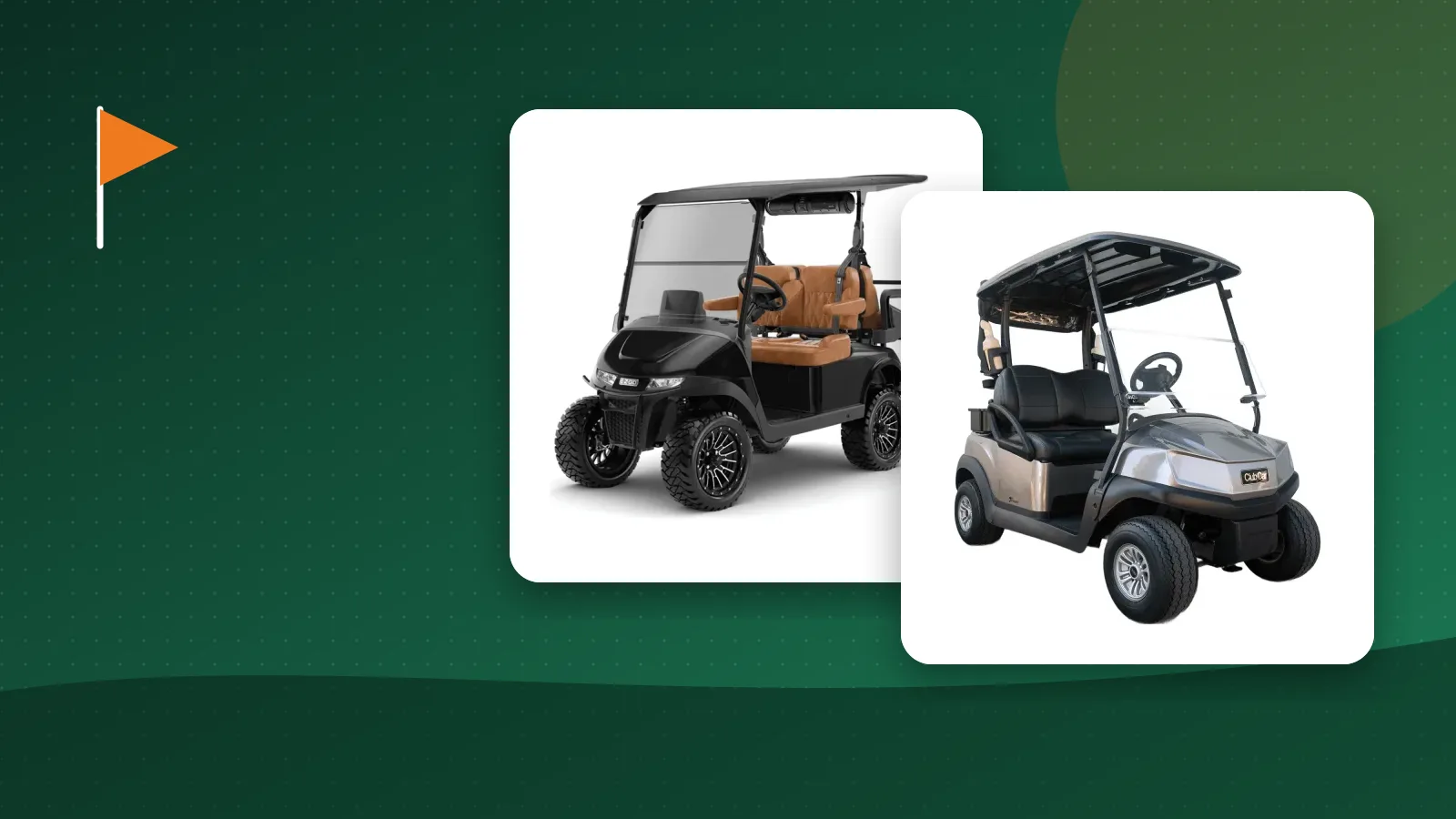
Search for a buggy cart and you will find a mix of golf carts, golf trolleys, utility carts and off-road buggies, all mixed together. In everyday Australian use, a buggy cart usually means a small motorised vehicle that carries people and gear over short distances, most often a golf cart. This guide untangles the names, explains what each type of cart does, and shows what used and refurbished options in our range cost.
All prices are in Australian dollars and include GST. Specifications come from the product pages, and where a detail is not listed we have not stated it, so ask us before you order.
What does buggy cart mean?
There is no formal definition. People use the term for four different things. The first is a golf cart, a small electric or petrol passenger vehicle used on golf courses, estates, resorts and farms. The second is a golf buggy, which in Australia often means a push or electric trolley that carries a bag. The third is a utility cart, a low-speed vehicle with a tray for work. The fourth is an off-road buggy for recreation. When someone asks for a buggy cart, the first question to ask is what it needs to carry and where it will be driven.
The background of the golf cart itself is covered in the golf cart article on Wikipedia. Our golf carts hub lists the passenger carts we sell, and the golf buggies hub covers trolleys and powered caddies.
Golf cart versus golf buggy
In Australia, golfers often call a motorised cart a buggy, so you will see both words in the same club newsletter. As a rule, a golf cart seats two or more people and has a steering wheel and pedals, while a golf buggy carries only a bag and is pushed, pulled or driven by remote. Retailers use the terms loosely, so read the listing, not the label.
If you want to ride, you want a cart. If you want to walk and carry less, you want a buggy or trolley. A cart suits an estate, a farm, a caravan park or a resort. A trolley suits a round of golf.
New, used or refurbished carts
New carts cost more but arrive with a known history. Used carts cost less but vary widely in battery health, bodywork and wear. Refurbished carts sit in between, with worn parts replaced. Our used golf carts page lists second-hand carts with a note on condition, and each product page recommends confirming condition and battery health before you buy.
The used range spans a wide price band. The Used 2010 Tomberlin Revenge 4 Seat is listed at $4,890 including GST. The Used 2015 Club Car Precedent 4 Seat is $9,790, and the Used 2017 EZGO RXV 4 Seat is $11,750 with a listed 48V system and 67Ah battery capacity. The Club Car Tempo Refurbished Lithium Golf Cart is $12,740.

Electric or petrol buggy cart
Electric carts are quiet, simple and cheap to run. They suit estates, resorts and courses where noise matters. Their range depends on battery size and condition, and a tired lead-acid pack is the most common problem on older carts. Petrol carts refuel quickly and suit long days and farm work, but they are louder and need engine servicing. Our electric golf carts and petrol golf carts pages let you compare both.
If you are buying used and electric, ask about the battery. A lithium conversion can transform an older cart. See the lithium golf cart batteries page for packages matched to common cart models.
Seats and layouts
Think about the people you carry. Two-seat carts are compact and cheaper. Four-seat carts suit families, guests and small crews, and many four-seaters have a rear seat that flips into a cargo tray. Utility versions swap the rear seat for a work bed. Our utility and 4-seater carts page groups these layouts. For young drivers or very small spaces, see the mini and junior carts range.
What to check on a used buggy cart
Whether you buy from us or elsewhere, the same checks apply. Look at the battery age, voltage and capacity, and ask how far the cart runs on a charge. Inspect the frame for rust or repairs, the seats for tears and the tyres for wear. Test the steering, the brakes and the accelerator, and listen for noise from the motor and axle. Ask for service records, and check the charger is included and working.
A cart that has lived near the sea may carry rust under the floor, and one stored outdoors may have faded or cracked plastic. These are cosmetic but can hint at the care the cart has had.
Legal use and where you can drive
A golf cart is designed for private land, courses and estates. It is not automatically road legal, and rules differ by state and by council. Before you plan to drive on a public street, check with your state road authority and your council, and do not assume a footpath or shared path is permitted. We can explain what we know, but you must confirm the rules for your own area. If something is not as described, your consumer guarantees are explained on the ACCC consumer rights and guarantees page.
Parts, accessories and servicing
A cart is more useful with a few extras: seat covers, lights, a windscreen, rain covers, drink holders and a phone holder. Browse the golf cart accessories page for options. If you need repairs, the repairs and servicing page explains how to reach us. Wheels and tyres are on the golf buggy wheels and tyres page.
Moving and storing the cart
Carts are heavy and need a ramp and a trailer or a truck to move. Plan how the cart will reach your property and where it will park. Store it undercover and keep the battery charged. If the cart sits for long periods, follow the maker's advice on battery storage. Our golf buggy trailers page lists trailer options.
Delivery and payment
Orders over $1,000 ship free to major metro and depot corridors, and a flat $95 applies below that. Freight is arranged to your postcode and we confirm it before you pay. The minimum order is $250. We accept bank transfer (Osko or EFT), PayID and crypto, and a 10% discount is applied automatically if you choose crypto at checkout. We do not offer card payments or invoices at checkout.
Choosing the right size for your property
A cart that is too large for a narrow path or a tight shed is a daily annoyance. Measure gateways, garage doors, paths and turning spaces before you buy, and ask us for the cart's dimensions if they are not on the product page. We will confirm them from the supplier rather than guess. Think about hills too. A heavily laden four-seat cart on a steep drive needs good brakes and enough motor power, and a mini or junior cart is not designed for heavy use on steep ground.
Ground surface matters. Standard golf cart tyres are made for turf and sealed paths, and soft or loose ground can cause slipping or ruts. If the cart will travel on gravel or farm tracks, ask about tyre options and ground clearance.
Brands you will see on the market
In Australia you will meet carts from Club Car, EZGO, ECAR, Yamaha and Tomberlin, among others. Each brand has its own parts network and service reputation, and some models have far better parts supply than others. Our Club Car, EZGO, ECAR and Yamaha brand pages list what we carry. If you are buying used, a common brand with a good parts supply is usually easier to maintain than a rare one.
A simple budget plan
Decide your total budget before you start looking, and include freight, accessories, charger, and possibly a battery upgrade. A used cart with a tired battery pack may need new batteries soon after purchase, which can add several thousand dollars. A newer cart or a refurbished lithium model costs more upfront but may avoid that outlay. Ask us what battery type and condition a particular cart has, so you can compare like with like before you commit.
Cart or buggy: a quick decision guide
If you will carry more than one passenger or move loads around a property, buy a golf cart. If you only need to carry a golf bag, buy a trolley or an electric golf buggy. If you want recreation on rough ground, buy an off-road buggy and check where you can legally drive it. Matching the machine to the job avoids the most common mistake, which is paying for a cart that cannot do the work or a buggy that is far more than you need.
Keep the first year's running costs in mind as well: charging or fuel, tyres, brake parts, servicing and eventually batteries. A cart is cheaper to run than a car, but it is not free, and a realistic budget keeps it enjoyable. Ask us to talk through the likely costs for any model you are considering, and we will give you straight answers based on what is listed.
Common mistakes buyers make
The usual errors are buying on price alone, skipping the battery check, ignoring the charger, forgetting freight and assuming a cart is road legal. Another is buying a cart that is too small for the passengers, then discovering that a four-seat model would have cost only a little more. Take your time, ask questions and compare at least two or three models before you commit.
Bottom line
A buggy cart can mean several things, so start with what you need to carry and where you will drive. For passengers, choose a golf cart, new, used or refurbished. For a bag, choose a trolley or electric buggy. Compare the used golf carts and the full golf carts range, then call +61420128746 to talk through condition and delivery.


