Buying guides · 7 min read
Can You Drive a Golf Cart on the Road in Australia?
The short answer is usually no, but it depends on your state, the vehicle and where you are driving. Here is how the rules work and what to check first.
By the Buggies For Sale team · Updated
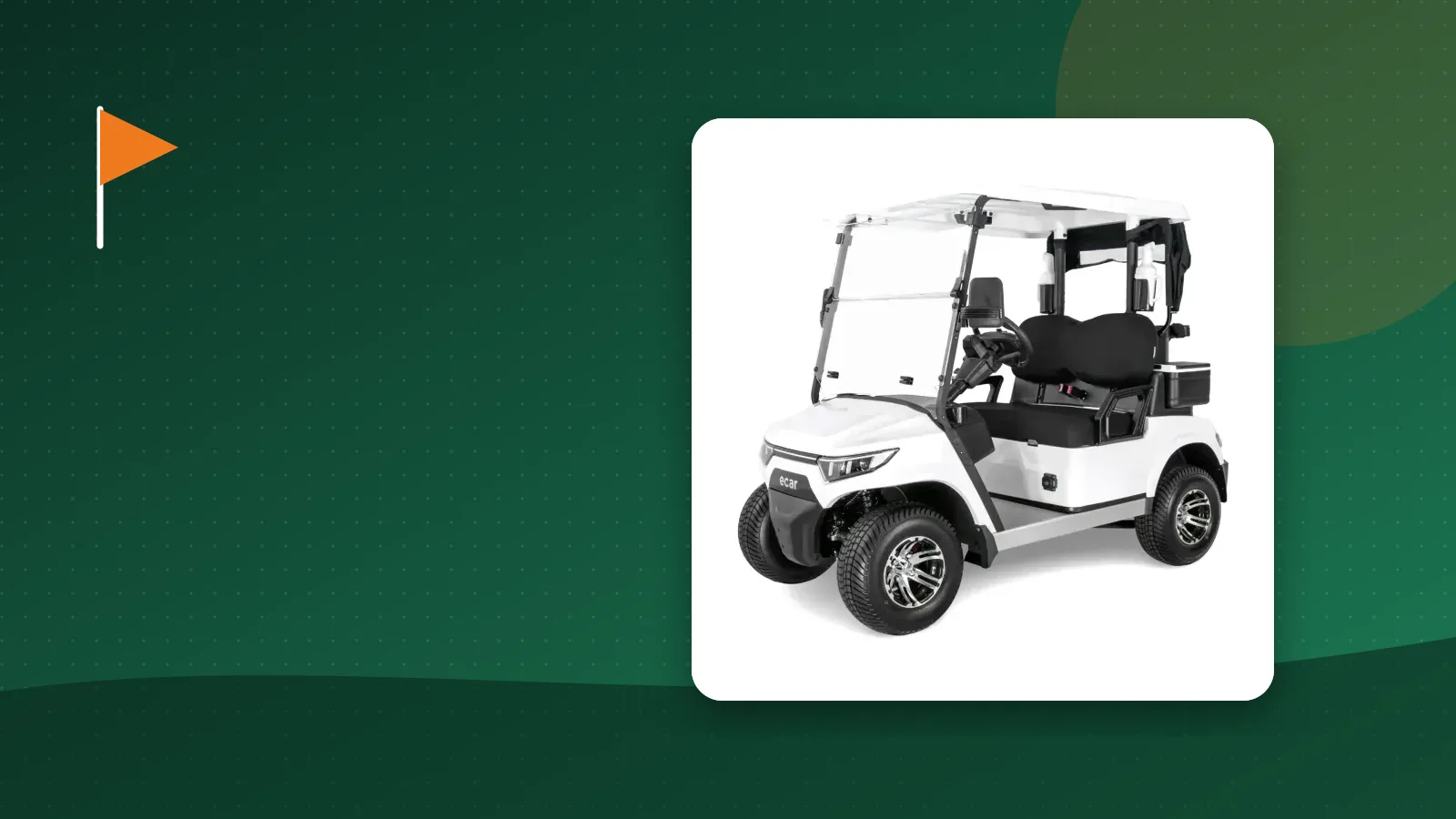
If you own a golf cart, or you are thinking of buying one, you have probably asked whether you can take it down the street. It is one of the most common questions we hear, and the honest answer is that it depends on where you live and how the vehicle is classified.
This guide explains the general picture across Australia, the questions to ask, and where to get a firm answer for your situation. It is general information and not legal advice, so always confirm with your state or territory transport authority before driving on a public road.
The short answer
In most of Australia, a standard golf cart is built for the course, private property and similar closed environments. It is not designed or certified as a road vehicle, so using it on a public road is generally not allowed unless it has been approved and registered for that purpose.
That does not mean carts never appear on roads. Some estates, resorts, islands and council-managed areas have specific arrangements. Those arrangements are local, and they come with conditions.
Why golf carts are treated differently
Road vehicles in Australia must meet design standards for lighting, braking, seat belts, mirrors, speed and crash protection. A typical golf cart is designed for low speed on private land and does not meet those standards by default.
Because rules are set by each state and territory, there is no single national answer. Transport agencies such as Transport for NSW, VicRoads and the Queensland Department of Transport and Main Roads publish their own guidance on low-speed vehicles and registration.
Questions to ask before you drive one on a road
- Is the cart approved or registrable for road use in my state, and by whom?
- Does it have the required lights, indicators, mirrors, seat belts and horn?
- Do I need a licence, registration and compulsory third party insurance?
- Does my council, estate or resort allow carts on its streets or paths?
- Does my own insurance cover use outside private property?
Private property, estates and clubs
On your own land, on a golf course, or inside a gated resort or estate, you can generally use a cart under the rules of the landowner or operator. Even there, sensible safety applies: seat belts if fitted, no overloading, and drivers who are competent and, where required, licensed.
If you are buying a cart for a farm, a resort or an estate, tell us the use case. We can help you choose a model with the right seating, battery and options, and our golf carts range includes electric carts for utility and multi-seat use.
Can you make a golf cart road legal?
Some owners add lights, indicators, mirrors and seat belts, but that is rarely enough on its own. In many cases a cart would need to be assessed, modified to meet standards and registered as a particular type of vehicle. That process can be complicated and costly, and it is not always possible.
If road use is important to you, speak to your state transport authority first. They can tell you whether your intended vehicle can be registered and what it would take.
Safe use on the course and on private property
- Follow the speed and path rules set by your club or property.
- Keep to marked paths where required and avoid steep slopes with a full load.
- Use seat belts and grab rails where fitted. We stock seat belt kits, grab rails and floor mats for popular carts.
- Do not carry more passengers than the number of seats.
- Keep batteries charged and maintained. See our guide on lithium vs lead-acid batteries.
What about golf buggies?
A golf buggy that you push or that follows you across the course is a different category again. These are for use on the course and similar areas, not roads. Our range of golf buggies for sale is made for walking golfers.
A quick checklist before you buy a cart for private use
- Write down where the cart will be used: a farm, an estate, a resort, a club or a workshop.
- Ask the landowner or body corporate for their written rules on carts, speed and licences.
- Choose seating, battery type and options to match the job. See our guide to what a golf cart costs.
- Check that your insurer covers the use you have in mind.

Buying new or used
A new cart comes with a warranty and modern lithium batteries. A used cart can be good value if the battery and frame are sound. Read our used golf carts buyer guide and browse used golf carts and petrol golf carts.
For general background on what a golf cart is and how the category developed, the golf cart overview on Wikipedia is a useful reference.
How the rules differ between states and territories
Australia does not have a single national rulebook for golf carts. Each state and territory sets its own vehicle standards, registration rules and local exceptions, and local councils or estate managers add another layer on top. That is why you will hear one owner say they can drive their cart to the shops while another is told it is not allowed. The sensible approach is to start with the transport authority in your state, ask in writing whether the specific make and model can be registered, and keep the reply with your purchase records.
Some regions treat low-speed vehicles differently from standard cars. In a handful of places there are approved zones such as retirement villages, islands, resorts and holiday parks where carts are permitted on internal roads under conditions set by the operator. These zones usually have speed limits, hours of use and age or licence conditions. If you are buying a cart to live in one of these places, ask the manager for the written rules before you order, because they may require specific lights, flags, seat belts or insurance.
Questions to ask a seller before you buy
A reputable seller will not be offended if you ask direct questions about use. Before you pay, ask what the cart is designed for, whether it has any road approval at all, and what the manufacturer warranty covers when the cart is used on private roads inside an estate. Ask which accessories are factory fitted and which are added later, because aftermarket lights and mirrors do not change a cart's classification. Ask whether the battery, charger and motor are matched, and what servicing the warranty requires.
If a seller claims a cart is road legal, ask for the evidence: a compliance plate, a registration certificate or a letter from the transport authority. Be cautious of general statements such as street legal kits. A kit may add lights and a horn, but the vehicle still has to be assessed and registered as a specific class before it can be used on a public road.
Insurance and liability
Even on private land, accidents happen. A cart carrying passengers, driven by a visitor or used by staff can create liability that your normal home policy may not cover. Talk to your insurer about the property, the people who will drive and the type of use, and ask whether the cart should be listed. If the cart is for a business, such as a resort, farm or club, check that your public liability cover includes vehicle use and that your workers compensation arrangements cover staff driving. A short call now is much cheaper than discovering an exclusion after an incident.
Choosing a cart for private roads and estates
If your use is on private roads and paths, the right features are practical rather than legal. Seat belts and grab rails make a real difference on slopes. A windscreen, roof and lights make a cart usable in wet weather and at dusk. Bigger tyres and a lifted body help on gravel and rough tracks. Lithium batteries give steady power and shorter charge times, which suits carts used all day. Our electric golf carts include two, four and six-seat models, and our utility and four-seater carts suit farms, estates and resorts.
If you plan to move the cart between properties on a trailer, plan that early. Read our guide to trailering a golf cart so you choose a cart you can load safely. If your budget is limited, a refurbished or used cart can be a good start, and our used golf cart checklist explains what to inspect.
Common myths
- Myth: adding lights makes a cart road legal. Lights alone do not change the classification of a vehicle.
- Myth: if a neighbour does it, it must be allowed. Local arrangements, exemptions and enforcement vary, and they can change.
- Myth: electric carts are exempt from licence rules. Licence and registration requirements depend on the vehicle class and where it is used, not on the power source.
- Myth: a small speed means a small risk. Slow vehicles can still tip, roll or collide, which is why seat belts, speed limits and sensible driving matter.
Practical safety habits
Treat a cart like any vehicle. Do a quick check before use: tyres, brakes, steering, lights and charge level. Keep a clear view, slow down on corners and slopes, and avoid carrying more passengers than there are seats. On wet grass and gravel, brake early and leave extra space. Keep children seated and never let them stand or ride on the rear without a purpose-built seat. If you carry golf bags or tools, secure them so they cannot slide.
If you are unsure about a particular use, call us on 0420 128 746. We cannot give legal advice, but we can explain the options for seating, batteries and accessories and point you to the right authority for the rules in your area.
Bottom line
Treat a golf cart as a private-property vehicle unless your state authority confirms otherwise in writing. If you are unsure, ask before you buy, because rules and enforcement can change. We are happy to talk through your use case. Call 0420 128 746 or message us on WhatsApp.

