Buying guides · 10 min read
Childs Off Road Buggy Guide: How to Choose a Safe, Right-Sized Buggy
Choosing a childs off road buggy? Learn how to match age, size, engine or battery and safety gear, and see the youth buggies we list in Australia.
By the Buggies For Sale team · Updated
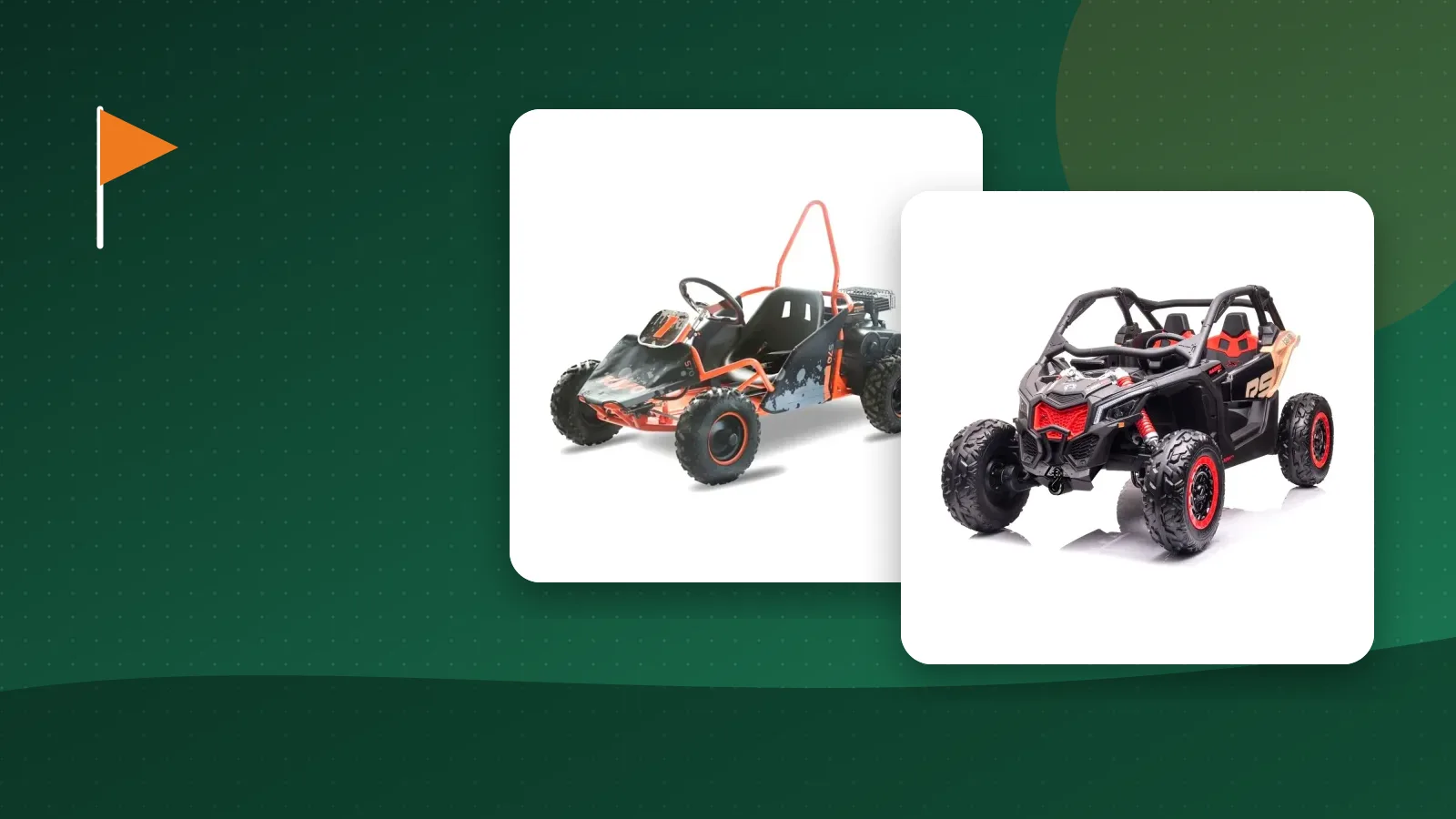
Buying a childs off road buggy (a child's off road buggy, as it is properly written) is a different job from buying a buggy for an adult. The machine has to fit the child, match their experience and be easy for a parent to supervise, and it has to be one you are comfortable seeing them drive. A buggy that is too big or too fast is a risk, and a buggy that is too small or too slow will be outgrown or ignored in a season. This guide explains how to choose a child's off road buggy in Australia, how petrol and electric models differ and what safety steps matter most, using the youth buggies we list.
Start with the child, not the buggy
Before you look at a single product, answer four questions. How old is the child, and how tall? How much riding or driving experience do they have? Where will they ride, and who will supervise? How long will they be able to use the buggy before they outgrow it? A confident ten-year-old on a farm with an adult nearby needs very different equipment from a six-year-old in a suburban backyard. Be honest about the answers, because they decide almost everything else.
Age ranges on product listings are a guide, not a guarantee. Children of the same age vary widely in size, strength and attention span. If a child cannot comfortably reach the controls, hold the handlebar or wheel and brake firmly, they are not ready for that machine regardless of the age on the box. Our kids buggies page lists the current range, and our kids ride-on buggy guide explains the electric side in more detail.
Petrol or electric?
The biggest decision is the power source. Petrol youth buggies have small engines, usually with automatic transmission, and they offer longer running time and a bit more grunt. Electric buggies are quiet and simple, and they suit younger children and smaller spaces.
Electric options in our range start with the Little Riders 24V electric golf cart ride-on with canopy at $244 and the Can-Am Maverick 24V kids ride-on buggy at $685. The John Deere 12V Gator XUV ride-on is $1,225. These are low-speed machines for backyards and young children. Electric quads such as the GO SKITZ Adventure at $420 (listed at 30 kg and 7 km/h) and the GO SKITZ 2.5 at $783 (50 kg, 250W motor and 11 km/h) step up in size and speed.

Petrol youth machines start with the Kayo S70 kids buggy at $1,469. It is a 79cc, fully automatic machine listed at 40 kg, which keeps the controls simple. The Hammerhead Torpedo kids buggy at $2,253 has a 208cc engine and 6.5HP, and the R1 kids buggy for ages 5 to 11 at $2,793 is listed with a top speed of 35 km/h. The Polaris RZR 200 EFI youth buggy at $10,775 is the premium option, with a 180cc engine and 24 inch wheels. See the Polaris brand page and our Polaris RZR 170 guide for more on that line.
Match speed and power to experience
More speed is not better for a child. A beginner needs a machine that is easy to control, with smooth throttle response and good brakes. Many youth buggies have a throttle limiter, a screw or stop that caps the throttle travel so a parent can keep the speed low at first and raise it as the child gains skill. Check whether the buggy you choose has one, and learn how to set it. Start in an open, flat area with no obstacles, and increase difficulty gradually.
Electric buggies are generally easier for first-time drivers because the power delivery is smooth and there is no clutch, gear or engine noise to manage. Fully automatic petrol machines such as the Kayo S70 take the same approach with a simple twist-and-go transmission. Larger engines such as 208cc are better suited to older, more experienced children who have already spent time on smaller machines.
Safety gear is not optional
A child in an off road buggy must wear a certified helmet that fits properly, closed shoes or boots, gloves, long trousers and long sleeves. Eye protection is sensible on dusty tracks, and chest and knee protection add safety for more active riding. Check that the buggy has working seat belts or harnesses where fitted, and keep the child's arms and legs inside the frame at all times. Our product pages for youth buggies recommend helmets, gear and supervised use, and we strongly agree.
Safe Work Australia's quad bike safety guidance and the WorkSafe Victoria quad bikes page are written for workplaces, but they explain the way off-road vehicles can roll or crash and why rider size, load and terrain matter. Read them before you let a child ride anything with an engine. For general background on the machines themselves, see the all-terrain vehicle entry on Wikipedia.
Supervision and where to ride
The best safety feature is an adult watching. Keep the child in sight, set clear boundaries on where they can ride, and keep other children, pets and animals out of the area. Choose firm, open ground with no hidden holes, rocks, creek crossings or fences close to the track. Avoid slopes until the child can control the buggy on the flat. Never allow a child to drive on a public road or on council land unless the vehicle and the place are approved for it, and check local rules on recreational vehicles on private property. Children should never carry passengers on a single-seat machine.
Check the fit
Sit the child on the buggy, or on a similar machine, before you buy. Their feet should reach the pedals or floor, their hands should reach the controls with a slight bend in the elbow, and they should be able to squeeze the brake lever or push the pedal fully. They should be able to turn the steering fully without leaning off the seat. If the buggy is slightly large and you plan to let them grow into it, be careful: a machine that is too big is harder to control and more dangerous than one that is slightly too small.
Maintenance for a child's buggy
Children's machines get hard use and need regular checks. Before every ride, check tyre pressure, brakes, throttle return, steering and every visible bolt. After riding, clean off dirt and mud, charge the battery if the machine is electric, and store it dry. For petrol machines, check the oil and air filter on a regular schedule and use fresh fuel. Keep the manual somewhere you can find it. We stock a range of off-road parts and can help if something wears out.
How long will it last?
Children grow fast, so a buggy that fits today may be too small in a year or two. A good-quality youth machine keeps its value better than a toy-grade product, which makes it easier to pass on to a younger sibling or resell. Electric ride-ons for little children usually have the shortest useful life, while a sturdy petrol youth buggy for a ten-year-old may last several years. Factor this into your budget when you compare the price tags.
A quick checklist before you buy
- Confirm the child's height and weight against the product listing.
- Choose petrol or electric based on age, noise limits and where they will ride.
- Check for a throttle limiter or speed control.
- Budget for a helmet, gloves, boots and protective clothing.
- Plan a safe, fenced or clearly marked place to ride.
- Decide who will supervise and who will maintain the buggy.
- Check assembly requirements and freight cost before you order.
Teaching a child to drive safely
A good buggy is only half the answer. The other half is how you teach. Start in a flat, open, fenced area, and begin with the engine or motor limited to a low speed. Walk through the controls first: how to start and stop, how to brake smoothly and how to turn without leaning. Practise stopping on command until it is automatic. Set simple rules and repeat them every time: helmet on, gear on, stay in the marked area, no passengers and no riding when you are not watching.
Increase difficulty slowly. Move to gentle curves, then to gentle slopes, only when the child is calm and consistent at each step. Keep sessions short so they stay fresh, and end each one with a quick check of the buggy. Praise careful driving rather than speed. Children copy what adults model, so wear your own protective gear when you demonstrate, and treat the buggy with respect.
Buying from Buggies For Sale
All prices are in Australian dollars including GST. We confirm stock and freight before you pay, and you can pay by bank transfer (Osko or EFT), PayID or crypto, with 10% off automatically at checkout when you choose crypto. The minimum order is $250, freight is free over $1,000 to major metro and depot corridors and a flat $95 applies below that. If you are unsure which size suits your child, call +61420128746 or message us on WhatsApp with their age, height and where they will ride. For the whole range, browse our off-road buggies.
Bottom line
A child's off road buggy should fit the child, suit the ground and be easy for an adult to supervise. Start with age, size and experience, choose electric for the youngest riders and fully automatic petrol for older children, and add proper safety gear and a safe place to ride. Pick the smallest machine that does the job, and resist the temptation to buy extra speed.


