Buying guides · 10 min read
Off Road Dune Buggy Guide: How to Choose One for Australian Conditions
Thinking of buying an off road dune buggy in Australia? Compare engine sizes, terrain, safety gear and running costs, then browse our range today.
By the Buggies For Sale team · Updated
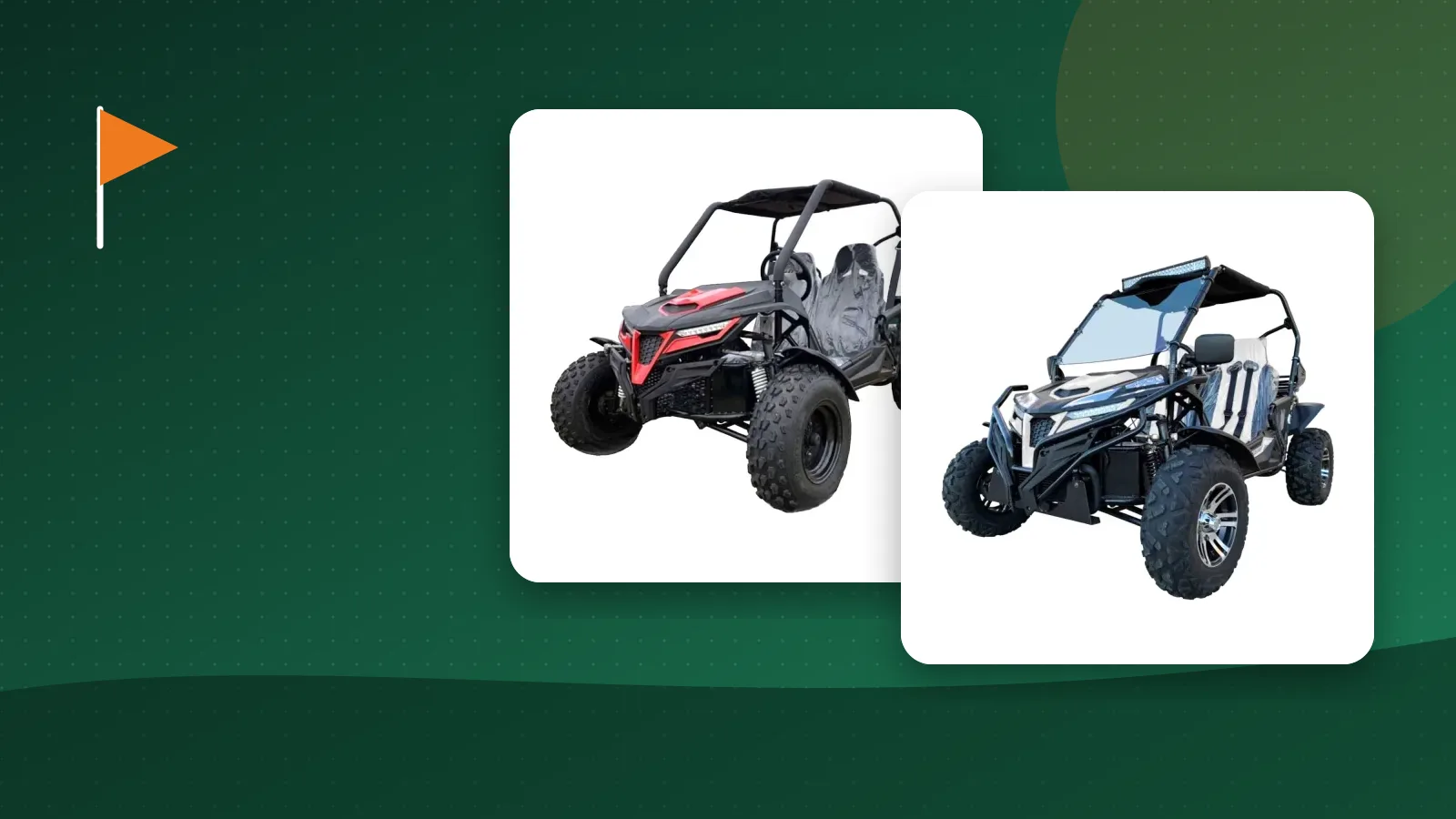
An off road dune buggy is a lightweight, open-framed recreational vehicle built for sand, dirt tracks, paddocks and bush trails. It is one of the most recognisable shapes in motoring: a tubular frame, big rear tyres, a bucket seat or two and an engine behind you. In Australia, dune buggies are a popular choice for rural properties, holiday parks, farms and weekend trips to private tracks. This guide explains how an off road dune buggy works, what separates the models we list, how engine size and terrain interact and what to budget for beyond the purchase price.
What is an off road dune buggy?
A dune buggy is a small, open recreational vehicle designed to travel over loose or rough ground. The basic recipe has not changed much since the 1960s: a strong frame, a compact engine, a transmission, a roll cage and large, soft tyres. For a short history and a look at the various body types, read the dune buggy article on Wikipedia. In today's Australian market, buyers use the term for modern, purpose-built buggies as well as the classic beach buggy.
Dune buggies sit between a go kart and a side-by-side. They are usually more capable off-road than a kart, with better suspension and ground clearance, and lighter and cheaper than a full side-by-side utility vehicle. Our dune buggies page lists the current models, and our wider off-road buggies range covers the neighbouring categories.
The dune buggies we list
The core of our dune buggy range is the Trailmaster family. The Trailmaster Cheetah 175cc dune buggy is listed at $4,557 including GST and is described for farms, tracks and weekend runs. The bigger Trailmaster Cheetah 300cc is $5,879, and the Trailmaster Challenger 200 is $6,223 with a 200cc engine and a 12V electrical system. If you want a side-by-side layout, look at the Hammerhead Mudhead SE at $3,429, which is part of our wider side-by-sides and UTVs range.

For more on the Trailmaster line see our Trailmaster Cheetah guide, our Trailmaster dune buggies article and the Trailmaster brand page.
Engine size: 175cc, 200cc or 300cc?
Engine size is the first number most buyers compare, but it only makes sense in context. A larger engine gives more power for climbing, carrying passengers and pulling through soft sand, and it also costs more to buy and run. A smaller engine is lighter on fuel and easier to handle, which suits younger drivers who are old enough for the vehicle and open paddocks that do not need a lot of grunt.
- 175cc: a sensible entry point for farms, flat tracks and general fun. The Cheetah 175 is the lowest price in the Trailmaster range.
- 200cc: a step up in power, useful if you carry weight or tackle longer slopes. The Challenger 200 sits here.
- 300cc: the most power in our dune buggy range, aimed at drivers who want to climb dunes and hills or carry a passenger with confidence.
Do not choose on engine size alone. Weight, gearing, tyre choice and suspension all change how a buggy feels, and a well-set-up 175cc can outperform a poorly set-up larger engine on the right surface.
Terrain: sand, dirt, mud and hills
Match the buggy to the ground you will actually drive on. Sand rewards power and light weight, plus wide, soft tyres run at low pressure. Packed dirt and gravel tracks suit almost any dune buggy and are kind to the drivetrain. Mud is hard on air filters, chains and brakes, so clean the buggy after each muddy session. Steep hills test the engine and the brakes, so choose a buggy with a bigger engine and good brakes if you live in hilly country. Rocky ground is tough on tyres and suspension, so check clearance and carry a puncture repair kit.
If you plan to drive at the beach, check the rules first. Many beaches ban motor vehicles or restrict them to certain areas or permit holders, and driving on dunes can damage fragile environments. Always check with the local council or land manager, and keep to permitted tracks. Our guide to beach buggies for sale in Australia covers the beach side in more detail.
Safety gear and driving rules
A dune buggy is an open vehicle, and open vehicles demand respect. Wear a certified helmet every time, closed shoes, gloves and clothing that covers your arms and legs. Use the seat belts or harnesses that the buggy has and keep arms and legs inside the frame. Check the roll cage, seat mounts and fasteners before every drive. Never drive on a public road unless the vehicle is registered and approved for road use, and never let an inexperienced driver take a powerful buggy alone. The product pages for our buggies recommend safety gear and supervised use for younger drivers, and the pages note assembly requirements you should read before ordering.
Workplace and farm regulators publish guidance on off-road vehicle safety that is useful even for recreational use. Safe Work Australia's quad bike safety page explains the main risks of rollover and loading on similar vehicles, and the principles of speed, load and terrain apply directly to buggies.
Assembly, delivery and set-up
Our buggies are delivered Australia-wide, and some arrive requiring assembly. Read the assembly notes on the product page and set aside time, or book a mechanic. Before the first drive, check fluids, tyre pressure, chain tension where fitted, brake operation, throttle return, steering play and every bolt. Break the engine in according to the manual. If you are unsure about anything, call us on +61420128746 before you start.
Running costs and maintenance
A dune buggy costs more to run than a pushbike and far less than a road vehicle. Fuel is the main running cost, followed by oil, filters and tyres. Sand and dust are tough on air filters, so clean or replace the filter often. Check the chain or belt, clean and lubricate the moving parts, and keep the battery charged. Store the buggy dry and covered, drain or stabilise fuel if you will not use it for months, and keep a basic tool kit and spares in the shed. Parts and accessories are in our off-road parts range.
Getting it home and on the trailer
A dune buggy is awkward to transport. If you will tow it to a track or a camping spot, you will need a suitable trailer, secure tie-downs and a way to load it. Ramps make loading safer, and strong tie-downs stop the buggy shifting in transit. Browse our trailers, tie-downs and ramps for the basics, and see our guide to trailering a golf cart, where the loading principles are the same. Check the weight of the buggy and the capacity of your trailer and tow vehicle before you load.
Dune buggy or side-by-side?
The choice between a dune buggy and a side-by-side comes down to what you need to do. A dune buggy is lighter, usually cheaper and more fun for recreation on sand and tracks. A side-by-side is heavier, carries more people and cargo and is better suited to farm work, hauling and long days. If your main goal is recreation, a dune buggy is the obvious pick. If you need to move tools, feed or passengers around a property, look at a side-by-side. Our guide to UTVs, side-by-sides and ATVs explains the differences.
Questions to ask before you buy
- Where will I drive it, and is that land private or permitted?
- Who will drive it, and are they old enough and experienced enough?
- Do I need one seat or two?
- How will I transport it?
- Is assembly required, and can I do it?
- What parts and servicing support are available?
- Can I afford safety gear, fuel, maintenance and freight on top of the purchase price?
Your first week with a new buggy
The first week matters more than most owners expect. On day one, read the manual from start to finish, then walk around the buggy with a spanner and check every bolt, the tyre pressures, the brake feel and the throttle return. Add fuel and oil as the manual says, and check for leaks. For the first drive, choose a flat, open area with no obstacles and keep the speed low while you learn how the steering, brakes and throttle respond.
Follow the manufacturer's run-in advice for the engine, which usually means varying the revs and avoiding full throttle for a set period. After the first few hours, re-check the bolts and chain tension, because new machines settle in. Keep a note of anything that rattles, leaks or feels odd, and contact us early if something does not seem right. Treat the first week as a shake-down, and the buggy will be more reliable for years afterwards.
Buying from Buggies For Sale
All of our prices are in Australian dollars including GST. We confirm stock and freight before you pay, and payment is by bank transfer (Osko or EFT), PayID or crypto, with 10% off automatically at checkout when you choose crypto. There is a $250 minimum order, freight is free over $1,000 to major metro and depot corridors and a flat $95 applies below that. Call +61420128746, message us on WhatsApp or email sales@buggiesforsale.com.au and tell us where you plan to drive, and we will help you choose.
Bottom line
An off road dune buggy is a rewarding way to enjoy sand, tracks and paddocks, provided you pick the right size for your terrain and take safety seriously. Start with where you will drive and who will drive, then choose the engine size, then check assembly, transport and running costs. The Trailmaster Cheetah range gives a clear ladder from 175cc to 300cc, and the Challenger 200 sits in between for drivers who want a step up.


