Buying guides · 10 min read
Farm UTV Guide: Choosing a Side by Side for the Property
Farm UTV guide for Australian properties: engine sizes, seats, safety and models from $4,213. Compare side by sides and enquire about freight today.
By the Buggies For Sale team · Updated
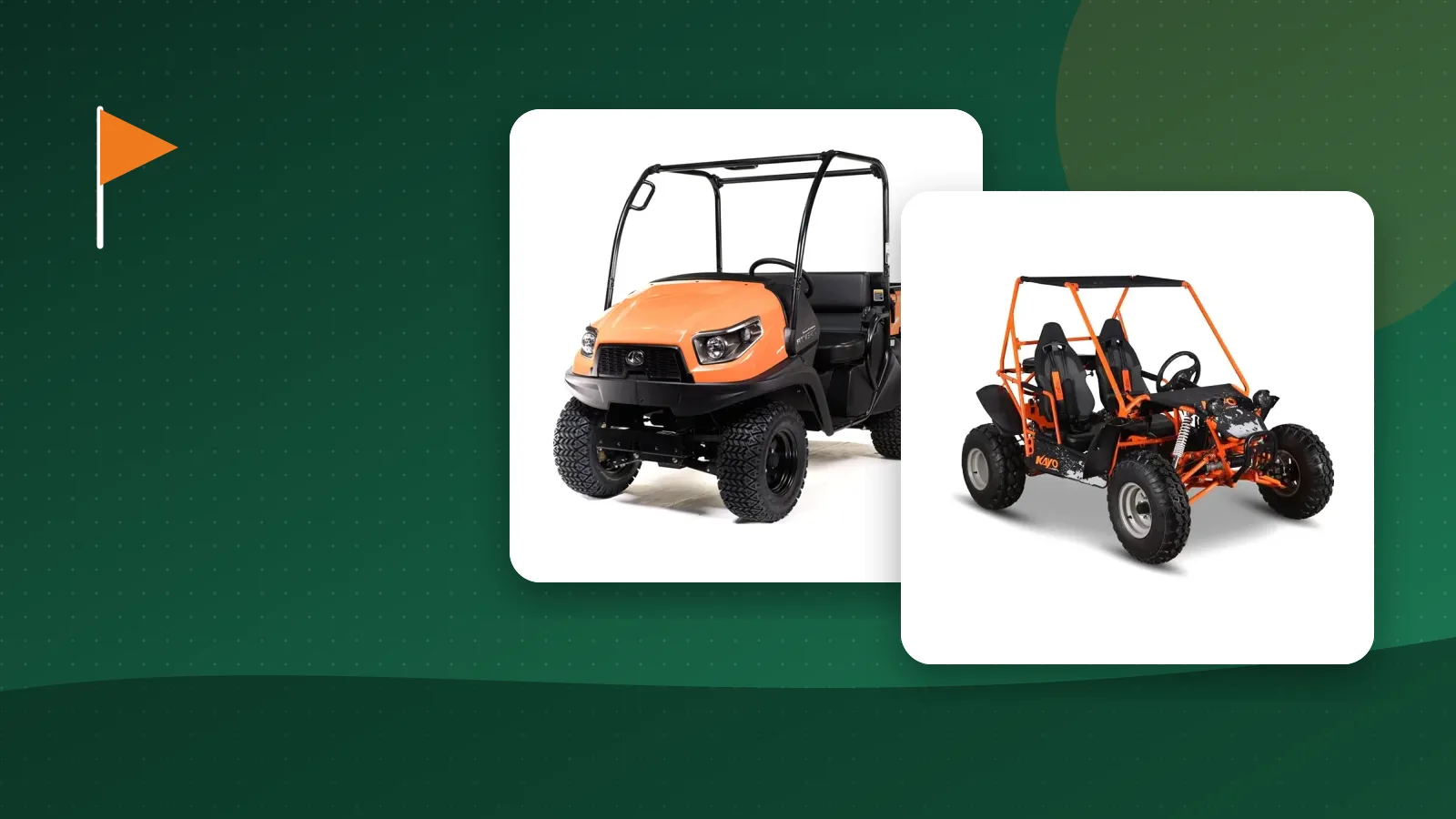
A farm UTV is a side-by-side utility vehicle used for the daily work of a property: checking stock, moving feed, carrying tools, towing light trailers and getting around paddocks faster than on foot. Compared with a quad bike, a UTV gives you seats, a steering wheel, a roll structure and more carrying space. Compared with a ute, it is smaller, goes where a ute cannot and costs far less to run on a farm. This guide explains how to choose a farm UTV in Australia, what the models in our range cost and what to check before you buy.
All prices are in Australian dollars and include GST. Specifications come from the product pages, and where a page does not list a detail we have not stated it, so ask us before you order.
What is a farm UTV?
UTV stands for utility task vehicle. The vehicle sits between a quad bike and a small truck. Most have two or more seats, a cargo bed at the back, a protective roll cage and a petrol, diesel or electric drivetrain. The general category is outlined in the utility vehicle article on Wikipedia. Farm models are built for work, so they favour carrying capacity and durability over outright speed.
Our side by sides and UTVs category lists the machines we carry, and the electric off-road UTVs category covers battery-powered options for quiet, low-maintenance work around sheds and stockyards.
Why farms choose a UTV over a quad bike
The biggest reason is safety. A UTV has a roll structure, seat belts and a stable wide stance, while a quad bike carries the rider on top. Workplace safety regulators publish guidance on farm vehicle hazards, which is worth reading if you employ staff or supervise family members. See, for example, WorkSafe Victoria.
Other reasons are practical. You can carry a second person, put tools in the tray, and drive in the rain without being soaked. UTVs also suit older operators who find a quad bike awkward. That said, a quad is lighter, cheaper and more manoeuvrable in tight spots, so the best answer depends on your work. We stock both: see the farm adult quad bikes range if a quad suits you better.
Farm UTV models in our range
At the lower end is the Kayo S150 Side by Side Buggy, listed at $4,213 for light property work and recreation. Above that, the Kayo S350 Side by Side is listed at $8,819.

For heavier duty work, the Kubota RTV520 Side by Side is listed at $19,105. Its specification lists a 514 cc engine, a weight of 625 kg and a top speed of 40 km/h. The Polaris Ranger 500 Side by Side is listed at $15,675 with a 567cc engine. If you prefer a bigger machine, the Polaris Ranger XP 1000 HD and the Kubota RTV-XG850 Sidekick sit higher in the range. You can browse more under the Kubota brand page and the Polaris brand page.
Engine size and what it means on a farm
Engine size affects towing, hill climbing and load. A smaller engine such as the Ranger 500 suits general paddock work, fencing runs and light trailers. A bigger engine helps when you carry heavy loads, climb steep tracks or tow regularly. Do not buy more engine than you need, because bigger machines cost more to buy and run, and they are harder to move in tight yards. Equally, a machine that is underpowered for your hills will be hard on the drivetrain.
Ask us for the stated towing and payload figures on the model you are considering. If a figure is not on the product page, we will confirm it from the supplier rather than guess.
Seats, cabin and cargo
Count how many people usually ride. A two-seat UTV is fine for one or two workers, while crew versions with a second row suit teams or families. The Yamaha Viking SE lists three seats, which suits a driver and two passengers. Consider the cargo bed too. A tipping tray is handy for feed, firewood and gravel. Check the bed length against the loads you carry, and look at whether the sides fold down.
Weather protection is worth thinking about. Many farm UTVs ship without doors or a windscreen, and cabins and canopies are often aftermarket. If you work in cold or wet country, price those extras into the purchase.
Petrol, diesel or electric
Petrol UTVs are the most common and the easiest to service. Diesel suits heavy work and long days, and it offers better fuel economy under load. Electric UTVs are quiet, spook stock less and have almost no routine maintenance, but they are limited by charge time and range. If you only run short trips around the house paddock and sheds, electric can be a sensible choice. For daily long runs, petrol or diesel is simpler. The Segway Villain SX10 E is one of the electric options we list.
Safety and the law on a farm
Always wear a seat belt, keep to the stated passenger number and never carry children where there is no seat. Keep loads low and secured, slow down on slopes and across slopes, and avoid steep or wet ground that could tip the machine. Check the rules for your state on registration, which differ depending on whether you use the vehicle on public roads or only on private land. Employers must also follow workplace health and safety rules, and your state regulator, such as SafeWork NSW, publishes guidance.
Do not let children drive adult machines. If you need something for young riders, look at our kids buggies range, which is sized and supervised differently.
Running costs and servicing
Farm UTVs are tough, but they still need regular service. Plan to change the oil and filters on schedule, check and grease the suspension and driveline points, inspect tyres and brakes, and keep the air filter clean in dusty paddocks. Mud and manure can hide damage, so wash the machine down and inspect it regularly. Ask the seller where servicing and parts are handled in your region, because a UTV that is two weeks from a part is a UTV sitting idle during a busy season. Accessories such as winches, tow bars and tie-downs are listed under winches and tow bars and trailers and tie-downs.
Questions to ask before you buy
Ask what the machine is rated to tow and carry. Ask what warranty applies and who services it near you. Ask whether it arrives assembled, and how freight and unloading work at your property. Ask about spare keys, manuals and what tools come with it. Finally, ask what accessories fit, such as canopies, roll-over protection upgrades, winches and tow hitches. A good seller will answer plainly and put anything important in writing.
Delivery and payment
Freight is arranged to your postcode. Orders over $1,000 ship free to major metro and depot corridors, and a flat $95 charge applies below that, though a UTV will normally exceed it. Rural delivery depends on carrier coverage, so tell us your property address and whether a truck can reach the gate. We accept bank transfer (Osko or EFT), PayID and crypto, and a 10% discount is applied automatically if you choose crypto at checkout. The minimum order is $250.
Working out the real cost of ownership
The purchase price is only the start. Add freight, registration or permits where they apply, a canopy or doors, a tow hitch, a winch, tyres suited to your ground and a service schedule. On a working property, fuel or charging costs and servicing add up over the years. Ask for a clear list of what comes in the box, what is optional and what the warranty covers. A machine that costs a little more but arrives with the extras you need may be cheaper than a base model that needs a long list of add-ons.
If you run several machines, matching brands and models simplifies parts, training and servicing. Buying a UTV in the same family as an existing quad or tractor can also help if the same dealer network handles both.
Training and supervision on the property
Anyone who drives the UTV should know how it behaves before they carry a load or cross a slope. Walk new drivers through the controls, the passenger rules and the paddocks where the machine can and cannot go. Agree speed limits around yards, sheds and gates, and make belt use non-negotiable. Keep children off the machine unless they are seated with a belt on and the vehicle is designed for passengers of their size. Set up a routine to check tyres, brakes, steering and fluids before each working day, because a few minutes of checking prevents breakdowns in the middle of a job.
Choosing between brands
Each maker has its strengths. Kubota is known for tractors and utility machines, and its side by sides are built around farm work. Polaris offers a wide range from work models to sport machines. Kayo is a more affordable entry point with a lighter build. The right choice depends on workload, budget and servicing in your area. Compare the range on our Kubota, Polaris and Yamaha brand pages, then ask about service and parts availability near you before you decide.
Bottom line
A farm UTV saves time, carries more and is safer than a quad for most jobs, but the right one depends on your terrain, loads and budget. Start with the work you do every day, count the seats you need and then compare engine size and price. Browse the side by sides and UTVs range or call +61420128746 and tell us about your property.


