Buying guides · 10 min read
4x4 Buggy Guide: How 4WD Buggies Work and What to Buy in Australia
A 4x4 buggy gives extra grip on mud, hills and soft ground. Learn how 4WD works, what it costs and which models we stock from $11,231. Compare now.
By the Buggies For Sale team · Updated
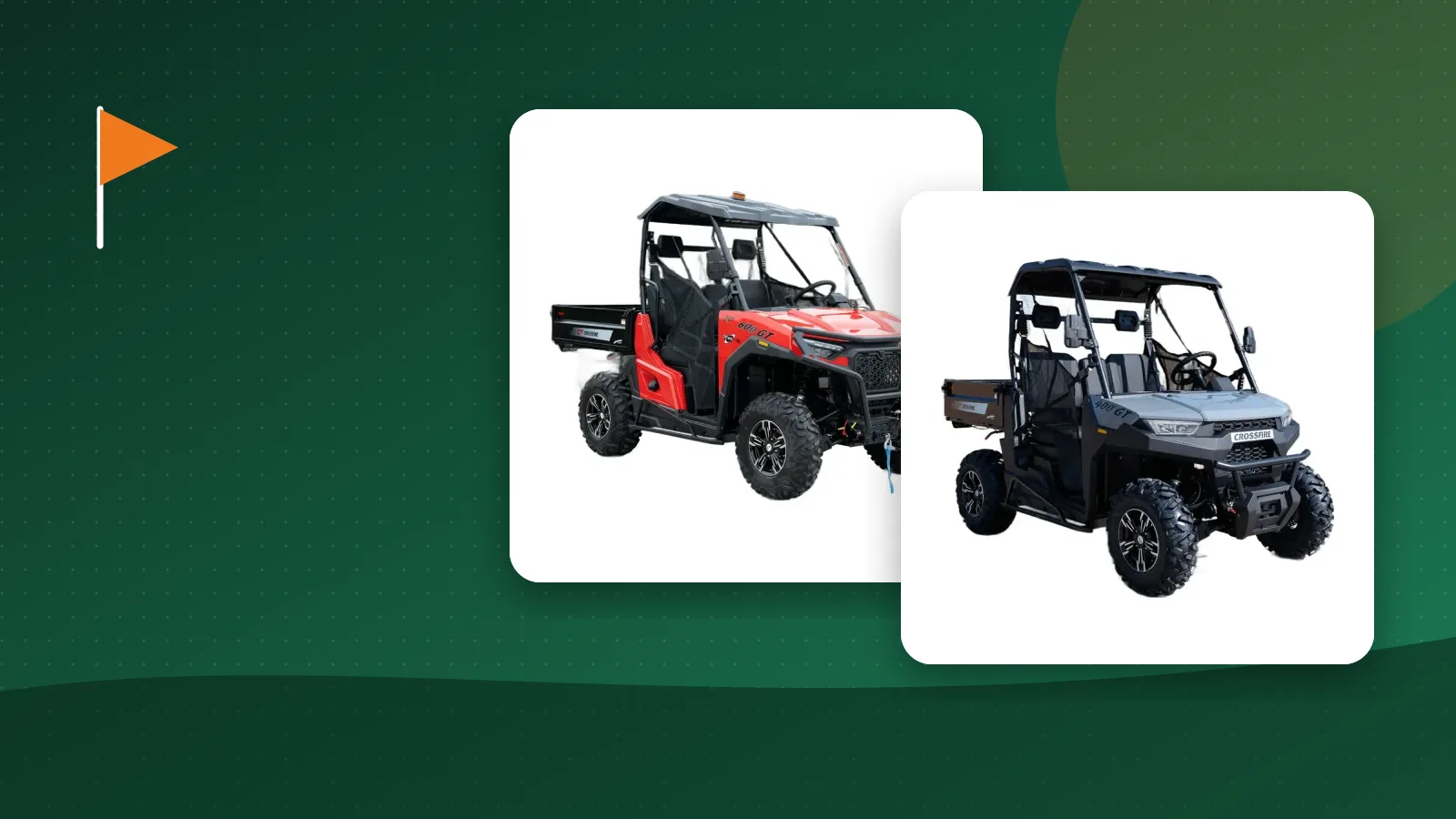
A 4x4 buggy sends power to all four wheels instead of two. That one change makes a big difference on slippery, steep or soft ground, which is why farmers, property owners and keen off-road drivers ask for a 4x4 buggy by name. It is not the right answer for every buyer, though. Four-wheel drive adds weight, cost and servicing, and it can give a false sense of security if the tyres or driver are not up to the job. This guide explains how a 4x4 buggy works, when you actually need one, what to check on the spec sheet and which models we stock, using the specifications and prices as published on our product pages.
What does 4x4 mean on a buggy?
The label "4x4" means four wheels in total and four of them driven. On a buggy that usually means a driveshaft to the front axle as well as the rear, so all four tyres share the work of pulling the vehicle forward. The general idea is explained in the four-wheel drive article on Wikipedia. Many buggies also let the driver switch between two-wheel and four-wheel drive, using 2WD on easy ground to save wear and 4WD when traction is poor.
Terms vary between brands. Some say 4WD, some say AWD and some say 4x4. For a buyer, the practical question is whether power reaches all four wheels, whether you can lock or engage it, and what the manual says about when to use it. Always check the product page and ask us if the drivetrain is not clear.
When do you need a 4x4 buggy?
Four-wheel drive helps most where traction is limited. Mud, wet grass, loose gravel, steep slopes, sand and creek crossings are the obvious cases. If you carry a load, such as feed, tools or fuel, the extra grip also helps with starting and stopping on slopes. On flat, firm ground, two-wheel drive is often enough, and it is cheaper to buy and run.
Be honest about your terrain. If you only drive on dry tracks and firm paddocks, you may not need 4x4 at all. If you farm hilly country, deal with wet seasons or want to reach remote parts of a large property, it is a sensible investment. Our side-by-sides and UTVs category is the place to compare.
4x4 buggies in our range
The Crossfire 600GT 4WD Utility Side by Side is listed at $14,298 including GST, with a stated 25 inch wheel size. As the name says, it is a four-wheel-drive utility machine in a side-by-side layout, designed for work and play on rural properties.

The Crossfire 400GT 400cc EFI Farm Side by Side is $11,231 and has a 400cc engine with electronic fuel injection. The Kayo S350 Side by Side is $8,819. For these two, check the product page and the manufacturer's notes for the drivetrain before you order, because not every side-by-side has four-wheel drive as standard. We would rather you ask than assume.
At the premium end, the Polaris Ranger XP 1000 HD is $27,435 and the Polaris RZR Trail S 1000 is also $27,435 with a 999cc engine. Our Polaris brand page lists the whole line. For a full explanation of the machine types, read our UTV, side-by-side, ATV and dune buggy comparison and the background on the utility terrain vehicle.
Costs and trade-offs of four-wheel drive
A 4x4 system adds a front differential, driveshafts, axles and often a switch or lever. That raises the purchase price and adds parts that need servicing. Fuel use tends to be higher, and the extra weight increases tyre wear. Four-wheel drive also changes how a buggy fails: when you get stuck in mud with 4x4, you are usually stuck deeper, because you went further before stopping. Treat 4x4 as extra capability that helps you avoid trouble, not as permission to take risks.
Specifications to compare
- Drivetrain: confirm 4WD or AWD on the product page, and whether you can switch between 2WD and 4WD.
- Engine size and fuel system: a larger engine gives more pulling power. Electronic fuel injection starts more reliably than a carburettor in hot and cold weather.
- Tyres: all-terrain tyres suit mixed use, mud tyres suit wet country, and tyre size affects ground clearance.
- Ground clearance and suspension travel: more clearance helps with rocks and ruts.
- Payload and towing: if you carry or tow, check the stated limits.
- Safety structure: roll cage, seat belts and doors or nets matter on rough ground.
- Weight and width: these affect transport and the gates you can pass through.
Safety on rough ground
Rollovers are the major hazard with any off-road buggy. Wear a helmet and seat belt, keep arms and legs inside the cage, drive slower than you think you need to on steep and uneven ground and never carry more people than there are seats. Avoid side-slopes, and approach hills straight on. Farm users should follow state work-safety guidance, and SafeWork NSW is one example of a regulator that publishes advice for workplace vehicles. Keep children off adult buggies unless the manufacturer says it is safe.
Maintenance of a 4x4 buggy
Four-wheel drive means more lubricated parts. Check driveline oil levels and boots, inspect CV joints and axles for damage, and keep an eye on tyre wear across all four wheels. Rotate tyres where the maker recommends it. Rinse mud off the underside after wet rides, because packed mud hides damage and holds moisture. Follow the service intervals in the manual, and use quality oil and filters.
Accessories that help
A 4x4 buggy goes where other vehicles cannot, so recovery gear matters. Consider a winch, a recovery strap, a tyre repair kit and a shovel. Our winches and tow bars category lists suitable items, and our UTV accessories guide covers what is worth buying first. For transport, see our trailers and tie-downs.
4x4 buggy or quad bike?
Some buyers compare a 4x4 buggy with a four-wheel-drive quad bike. A quad is lighter, cheaper and nimbler through trees, but it is less stable on slopes and carries less. A buggy has a roll cage, seat belts and a passenger seat. If you carry a passenger or heavy loads, the buggy is the safer, more practical choice. Our ATV versus UTV guide compares them directly.
Matching a 4x4 buggy to your property
Walk or drive your property before you shop and note the worst sections: the steepest slope, the wettest paddock, the narrowest gate. Those points decide the specification. A narrow gate limits width, a steep slope demands a strong low-range drive and a wet paddock needs a tyre with real bite. Think about the jobs you do most. If you carry feed or fencing materials daily, payload matters. If you mostly drive tracks for fun, comfort and suspension matter more. A buggy chosen for the worst day of the year is often more than you need on the other 360, so aim for a good balance.
Training and experience
Four-wheel drive does not replace skill. New drivers should start in open, flat areas to learn how the buggy steers, brakes and responds, then move to gentle slopes. Learn how to engage 4WD, how low-range or differential lock behaves if fitted, and how the buggy feels when it loses traction. Practise recovery with a strap before you need it. If more than one person will drive, make sure everyone knows the rules for passengers, speed and seat belts.
New or used 4x4 buggies
A used 4x4 buggy can save money, but four-wheel-drive systems hide wear. Inspect the front and rear axles, CV boots, driveshafts and differential for leaks and noise. Test that 4WD engages and disengages smoothly, and look at the tyres for uneven wear that points to alignment or drivetrain faults. A new buggy comes with a known specification and a seller you can question, which makes it the safer choice for a first purchase.
Insurance and paperwork
Check whether your farm or home insurance covers an off-road buggy, since many policies treat these machines separately. Keep the receipt, serial number and manuals together, because they help with warranty questions, servicing and resale. If you use the buggy for work, ask your insurer and your state work-safety regulator about any extra requirements for operators.
Buying a 4x4 buggy from us
All prices are in Australian dollars and include GST. We confirm stock and freight to your postcode before you pay, which matters for large machines. You can pay by bank transfer (Osko or EFT), PayID or crypto, with a 10% discount applied automatically when you choose crypto at checkout. Orders over $1,000 ship free to major metro and depot corridors, and the minimum order is $250. Buggies of this size can arrive partly assembled, so read the assembly and delivery notes on each page. Call +61420128746 if you want help matching a model to your terrain.
Bottom line
A 4x4 buggy is worth the extra money when your terrain is wet, steep or soft, and not worth it on flat, dry ground. Confirm the drivetrain on the product page, look at engine, tyres and safety structure, and plan for recovery gear and maintenance. From the Crossfire 600GT 4WD at $14,298 to the Polaris models at $27,435, there are options for working farms and keen recreational drivers.


