Buying guides · 10 min read
ATV vs UTV: Which Is Right for Your Property and Budget?
ATV vs UTV: compare seating, cargo, safety, cost and terrain to decide which suits your farm or weekend use, with models and prices we list in Australia.
By the Buggies For Sale team · Updated
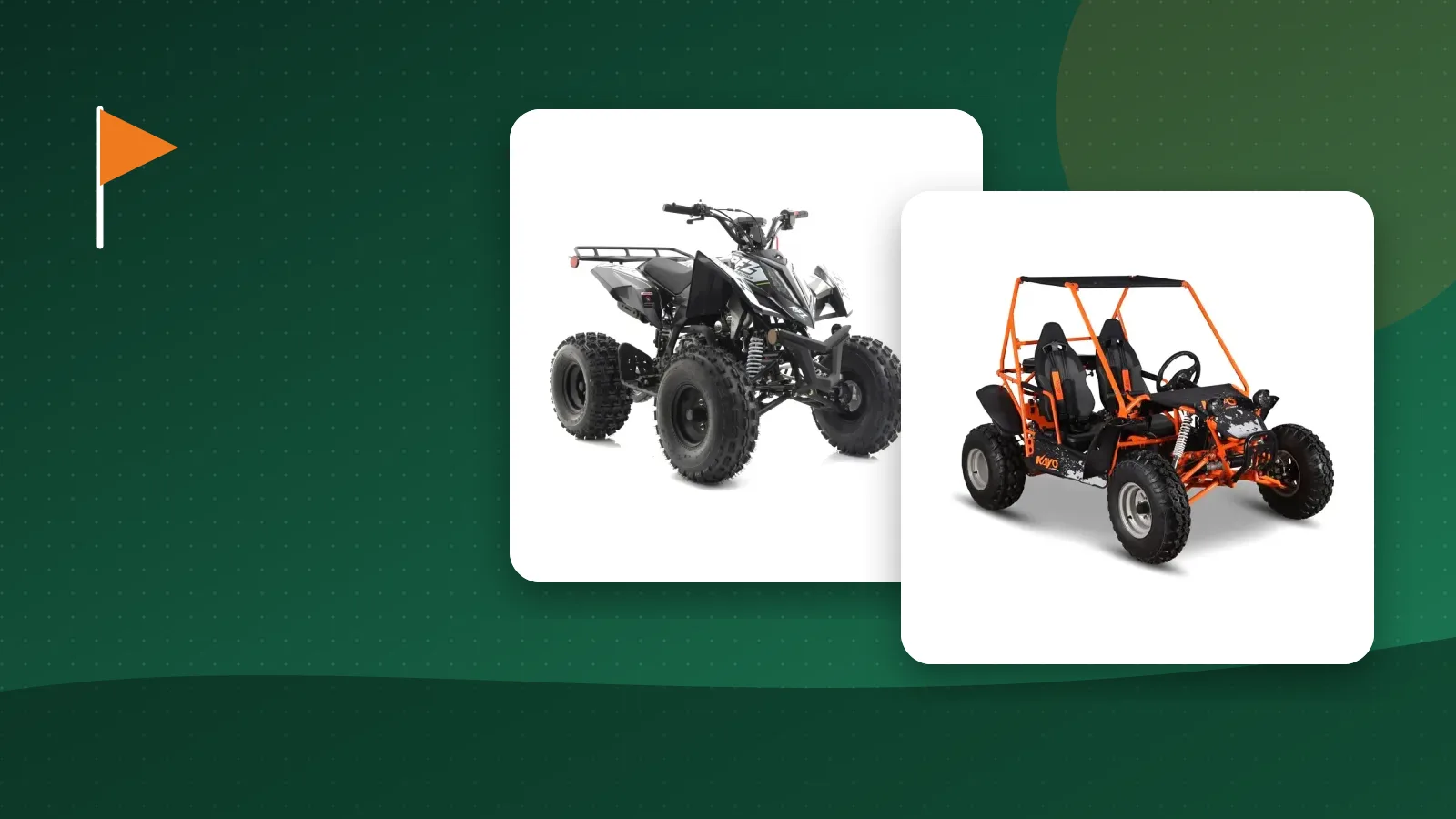
If you are weighing up an ATV against a UTV, you are really asking a practical question: do you want to sit on the machine or in it? An ATV, or all-terrain vehicle, is what most Australians call a quad bike. You straddle a seat and steer with handlebars. A UTV, or utility task vehicle, is a side-by-side with a steering wheel, bucket seats and usually a cargo tray. They overlap in what they can do, but they differ in cost, carrying capacity, comfort and safety. This guide compares ATV and UTV on the points that matter and uses the models we list so you can see real prices.
The short version
Choose an ATV if you want a lighter, cheaper, nimbler machine that is easy to store and transport and you mainly ride alone on tracks and paddocks. Choose a UTV if you want to carry passengers or heavy loads, want protection from the weather and a roll cage and are happy to spend more. Neither is better in every case. The right answer depends on your work, your land and your budget. Our mini quads and ATVs and side-by-sides and UTVs pages list both types.
What is an ATV?
An ATV is a small, single-rider or rider-and-passenger machine with four large low-pressure tyres, handlebar steering and a saddle seat. You shift your body weight to help it turn and climb. ATVs range from small youth models to large utility quads with racks front and rear. For background on the machine see the all-terrain vehicle article on Wikipedia. In our range, the Apollo Commander 110cc automatic at $1,959 and the Apollo RFZ Falcon 140cc automatic at $2,547 (listed at 100 kg and 55 km/h) sit at the recreational end, while the Kayo Bull 125 farm quad at $2,351 is built for farm tasks. At the bigger end, the Crossfire X400 with a 500cc engine is listed at $7,839 and the Crossfire X600 4WD utility ATV is $9,789.

What is a UTV?
A UTV, also called a side-by-side, seats two or more people next to each other, steers with a wheel, has pedals for throttle and brake and normally includes a cargo bed. Most have a roll cage and seat belts. They are heavier and more stable than ATVs and can carry more. Read the general description in the utility vehicle article on Wikipedia. In our range, the Hammerhead Mudhead SE at $3,429 and the Kayo S150 side by side at $4,213 sit at the entry end. The Crossfire 400GT farm side-by-side is $11,231 with a 400cc EFI engine, and the Polaris Ranger 500 is $15,675 with a 567cc engine. The Kubota RTV520 at $19,105 is listed at 625 kg with a 514cc engine and a top speed of 40 km/h. The Yamaha Viking SE seats three and is $23,764.
Seating and carrying capacity
This is the clearest difference. An ATV carries one rider, and some larger models allow a passenger, but the machine is built around solo use. Loads sit on front and rear racks, which suits fencing gear, a feed bag or a small toolkit, but not much more. A UTV carries two or more people in proper seats and has a cargo tray that can handle heavier loads, tools, feed and gear. If you regularly take a family member, a worker or a dog with you, or you move a lot of material, a UTV is the better tool.
Safety and protection
UTVs have the edge on protection. A roll cage, seat belts and a cabin-like layout protect occupants better than an open saddle, and many have a windscreen or roof. ATVs have no such structure, so the rider is exposed in a rollover, and rollover is one of the main hazards on quad bikes. Safe Work Australia's quad bike safety page sets out the risks and the controls for workplaces, and the WorkSafe Victoria quad bike page does the same. Standards and rules for quad bikes have changed in recent years, so check the current requirements for your state or territory if you buy for work.
Whichever you choose, wear a helmet, use seat belts where fitted, never carry more people than the machine is designed for and keep speed down on slopes and rough ground. Do not let children ride adult-sized machines. If a child will ride, see our child's off road buggy guide for suitable youth models.
Cost: purchase and running
ATVs are cheaper. Our recreational quads start under $2,000 and farm quads sit between roughly $2,300 and $3,900, with large utility quads reaching about $9,800. UTVs start around $3,400 for entry side-by-side buggies and climb to $15,000 to $30,000 for well-known utility brands. Running costs follow the same pattern: an ATV uses less fuel, needs fewer parts and costs less to service, while a UTV has more components, larger tyres and a heavier drivetrain. Insurance, registration where required and servicing add to the total, so ask about them before you decide.
Electric options exist too. The Crossfire E5 electric UTV is a two-seater at $11,759. See our electric off-road UTVs page for the category and consider whether quiet running and low servicing suit your property.
Terrain and handling
An ATV is nimble. It slips between trees, climbs narrow tracks and can be moved by hand more easily if it gets stuck. A UTV is wider and heavier, so it needs more room to turn, but it is more stable on side slopes and over bumps. In sand, mud and steep gullies, the weight and width of a UTV can help or hinder depending on the ground, and in tight scrub an ATV may be the only thing that fits. Tyre choice matters more than the vehicle type on slippery ground. See our off-road parts for tyres and accessories.
Transport and storage
An ATV fits on a small trailer or in the back of a ute with the right ramp. A UTV is longer, wider and heavier, so you need a bigger trailer or a flat-deck, and loading requires strong ramps and tie-downs. Check the weight of the machine against your trailer and tow vehicle. Our trailers, tie-downs and ramps page lists the basics, and our guide to trailering a golf cart explains loading principles that apply to any heavy machine.
Which suits which job?
- Checking stock and fences alone: an ATV is fast, light and cheap to run.
- Hauling feed, tools or fencing materials: a UTV with a cargo tray is more practical.
- Carrying passengers or family: a UTV, with proper seats and belts.
- Recreation on tracks: either, depending on whether you prefer the feel of riding or driving.
- Tight scrub or narrow trails: an ATV.
- Wet weather and long days: a UTV with a roof or screen is more comfortable.
Related reading
Our wider guide to UTVs, side-by-sides, ATVs and dune buggies explains how all four types fit together, and our ATV buggy guide looks at the in-between machines. If you are leaning towards a recreational buggy instead, see our off-road dune buggy guide.
Three typical situations
A hobby farmer with a small block, a few animals and a lot of fence checking usually does well with a small farm ATV such as the Kayo Bull 125. It is cheap to buy, cheap to run and fast for solo jobs. A family on acreage who want to carry kids, picnic gear and tools around the property are better served by a side-by-side, with real seats and belts. A tradesperson or landholder who hauls feed, posts and equipment every day needs the cargo bed and the load rating of a larger UTV, and should look at the Crossfire or Polaris models in our range.
Rules, licensing and insurance
Rules differ between states and territories, and they can differ between private property, public land and farm work. Registration, helmet laws, age limits and safety requirements for quad bikes and side-by-sides are not the same everywhere, and they change over time. Ask your state road authority and your insurer what applies to you before you buy, and check whether your property or farm insurance covers recreational and work use of the machine. A short phone call can save a lot of trouble later.
Buying from Buggies For Sale
All prices are in Australian dollars including GST. We confirm stock and freight before you pay and deliver Australia-wide. Payment is by bank transfer (Osko or EFT), PayID or crypto, with 10% off automatically at checkout when you choose crypto. The minimum order is $250, freight is free over $1,000 to major metro and depot corridors and a flat $95 applies below that. Call +61420128746 or message us on WhatsApp and describe your property and what you need to carry, and we will help you choose between an ATV and a UTV.
Bottom line
ATV vs UTV is a decision about people, loads and money. An ATV is the lighter, cheaper and nimbler choice for one person on tracks and paddocks. A UTV costs more but carries passengers and cargo, offers better protection and is more comfortable on long days. Start with who and what you carry, then check your terrain, transport and budget, and the answer is usually clear.


