Buying guides · 10 min read
Shuttle Buggy Guide: Choosing a Cart to Move People on Site
Shuttle buggy guide for Australian resorts, estates and farms: 4, 6 and 8 seat carts, electric or petrol, models from $12,730. Compare and enquire today.
By the Buggies For Sale team · Updated
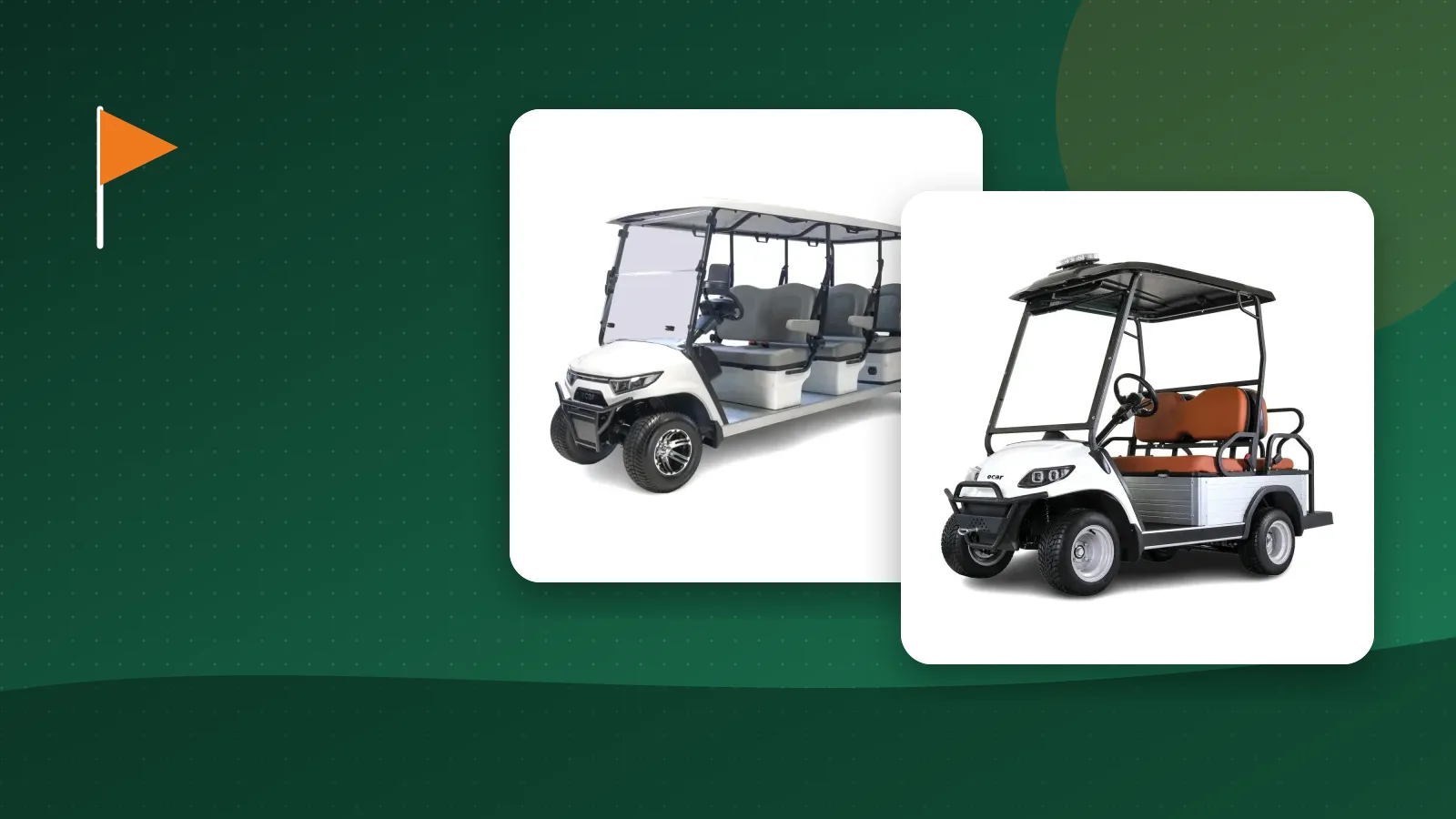
A shuttle buggy is a small, low-speed vehicle used to move people around a site: guests at a resort, residents on an estate, visitors at a caravan park, staff at a winery or workers on a large property. Most shuttle buggies are golf-cart based, with four, six or eight seats and a roof, and they are chosen because they are quiet, cheap to run and easy to drive. This guide explains what to look for when you choose a shuttle buggy in Australia, how the options in our range compare and what to plan before you order.
All prices are in Australian dollars and include GST. Specifications come from the product pages, and if something is not stated there, we have not stated it either. Ask us for confirmation before you buy.
What is a shuttle buggy?
The term has no formal definition, but it nearly always means a multi-seat cart that runs a loop or a route on private land. Unlike a single golf cart for personal use, a shuttle buggy is expected to run most of the day, carry changing passengers and stay reliable with little attention. That favours simple drivetrains, comfortable seating and a design that is easy for staff to drive.
Our utility and 4-seater golf carts page lists the multi-seat carts we carry, and the golf carts hub shows the whole range, including two-seat models. For background on the cart type, the golf cart article on Wikipedia outlines how these vehicles developed.
How many seats do you need?
Start by working out how many passengers a typical trip carries, then add a margin for peak times. Four seats suit a small estate, a cafe or a family property. Six seats suit mid-sized resorts and larger caravan parks. Eight seats suit venues that move groups, such as weddings, tours or event sites. A cart that is too small means extra trips and wasted time, while an oversized cart is harder to park and handle in tight lanes.
Our range includes the ECAR Lithium IKON HD 4S at $12,730 for four seats, the ECAR Lithium Magnum 6S 6 Seat at $18,414, and the ECAR Lithium Magnum 8S 8 Seat at $20,374. You can compare the full lineup on the ECAR brand page.

Electric or petrol shuttle buggies
Electric shuttle buggies are the most common choice for sites where noise and fumes matter. They are almost silent, cost little to run and need less routine maintenance. Lithium models charge faster and are lighter than lead-acid carts, though they cost more to buy. Check the listing for battery details and ask us for charging time and expected range on your preferred model.
Petrol shuttle buggies suit long, continuous duty and sites without easy charging. The Club Car Onward Petrol Golf Cart is listed at $26,950 and suits users who need quick refuelling. Browse the petrol golf carts and electric golf carts pages to see both sides. Many sites choose electric for the guest-facing routes and petrol for heavier back-of-house work.
Comfort and presentation
Guests judge a site by how it feels. Look at seat padding, handholds, step height and the way the cart rides. A good roof and a windscreen keep passengers dry, and side curtains help in cooler weather. Seat covers keep upholstery looking tidy and are quick to replace, and our seat covers and comfort page lists options. Branding is easy to add with decals or colour choices, and a clean, consistent fleet looks professional.
Safety for passengers and drivers
A shuttle buggy is a low-speed vehicle, but accidents still happen, especially with children and on slopes. Set a clear rule that passengers remain seated, keep hands and feet inside, and never ride on the rear or load bed. Brief drivers on route, speed limits and weather conditions, and check seat belt and handhold fittings if the cart has them. Plan pedestrian crossings and mark the route.
If the buggy is used in the workplace, employer duties under workplace health and safety law apply. Your state regulator, such as SafeWork NSW, publishes guidance on safe vehicle use at work.
Legal use and insurance
Most shuttle buggies are used only on private land. If your route crosses a public road, a shared path or a car park open to the public, rules differ by state and council, and you must check with the relevant authority before you buy. Do not assume that a golf cart can be driven on a public road. We are not insurers, so speak to your own insurer about cover for guests, drivers and the vehicle.
Running costs and servicing
The main costs are the battery or fuel, tyres, brakes and routine servicing. Electric carts need basic checks: tyres, brakes, steering, lights and the battery system. Lithium packs need little maintenance, while lead-acid packs need watering and cleaning terminals. Ask about service intervals and who can carry out warranty work in your region. For parts and repair questions see our repairs and servicing page.
A site that depends on its buggies for guest transport should keep a spare set of key consumables and know how long parts take to arrive. A cart that waits three weeks for a brake part can leave a service stranded.
Charging and storage
Plan a safe, dry place to park and charge the fleet. A charger needs a suitable power point, and a number of carts charging at once draw serious current, so have an electrician check the circuit. Chargers are listed under chargers and conversion kits. Keep the area ventilated and clear of clutter. If you plan to expand the fleet later, leave room for more bays.
New or used for a shuttle fleet
New carts give you a warranty, a uniform look and predictable battery life. Used carts cost less and can fill a seasonal gap, but they vary in battery health and wear. The used golf carts page lists second-hand carts with a note on condition. For a fleet, buying matching new carts simplifies parts and training, while a mix of new and used works for sites with seasonal demand.
Delivery and payment
Orders over $1,000 ship free to major metro and depot corridors, and a flat $95 applies below that, although carts will normally exceed it. We arrange freight to your postcode and confirm it before payment. The minimum order is $250. We accept bank transfer (Osko or EFT), PayID and crypto, and a 10% discount is applied automatically if you choose crypto at checkout. We do not offer card payments or invoices at checkout. For a multi-cart order, call us on +61420128746 to discuss staging deliveries.
Planning the route and the stops
Before you buy, walk the route you plan to run. Note the gradients, surface changes, corners, crossings and low branches, and measure the narrowest point. Plan where passengers will board and leave, and make sure those points are flat and clear of traffic. Think about what happens in the rain or at night. Lights, a windscreen and good tyres matter more on a shuttle than on a weekend golf cart. If the route includes steep sections, ask about braking performance and hill-climbing ability, and make sure the cart is rated for your passenger load.
Signs and speed limits keep guests and staff safe. A simple painted line and a clear speed rule can prevent most problems on shared paths. Train drivers to give way to pedestrians and to stop completely before loading or unloading.
Fleet management basics
If you run more than one cart, keep a simple register. Record the purchase date, serial number, service dates, battery condition and any damage, and rotate carts so that no single cart does all the work. Label keys and keep them locked away. Set a charging routine so that every cart is ready at the start of the day, and check tyres, brakes and lights at the start of each shift. A clean, well-kept cart tells guests that the whole site is well run.
Accessories that help a shuttle service
Useful additions include a roof and windscreen for weather protection, a bag rack or tray for luggage, grab handles for passengers, a horn or warning light and seat covers that clean easily. Browse our golf cart accessories for options, and ask us whether a given accessory fits your chosen model. For stability and safety, never add accessories that block the driver's view or overload the cart.
Questions to ask a supplier
Ask how many carts they can supply and how quickly, whether matching colours and trims are available, and what the warranty covers for commercial use. Ask whether staff training or handover is available, how spare parts are supplied and what happens if a cart is off the road. Ask for the charger details, charging time and the expected battery life under daily use, and ask for those answers in writing. A supplier who is clear on these points is far easier to work with over the life of a fleet.
Bottom line
A shuttle buggy works best when the seat count, power type and comfort match your site, so start with passengers, route and charging. Compare the 4, 6 and 8 seat carts, check the legal position for your route, and plan servicing before you order. Browse the utility and 4-seater golf carts or contact us and we will help you choose. If you need a rougher machine for tracks and paddocks rather than paths, the off-road buggies range is the better place to look.


