Buying guides · 9 min read
Golf Buggy Size Guide: Folded Size, Weight and Fit for Your Car and Bag
Golf buggy size explained: folded size, weight, wheel size and bag fit for push, electric, remote and ride-on buggies. Measure first, then shop with us.
By the Buggies For Sale team · Updated
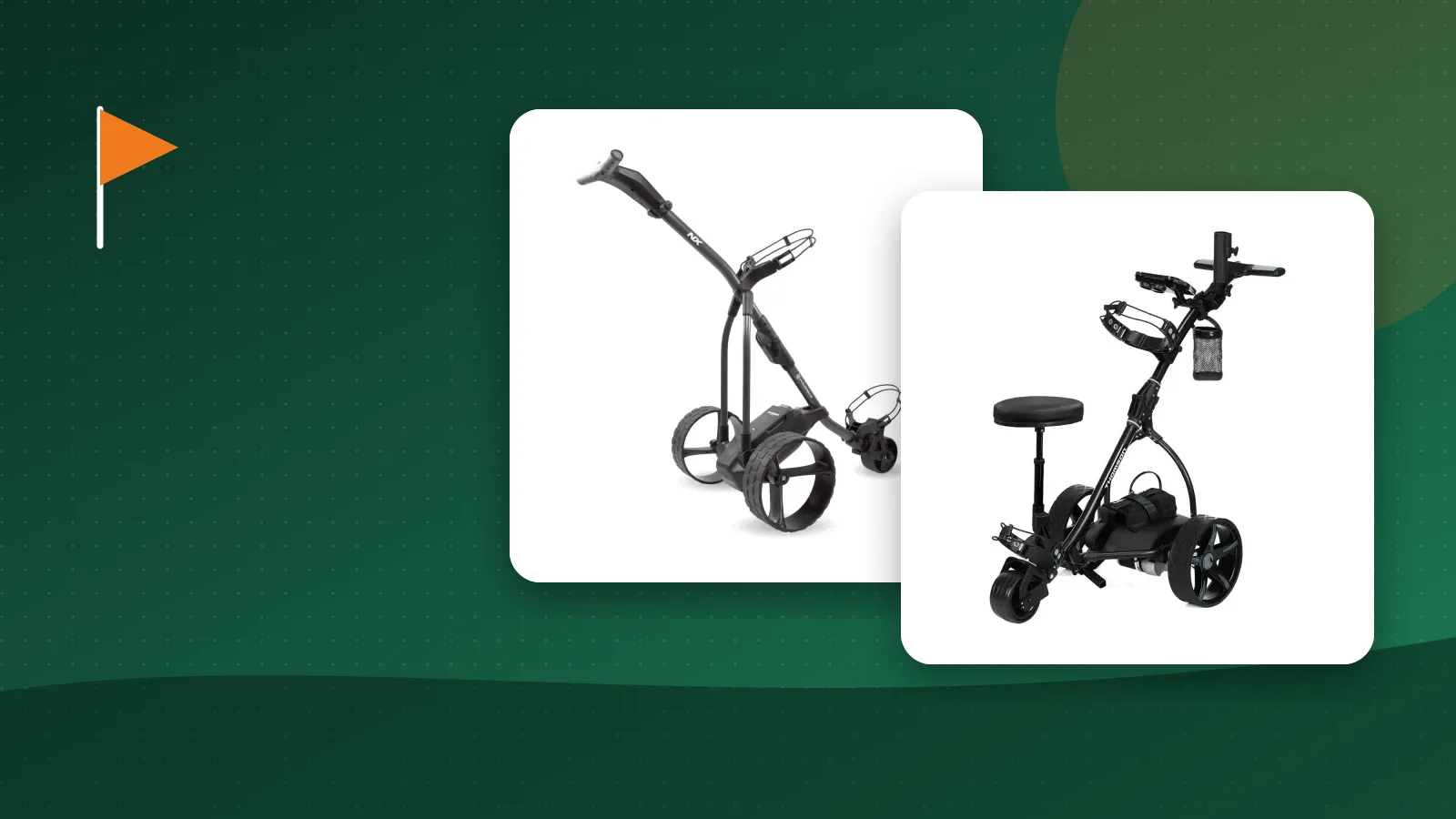
Golf buggy size is one of those details that does not feel important until the day your new buggy will not fit in the boot. Size is more than length and width. It covers folded size, weight, wheel diameter, how a bag sits on the frame and, for ride-on models, how much room there is for a driver. Measure the wrong thing and you end up with a buggy that is awkward to lift, impossible to store or uncomfortable on the course. This guide explains every size measure that matters when you choose a golf buggy, how the types we list compare on weight and what to check before you order.
The five sizes that matter
Golf equipment has changed a lot over the years, and the golf equipment article on Wikipedia gives a useful overview of how bags, carts and trolleys fit into the game. Background on the sport itself is in the golf article on Wikipedia. The buggy is the part of the kit you handle most, so its dimensions deserve the same attention as your clubs.
When golfers talk about golf buggy size they usually mean one of five things, and each one has its own question to answer.
- Folded size: will it fit in your car, locker or storage space?
- Weight: can you lift it in and out of the boot comfortably, every week?
- Open footprint: how wide and long is it when set up, and will it cope with narrow paths and gates?
- Wheel size: how well does it roll across rough ground, wet grass and slopes?
- Bag fit: does it hold your bag securely, whether it is a stand bag or a cart bag?
For ride-on models there is a sixth: driver space, meaning leg room, seat width and where the bag goes. We take each in turn below.
Folded size: measure your boot first
Most golf buggies fold, and folded size decides whether the buggy lives in your car comfortably. Many modern push buggies fold to a compact bundle, and electric buggies usually fold too, though the battery and motor add bulk. Before you shop, measure the boot opening, the depth and the height, and note whether the parcel shelf or rear seats limit the space. Then compare those numbers with the folded dimensions on the product page. If a listing does not show them, ask us before you buy. Our product pages remind buyers to check the folded size, the weight and how the bag attaches, and we think it is the best advice there is.
Allow for the rest of your gear too. Clubs, shoes and a trolley bag all need room, and a snug fit that works in an empty boot may fail once the rest of the kit is in. If you have a small hatchback or a sedan with a shallow boot, favour the compact folding designs in our push and pull trolleys, including the Tri-Lite Deluxe 3 Wheel. Our push trolley guide goes through the fold designs.

Weight: what the models we list weigh
Weight is the size measure that most affects daily life, because you lift it every time you play. The models with a listed weight give a useful picture of the range. The PowerBug NX lithium electric golf buggy is listed at 9.5 kg and the PowerBug NX DHC at 10.0 kg. The Thomson E5000 Pro is listed at 12 kg. The QOD Q2 remote control all-terrain buggy is listed at 35 kg, which reflects its larger frame and all-terrain build. The i-MotionCaddys IM4 ride-on is listed at 178 kg, which is a vehicle you transport on a trailer or ramp rather than lift.
If you have a bad back or shoulder, or you share the buggy with someone who does, pick a light model and test the lift before you commit. A buggy that is easy to carry encourages you to use it, and one that is a struggle sits in the garage. If weight is the main worry, an electric trolley with a lithium battery is usually lighter than one with an older lead-acid battery. Our guide to electric versus push golf buggies covers how battery weight affects the total.
Open footprint: paths, gates and cart paths
A buggy's open width decides whether it fits through narrow gates, between bunkers and across cart paths with bridges. Three-wheel designs are generally narrower at the front and steer easily, and our three wheel golf buggies page lists them. Four-wheel designs are very stable but wider. Check the course rules too, because some clubs restrict wheel layouts, widths or powered buggies. If you play at several clubs, ask each one before you buy.
Wheel size and ground conditions
Wheel diameter affects how easily the buggy rolls. Larger wheels pass over roots, ruts and wet grass with less resistance, while small wheels are more compact but struggle on rough ground. The PowaKaddy CT6 is listed with 8 inch wheels, a 230W motor and a 30V system. All-terrain remote buggies such as the QOD Q2 use a different build for rough conditions. Think about the course you play: firm links fairways need less wheel than a soft, hilly parkland course. Also think about the weight of the bag, because a heavy bag on small wheels is hard work.
Bag fit and the bag you carry
The best buggy in the world is useless if your bag will not sit on it securely. Stand bags, cart bags and tour bags have different bases and strap points. Check how the buggy holds the bag, whether the straps are adjustable and whether the bag base fits the cradle. A top-heavy bag on a small base can tip on slopes. If you carry a large tour bag with many pockets, favour a buggy with a wide base and two straps. Check accessories as well: umbrella holders, drink holders and phone holders have to fit the handle and frame. Browse our golf cart accessories for fittings.
Remote control buggies: bigger than they look
Remote buggies often carry a larger motor and battery, so they are heavier and bulkier than push models. That is not a problem if you plan for it. Measure the boot, plan how you will lift the buggy and check whether it breaks down into smaller parts. If the model allows it, removing the battery or wheels makes lifting easier. See our remote control golf buggies page for the range, and our remote control golf buggy buyer's guide for the pros and cons.
Ride-on buggies and carts: space for people
For ride-on buggies the size question changes. You are no longer asking whether the buggy fits in the boot but whether it fits you, your bag and your storage space. Check seat width, leg room, the position of the bag mount and the turning circle. A ride-on such as the IM4 is a small vehicle, listed at 178 kg with a 1200W motor and a 36V, 50Ah battery, so consider where you will store and charge it and how you will move it. See our ride-on seated golf buggies page, and if you need a single-seat cart for property use, read our single seat golf cart guide.

For full-size carts that seat two to eight people, size is a different discussion about length, width and garage space, and the models and seating options are in our golf carts range. Our guide to golf cars, golf carts and golf buggies explains where each term fits.
Storage at home
Measure your storage space as well as your boot. A folded push buggy stores in a cupboard, but an electric buggy with a battery needs a dry spot with a power point nearby. Do not leave a battery in a hot car or garage for long periods, since heat shortens battery life. A ride-on needs floor space, a charging point and a way to roll it in and out. Plan this before you order.
A simple size checklist
- Measure the boot opening, depth and height.
- Compare folded dimensions with those numbers.
- Check the weight against what you can lift comfortably.
- Check the open width against course gates and paths.
- Check wheel size against the ground you play on.
- Check the bag base and strap fit.
- Check where you will store and charge the buggy.
Size and the golfer
Handle height and reach matter as much as the buggy itself. A taller golfer pushing a low handle ends up stooped, and a shorter golfer reaching up to a high handle tires their shoulders. Look for adjustable handle height where you can, and try the buggy for comfort if you have the chance. Check the length of the buggy behind you as well: a long frame can clip your heels on a brisk walk, which is annoying over eighteen holes.
Buying from Buggies For Sale
All prices are in Australian dollars including GST. We confirm stock and freight before you pay, and we can help you check the size details with the supplier. Payment is by bank transfer (Osko or EFT), PayID or crypto, with 10% off automatically at checkout when you choose crypto. The minimum order is $250, freight is free over $1,000 to major metro and depot corridors and a flat $95 applies below that. Call +61420128746 or message us on WhatsApp with your boot size and bag type, and we will help you pick a buggy that fits. Start with the full golf buggies range.
Bottom line
Golf buggy size is about fit: fit in your car, fit in your hands, fit on your course and fit with your bag. Measure the boot, decide the weight you can handle, check the wheels and bag base and plan storage and charging. Do those five checks and the buggy you choose will be one you actually enjoy using.


