How-to · 10 min read
12 Volt Golf Cart Batteries: Lead-Acid, Lithium and What Fits
Confused by 12 volt golf cart batteries? Learn how 12V, 24V and 48V packs differ, lead-acid versus lithium, and which lithium options we list. Enquire now.
By the Buggies For Sale team · Updated
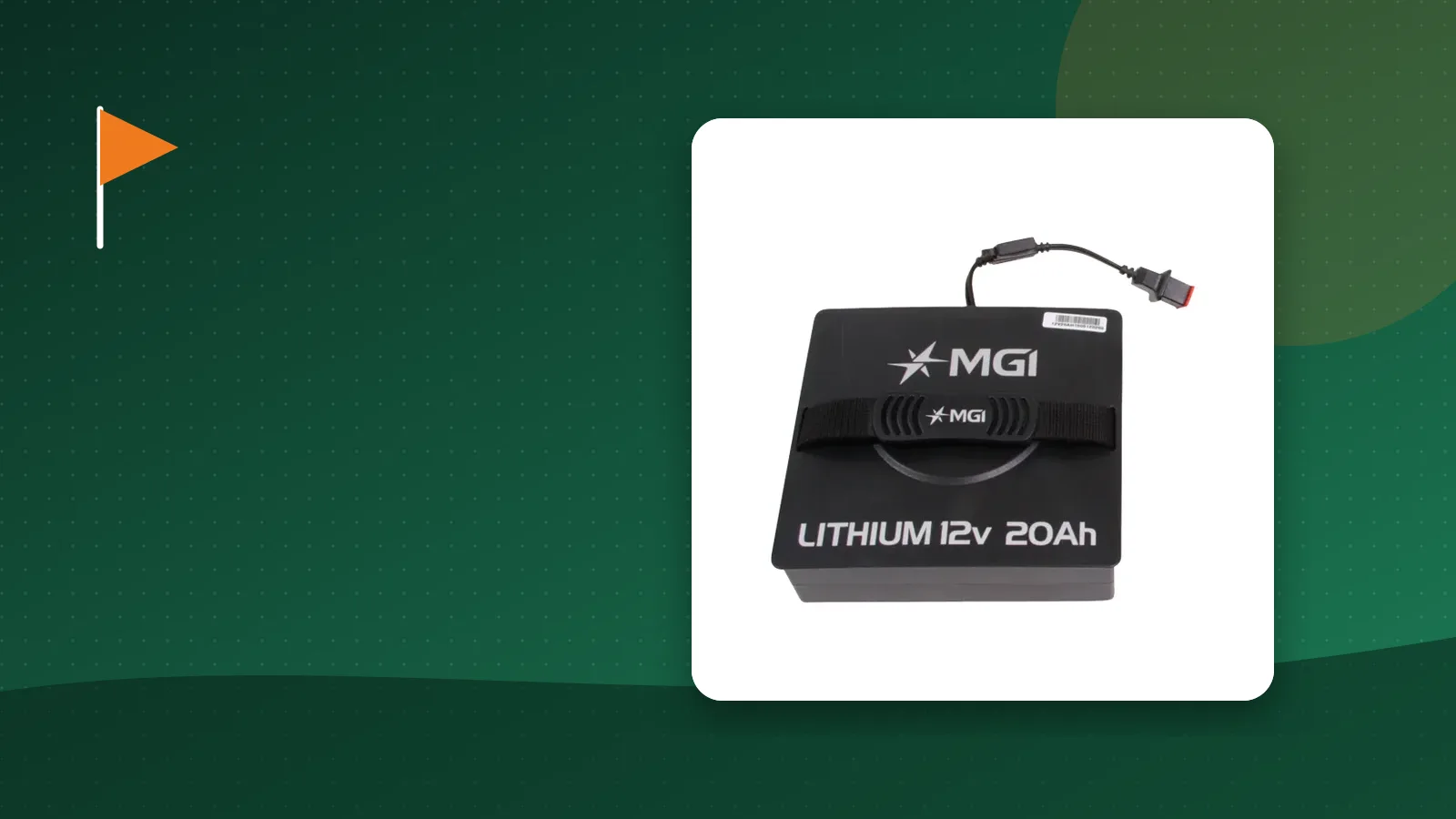
Shoppers searching for 12 volt golf cart batteries are usually trying to answer one of three questions. Is my golf cart a 12 volt system? Can I replace a worn lead-acid set with something better? Or do I actually need a small 12 volt battery for a golf trolley and not for a cart at all? The answers differ, and buying the wrong battery is expensive. This guide explains how 12 volt batteries are used in golf carts and buggies, what the choices are and which lithium options we list.
Prices are in Australian dollars including GST, and every specification is taken from the product page. Fit is critical with batteries, so always confirm compatibility with us before you order.
What does 12 volt mean on a golf cart?
A 12 volt battery is a single unit with a nominal voltage of 12. Most full-size golf carts do not run on one 12 volt battery. They run on a larger system of 36 or 48 volts, which has traditionally been built by wiring several 12 volt (or 6 or 8 volt) lead-acid batteries together in series. For example, four 12 volt batteries wired in series make 48 volts. When people search for 12 volt golf cart batteries, they are often looking for these individual units to replace one or more of the set.
Check your own cart before you buy. Look at the label or the manual for the system voltage, count the batteries and note whether they are 6, 8 or 12 volt. Mixing batteries of different types or ages in one string shortens the life of the whole set, which is why replacing a single failed battery often disappoints.
Lead-acid or lithium?
Lead-acid batteries have long been the standard for golf carts. They are cheap to buy, widely available and familiar to every mechanic. They are also heavy, they need regular maintenance if they are flooded types and they lose capacity as they age. Lithium batteries cost more upfront but are lighter, are sealed and maintenance-free and hold their voltage better as they discharge. The lithium iron phosphate battery article on Wikipedia explains one common lithium chemistry in more detail.
The trade-off is cost against convenience. If you drive the cart occasionally, a lead-acid set may be enough. If you use it daily, want lower weight or want to avoid topping up water and cleaning terminals, lithium is worth a serious look. Our lithium batteries category lists everything we carry.
12 volt batteries for golf buggies and trolleys
Small golf buggies and electric trolleys use much smaller batteries than a golf cart, and 12 volt is common. In our range, the MGI Lithium 12V 20Ah Battery is $489 and the MGI Lithium 12V 299Wh Battery is $538. Both are listed as matched to MGI buggies, with sealed, maintenance-free lithium construction. Because they are made to fit MGI buggies, they are not a swap-in for a full-size golf cart.

If your MGI buggy uses a 24 volt system, the MGI Lithium 24V 13Ah Battery at $567.40 is the relevant option. Brand and model fit matters, so tell us which buggy you own and we will match the battery to it. You can see the full group of buggies on our MGI brand page.
48 volt lithium packages for golf carts
If your golf cart runs on 48 volts, you are looking at a different class of product. Our Pro-Li packages are listed as 48V lithium battery packages for specific carts. The Pro-Li Core 48V 105Ah package for Club Car Precedent is $3,625, and the Pro-Li Plus 48V 150Ah version is $4,115. Similar packages are listed for EZGO RXV, Yamaha models and ECAR carts, and each is matched to the cart named in the product title.
These packages replace a bank of lead-acid batteries with a single lithium unit. They are a serious investment, so check the details with us and with a qualified installer. Our golf cart chargers and conversion kits page covers the related parts, and the charger must match the battery chemistry.
Can you mix 12 volt batteries?
Do not mix old and new lead-acid batteries in a series string, because the weakest battery limits the whole set and the new one wears out faster. Do not mix lead-acid and lithium. Do not wire batteries of different capacities together. If a single battery has failed in a lead-acid set, it is usually worth testing the others and considering a full replacement, which is why many owners switch to a complete lithium package instead.
How to work out what you need
Follow these steps. First, identify the cart or buggy: make, model and year. Second, find the system voltage from the label or the manual. Third, count the batteries and note their voltage and amp-hour rating. Fourth, check whether the battery sits on board or off board and how it is connected, since the connectors and the physical size matter. Fifth, send us the details and ask which of our products fits. We will say plainly when we do not have a fit rather than sell you a battery that will not work.
Capacity: amp-hours and watt-hours
Battery capacity is shown in amp-hours (Ah) or watt-hours (Wh). Watt-hours equals volts multiplied by amp-hours, so a 12 volt, 20Ah battery holds about 240Wh, and a 24 volt, 13Ah battery holds about 312Wh. A higher number gives more range or more rounds between charges. Compare batteries on watt-hours when the voltages differ, and remember that real range depends on the load, the terrain and the temperature.
Charging and care
Use the charger that matches the battery. A lead-acid charger can damage a lithium battery, and the reverse is also true. Charge in a dry, ventilated place and do not leave a battery in extreme heat. For lead-acid batteries, check the water levels in flooded types and keep the terminals clean. For lithium batteries, follow the maker's guidance about storage, and avoid leaving them completely flat for long periods. Our golf cart chargers page lists chargers for the products we carry.
Safety
Batteries store a lot of energy, so treat them with care. Disconnect the main negative lead before working on a cart, wear eye protection, keep metal tools away from terminals and never short a battery. Lead-acid batteries contain acid and give off gas when charging, so ventilation matters. Lithium batteries should not be punctured, crushed or exposed to heat. If a battery swells, smells or gets very hot, stop using it. For the fitting of a large lithium package, use a qualified installer, as the product pages advise. Old batteries should be recycled, not thrown out, and your local council or battery retailer can point you to a collection point.
Signs a golf cart battery is wearing out
Batteries rarely fail overnight. The cart may feel sluggish on hills, the range between charges drops, the charger runs longer than it used to or the voltage sags quickly under load. With lead-acid batteries you may see swelling, corrosion on the terminals or a battery that will not hold a charge. If you notice any of these, have the batteries load tested before you spend money. A single weak battery can mislead you into replacing the wrong part, so test the whole string and the connections as well as the individual units.
Loose or corroded cables cause many apparent battery problems. Clean the terminals, tighten the connections and check the cables for heat damage first, because that costs almost nothing.
Weight and handling differences
A full set of lead-acid batteries can weigh well over a hundred kilograms in total, and that weight affects the cart. A lithium package is far lighter, and less weight generally means less load on the tyres and suspension, though we cannot promise a specific result for your cart. For a small golf buggy, weight matters even more, because you lift it in and out of the car. A lithium 12 volt battery can make a noticeable difference to how easily you handle the buggy.
When to ask for help
If you are unsure of your cart's voltage, if the batteries are in an unusual layout or if you are thinking about converting from lead-acid to lithium, ask before you buy. The right package depends on the cart, the controller and the charger, and a mismatch can cost far more than a quick phone call. Tell us the make, model and year and send a photo of the battery compartment and the charge port if you can. That is usually enough for us to say what fits.
Buying from us
We confirm stock and freight to your postcode before you pay. Orders over $1,000 ship free to major metro and depot corridors, and a flat $95 freight charge applies below that. The minimum order is $250, so a single small battery may need to be paired with a charger or accessory to reach it. You can pay by bank transfer (Osko or EFT), PayID or crypto, and choosing crypto at checkout gives a 10% discount automatically. Call +61420128746 if you want help matching a battery to your cart or buggy.
Bottom line
12 volt golf cart batteries mean different things in different places. For a full-size cart, 12 volt units are usually part of a larger 36 or 48 volt string, and lithium packages are the modern alternative. For a golf buggy or trolley, a 12 volt lithium battery may be the whole power source. Identify your system voltage, match the battery to your model and use the right charger. See the full lithium batteries range or contact us and we will help.


