How-to · 9 min read
Distilled Water Golf Cart Battery Guide: When, How and How Much
Distilled water golf cart battery guide: why tap water is wrong, when to top up, safety steps and why lithium needs none. Read it and shop lithium batteries.
By the Buggies For Sale team · Updated
If your golf cart runs on traditional flooded lead-acid batteries, distilled water is the single most important maintenance item you will buy. Flooded batteries lose water every time they charge, and if the liquid level drops below the plates, the battery is damaged for good. This guide explains why distilled water is used, when and how to top up, what to avoid and why a lithium upgrade removes the job entirely.
This is general guidance. Your cart and battery maker's manual is the final word on levels and charging, so follow it where it differs. Prices quoted for our products are in Australian dollars and include GST, and specifications come from the product pages.
Why golf cart batteries need distilled water
A flooded lead-acid battery stores energy through a chemical reaction between lead plates and a sulphuric acid solution. When the battery charges, some of the water in the solution is split into hydrogen and oxygen gas and escapes through the vents. The acid stays behind, so the water has to be replaced. The basics of the chemistry are outlined in the lead-acid battery article on Wikipedia.
The water you add must be pure. Tap water, bore water and rainwater contain minerals and salts, including calcium, magnesium, iron and chlorides. These coat the plates, create internal leakage paths and shorten battery life. Distilled or deionised water has the minerals removed, which is why battery makers specify it.
Which batteries need topping up
Only flooded (wet cell) lead-acid batteries have removable caps and need water. Sealed lead-acid types, such as AGM and gel batteries, cannot be topped up, and trying to open them can damage them. Lithium batteries contain no liquid electrolyte that needs topping up. If you are unsure, look at the top of the battery. Removable round caps usually mean a flooded battery, while a flat sealed top does not.
Many older carts in our used golf carts range use flooded batteries, and the product pages recommend confirming battery condition before you buy. Ask us which battery type a used cart has if the listing does not say.
How often to check the water level
As a guide, check a new flooded battery regularly during its first months so that you learn how quickly it loses water, then settle into a routine. Heat, heavy use and age all increase water loss. In hot weather or on a cart that is used every day, check more often. Keep a simple log with the date and how much you added, so you can spot a cell that is using water faster than the rest, which can point to a charging or battery problem.
Your battery manual will state an interval. If it differs from what we describe, follow the manual.
When in the charge cycle to add water
Timing matters. The liquid level rises when a battery is charged and falls when it is discharged, so adding water to a flat battery can cause it to overflow when it charges. The usual advice is to check the level before charging and add only enough distilled water to just cover the plates. Then charge fully, check again and top up to the level indicator or the level the manufacturer specifies. Never fill to the brim before charging.
Step by step: topping up safely
First, put on eye protection, gloves and old clothing, because battery acid burns skin and ruins fabric. Park the cart on level ground, switch it off and make sure the charger is disconnected. Clean the top of each battery with a damp cloth so that dirt does not fall into the cells when you open the caps. Remove the caps one at a time and look inside with a torch.
If the plates are exposed, add distilled water until they are just covered. Use a small funnel or a battery filler bottle to prevent spills and overfilling. After charging, top up to the level mark or about a few millimetres below the bottom of the fill well, as the maker states. Refit the caps, wipe up any spills and wash your hands. If you spill acid, rinse the area with plenty of water and use bicarbonate of soda to neutralise it on surfaces.
Mistakes to avoid
Do not use tap water or bottled drinking water, because neither is distilled. Do not add acid to a battery that is low on water. Acid does not evaporate, so water is the only thing that is missing. Do not overfill, since acid will bubble out and corrode terminals, trays and cart components. Do not leave caps off, and do not charge in a closed space, because charging releases hydrogen gas, which is flammable. Keep sparks and open flames well away.
Cleaning terminals and checking the pack
While the caps are off, inspect the terminals and cables. White or green corrosion on terminals can be brushed off with a mix of bicarbonate of soda and water, then rinsed carefully and dried. Make sure every connection is tight. Look for cracked cases, bulging or leaking cells and loose hold-down brackets. A battery that smells like rotten eggs or is very hot while charging needs attention from a qualified person. Keep the charger in good condition as well. Chargers are listed on the chargers and conversion kits page.
Signs your batteries are wearing out
Shorter range, slow acceleration on hills, a battery pack that needs water far more often than before and a charger that runs for a very long time are all signs of age. Uneven cell levels are another hint. Flooded packs often last several years with good care, but the life depends heavily on use, charging habits and heat, so we cannot promise a number. When the pack starts to fail, you have two options: replace like for like, or move to lithium.
The lithium alternative
Lithium golf cart batteries remove the water routine entirely. They are sealed, do not need topping up, and are lighter than a flooded lead-acid set. They also tend to hold voltage under load, which keeps the cart feeling stronger as the charge falls. They cost more at the start, so the value comes from saving the maintenance time and from avoiding future pack replacements. A lithium pack must be matched to your cart and charger, and the listings advise fitting by a qualified installer.
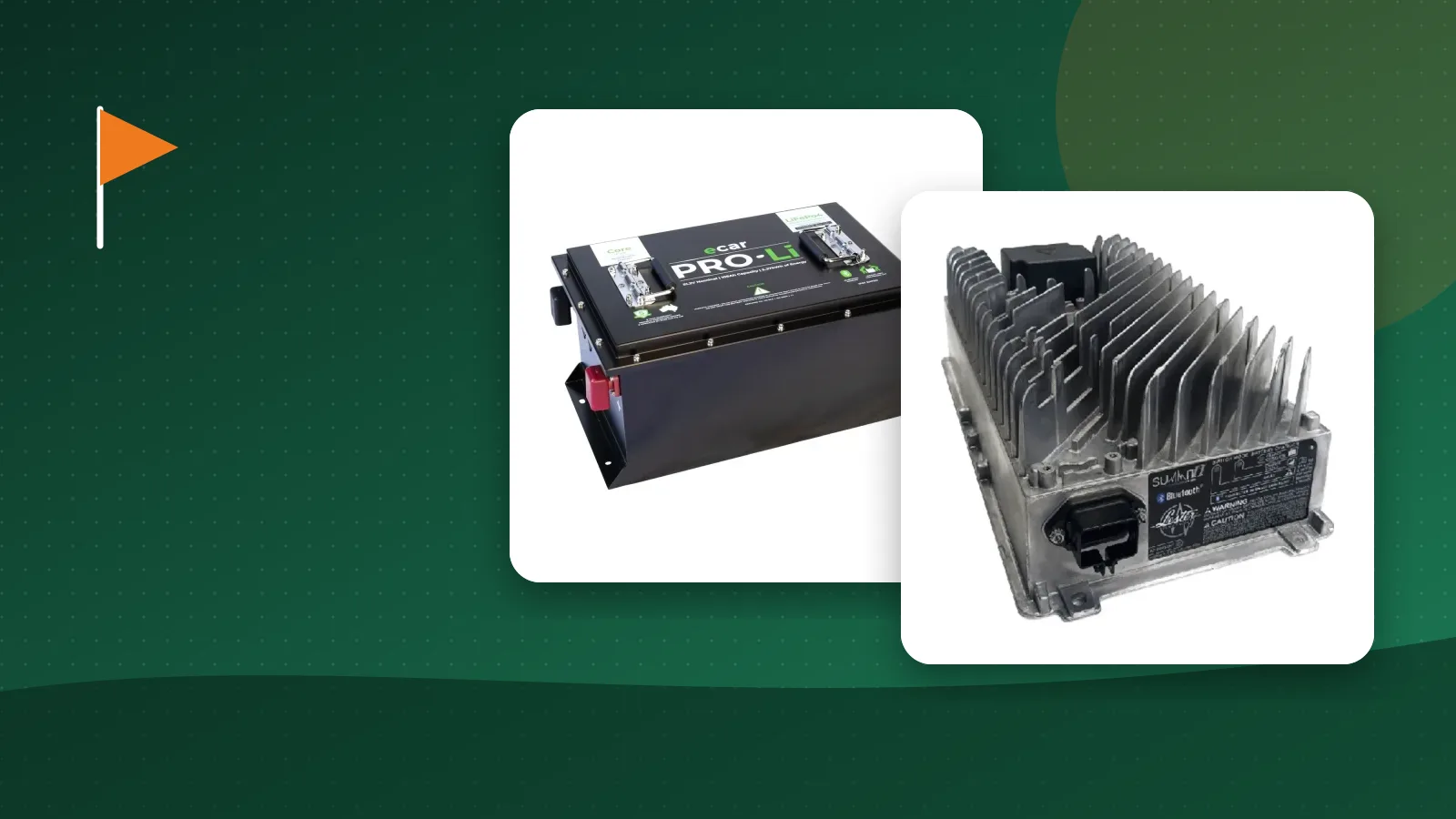
Our lithium golf cart batteries page lists packages by model. For example, the PRO-Li Core 48V 105Ah package for Club Car Precedent is listed at $3,625 and the PRO-Li Plus 48V 150Ah package for EZGO RXV is $4,115. A package for the ECAR 627 and Yamaha G29 is also listed. Check that the charger is suitable, for example a Lester Summit2 48V on-board charger at $587, or confirm compatibility with us before you order.

Disposing of old batteries
Old lead-acid batteries are hazardous waste and must not go in household bins. Take them to a battery recycler or a collection point, and ask the installer to take the old set when fitting new ones. Your state environment agency explains how to dispose of hazardous waste, for example the NSW EPA.
Delivery and payment
Orders over $1,000 ship free to major metro and depot corridors, and a flat $95 applies below that. The minimum order is $250. We accept bank transfer (Osko or EFT), PayID and crypto, and a 10% discount is applied automatically if you choose crypto at checkout. We confirm stock, fitment and freight before you pay, and we can help you check which package suits your cart.
Where to buy distilled water and how to store it
Distilled water is sold in supermarkets, hardware stores and automotive shops, usually in one or five litre containers. Check the label, because some products labelled as purified or filtered are not distilled. Store it in a clean, sealed container away from dust and sunlight, and keep it clearly labelled and out of reach of children. Do not reuse containers that held other liquids. A dedicated battery filler bottle makes topping up quicker and cleaner and reduces the chance of overfilling.
If you are unsure how much to buy, count your batteries and cells. A typical flooded golf cart battery has several cells, and every cell needs its own check. A pack of several batteries therefore has dozens of cells to inspect, so it is worth planning a routine and keeping a supply on hand.
Charging habits that reduce water loss
Water loss rises with overcharging and with heat. Use a charger that matches your battery type and voltage, and do not interrupt a charge cycle repeatedly. Park and charge in a cool, ventilated place when you can, and avoid charging immediately after a hard, hot run. If the pack seems to need water far too often, the charger may be set wrongly or a battery may be failing, which is a good reason to ask a qualified person to check it. A charger that is working properly will not boil the batteries.
Winter and storage tips
In cold weather, a battery that is only partly charged can be at risk, because the electrolyte is weaker and more likely to freeze in very cold climates. Most of Australia does not see those conditions, but alpine areas can. Whatever your climate, fully charge the pack before storing the cart, check the levels first and top up as needed, then charge again. Keep the terminals clean and disconnect any accessories that draw a small current when the cart is off.
Bottom line
For flooded lead-acid batteries, use only distilled water, add it at the right point in the charge cycle, never overfill and wear eye protection. If the routine is more than you want to manage, a lithium upgrade removes it. Browse the lithium battery range or call +61420128746 and tell us your cart model.


