How-to · 10 min read
Dune Buggy Sand Guide: Driving, Tyres and Care for Australian Riders
Dune buggy sand guide for Australia: tyre pressure, driving technique, where you may drive and cleaning, plus models from $3,429. Compare dune buggies today.
By the Buggies For Sale team · Updated
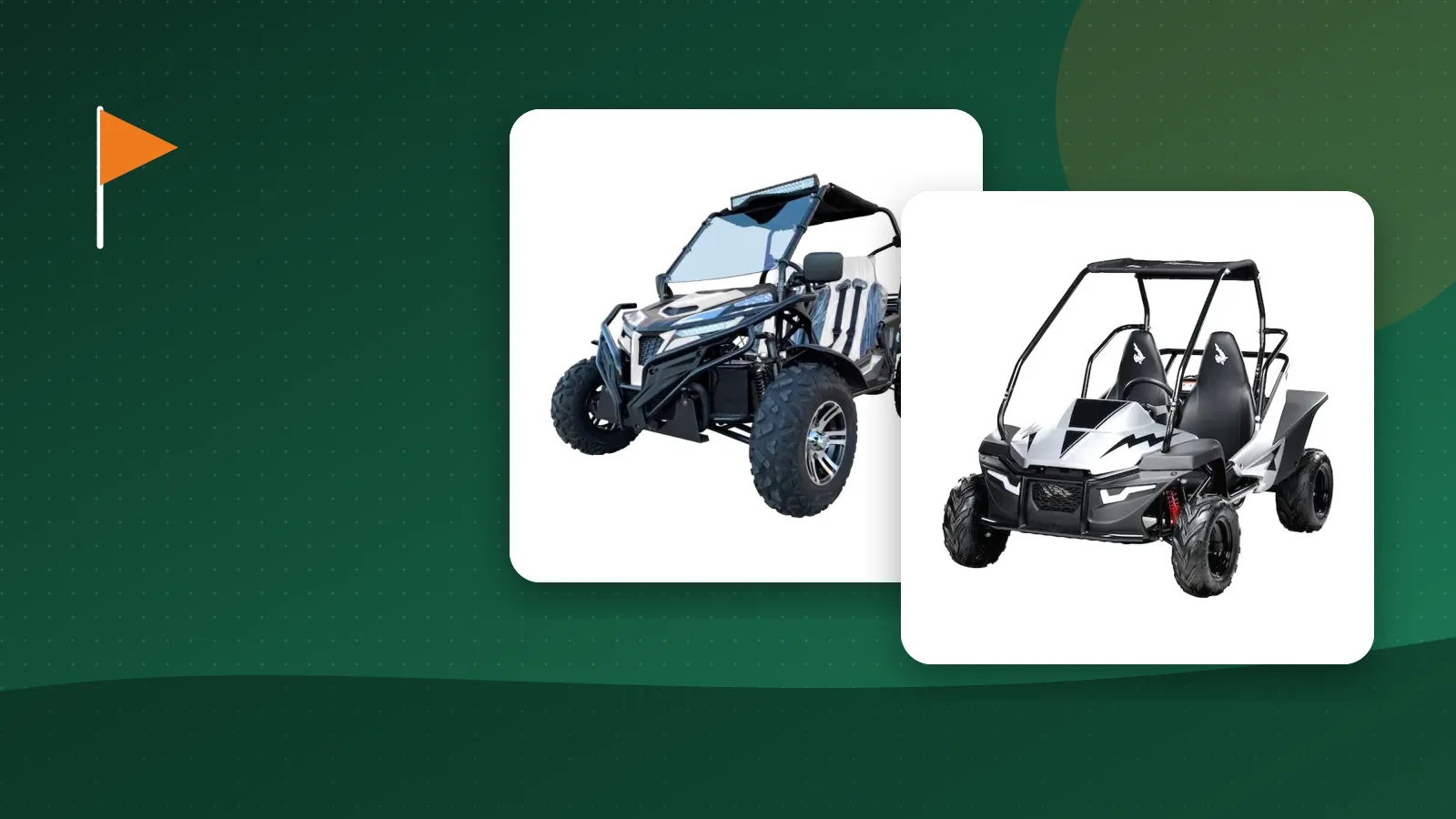
Sand is what dune buggies were named for, and it is also where beginners make the most mistakes. Soft sand is hard work for any vehicle. It drags on the wheels, hides ruts and holes, and gets into everything. A dune buggy that is set up and driven well will glide over sand that bogs down a heavier machine, but one with the wrong tyres, the wrong pressures or an impatient driver will dig in within minutes. This guide covers how to drive a dune buggy on sand, how to prepare it, where you may drive it and how to look after it afterwards.
All prices are in Australian dollars and include GST. Specifications come from the product pages, and where a page does not list a detail we have not stated it. Ask us if you need more information.
Why dune buggies suit sand
A dune buggy is light, with a tubular frame, wide tyres and a short wheelbase. Light weight is what keeps a vehicle on top of sand rather than sinking into it. Wide, soft tyres spread the load, and a low centre of gravity helps stability on slopes. The general concept is described in the dune buggy article on Wikipedia. If you are comparing machines, our dune buggies category lists the models we carry.
Where can you legally drive on sand?
Start here, because it is the question that matters most. In Australia, driving on beaches, dunes and coastal reserves is regulated, and many areas ban recreational vehicles entirely to protect vegetation, wildlife and other users. Where access is allowed, it often requires a permit, a registered vehicle or both, and may be limited to certain tracks and times. Rules differ between states, councils and land managers, so check with the land manager before you go.
Do not assume that a dune buggy sold for off-road use can be driven on a beach, even one close to your home. Private land you own or have written permission to use is the safest place to start, and organised off-road parks are another option. Never drive on dunes with vegetation, near nesting areas or around people.
Choosing a dune buggy for sand
For sand work, power, weight and tyres matter more than top speed. Our entry model, the Trailmaster Cheetah 175cc Dune Buggy, is listed at $4,557. The Trailmaster Cheetah 300cc Dune Buggy is $5,879 and gives you more engine for soft ground and hills. The Trailmaster Challenger 200 Buggy is $6,223, and the Hammerhead Mudhead SE Off-Road Buggy is $3,429.

If you expect to drive mostly on soft sand, a larger engine is the safer choice, because a small engine struggles to keep momentum. More detail on both makers is on the Trailmaster brand page and the Hammerhead brand page.
Tyres and tyre pressure
Tyres are the biggest single factor on sand. Paddle-style or sand-specific tyres give the best flotation, and standard off-road tyres work in firm sand. Lowering the tyre pressure widens the contact patch and helps the buggy float, but if the pressure is too low a tyre can roll off the rim. Many drivers drop pressure for the sand and re-inflate for the drive home. Follow the pressure range in your manual, and carry a gauge and a pump.
Do not guess at the right number, since it depends on the tyre, the load and the sand. Ask us for the tyre details on the model you are considering. Replacement tyres and wheels are listed on our off-road wheels and tyres page.
Driving technique on soft sand
Momentum is everything. Approach soft patches with steady speed, because stopping or slowing sharply lets the wheels dig in. Keep the throttle smooth. Spinning the wheels digs holes, and once the buggy is sitting on its frame it is hard to move. Steer with gentle inputs and avoid sharp turns at speed, which can roll a light vehicle. Read the surface ahead, looking for ruts, soft spots, hidden logs and drop-offs.
On slopes, drive straight up or down where possible. Crossing a steep dune slope sideways increases roll-over risk. If you start to slide, steer gently into the slide and avoid slamming the brakes. If you get bogged, stop, let the tyres cool and dig the sand away from the wheels rather than flooring the throttle.
Safety gear and group rules
Wear a helmet, eye protection and sturdy closed shoes, and use gloves and long clothing against sun and wind. Carry water, a first-aid kit, a recovery strap and a phone, and tell someone where you are going. Keep a safe distance from other vehicles because sand is hard to stop on. Never carry more people than the buggy has seats for, and keep children away unless they are seated and the vehicle suits their age and size.
Park managers set their own vehicle rules, so check the land manager's website before you go. For example, NSW National Parks publishes access and vehicle information for parks and reserves.
Heat, dust and sand in the engine
Sand and dust are the enemies of engines. Check the air filter before every run and clean or replace it often, because a clogged or damaged filter lets abrasive dust into the engine. Keep the cooling area clear, since a sandy, hot environment is hard on engines and belts. Watch for overheating, and stop to let the machine cool if it starts to run hot. If your model has a CVT or drive belt, check that it is in good condition and clear of sand.
Cleaning after the sand
Cleaning is not optional, especially if you have been near the sea. Salt corrodes frames, bolts, brake parts and electrical connectors. Rinse the buggy with fresh water, paying attention to the underside, suspension, wheels and brakes. Dry it, then lubricate the chain, pivots and cables as the manual states. Check bolts for looseness, because sand work shakes things free. Do not blast water straight into the air intake, ignition parts or electrical connectors.
Transporting your buggy to the sand
Most owners trailer their buggy to the riding area. Use rated ramps, secure the buggy at the proper tie-down points and check the trailer's load rating. Our trailers and tie-downs page lists transport gear, and winches and tow bars are useful for recovery. Carry a tow strap, a shovel and a set of traction boards or recovery tracks if you ride on soft ground.
Buying advice
Choose a buggy to match the sand you will drive on and the people you will carry. If you are unsure, tell us the terrain and riders, and we will point you toward a suitable model. Many buggies arrive part-assembled, and the product pages ask you to check assembly requirements. Confirm what is in the box, who handles warranty and how parts are supplied. Our off-road buggies hub lets you compare beyond dune buggies.
Delivery and payment
Orders over $1,000 ship free to major metro and depot corridors, and a flat $95 applies below that. Buggies normally exceed $1,000, so freight is free to those areas. The minimum order is $250. We accept bank transfer (Osko or EFT), PayID and crypto, and a 10% discount is applied automatically if you choose crypto at checkout. We confirm stock and freight to your postcode before you pay.
Planning a day on the sand
Check the weather, the tide and the access rules before you leave. A strong wind makes visibility poor and exhausting, and extreme heat is hard on machines and people. Take plenty of water, sun protection and a fully charged phone, and tell someone your route and return time. Carry a basic toolkit, a tyre repair kit, a tyre gauge and pump, a tow strap, a shovel and a first-aid kit. If you go with a group, agree signals and a meeting point in case of separation.
Fuel matters too. Soft sand uses more fuel than firm ground, so plan for a shorter range than you would get on the road, and carry fuel in approved containers if the machine's tank is small. Do not refuel a hot engine or smoke around fuel.
Respecting the environment and other people
Dunes and coastal vegetation are fragile, and driving over them can cause damage that takes years to recover. Stay on marked tracks, keep away from plants and nesting areas, and take your rubbish home. Be considerate of walkers, campers and fishers, and keep your speed down near people. Noise and dust carry, and a respectful approach protects the future of riding in an area. If an area is closed, it is closed. Do not assume that others' wheel tracks mean that access is allowed.
Common problems on sand and how to fix them
If the buggy overheats, stop in the shade, switch off and let it cool, then check the radiator or cooling area for sand and debris. If it loses power, check the air filter first, because a clogged filter chokes the engine. If a tyre comes off the rim at low pressure, re-seat it with a pump and raise the pressure before driving on. If the buggy gets stuck, avoid spinning the wheels. Dig out the sand around each tyre, lay down recovery tracks or a firm board, and move off gently. A tow from another vehicle is a last resort, and only with a proper strap attached to the correct recovery points.
Bottom line
A dune buggy on sand rewards patience: the right tyres, lower pressures, steady momentum and a thorough wash afterwards. First confirm where you may drive, then choose the buggy to match. Browse the dune buggies range or call +61420128746 to talk it through.


