Off-road guides · 8 min read
150cc Buggy Guide: What a 150cc Off-Road Buggy Can and Cannot Do
Is a 150cc buggy enough power? How 150cc and 175cc buggies compare with larger engines, who they suit and what to check before you buy in Australia.
By the Buggies For Sale team · Updated
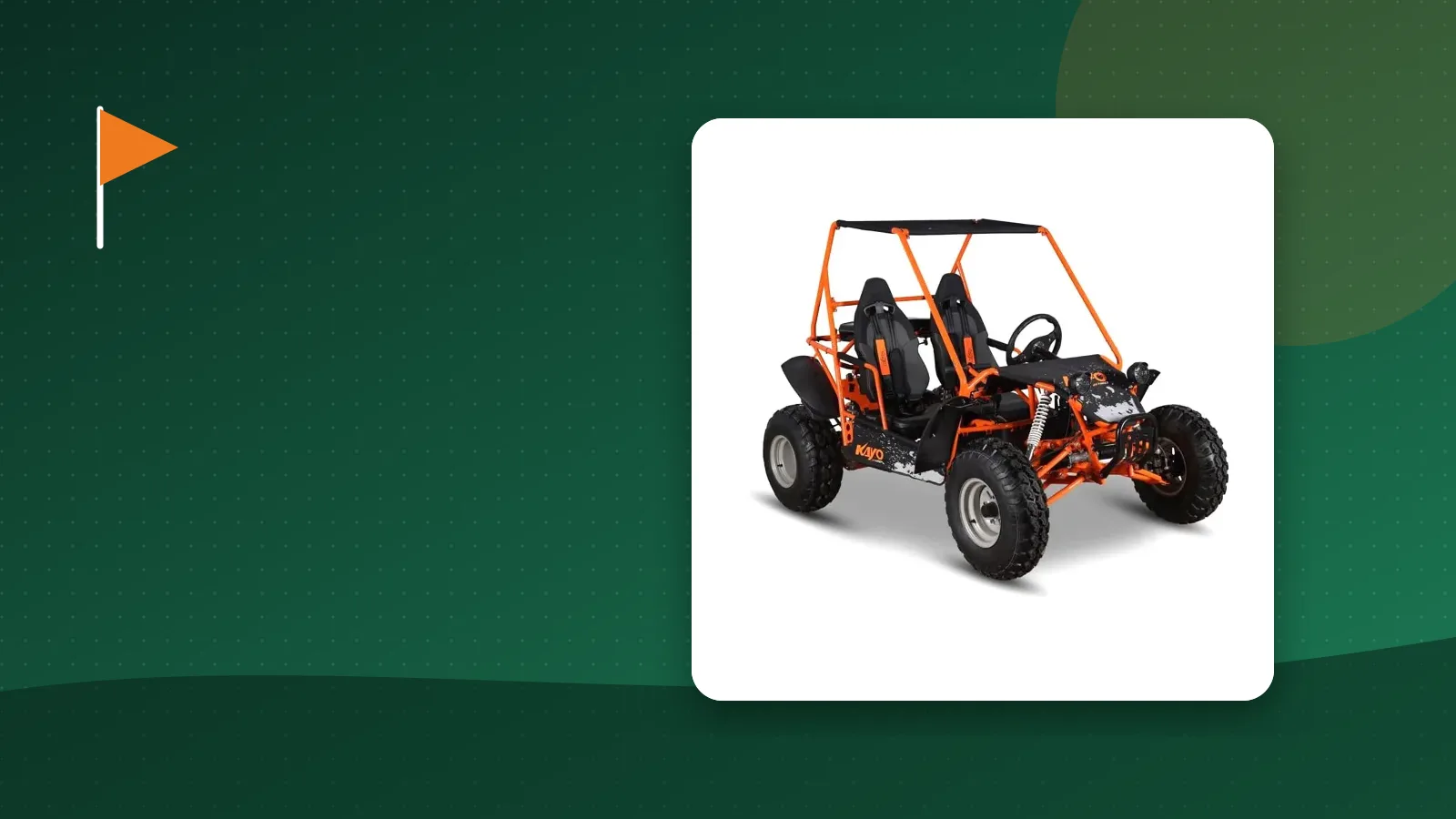
A 150cc buggy is one of the most common starting points for people who want an off-road buggy without spending on a large engine. The engine size, measured in cubic centimetres, describes the volume of the engine and gives a rough guide to power. This guide explains what a 150cc buggy can do, where it struggles, how it compares with larger engines and what to check before you buy one in Australia.
What does 150cc mean?
The number refers to the displacement of the engine: the total volume of its cylinders. A larger displacement generally means more power and torque, but engine design, gearing and the weight of the buggy all matter as much. A well-designed 150cc engine in a light buggy can feel lively, and a poorly matched engine in a heavy buggy will feel slow. You can read the general explanation in the engine displacement article on Wikipedia.
What can a 150cc buggy do?
A 150cc buggy is well suited to light recreational use on private land. It copes with flat paddocks, farm tracks, firm sand and moderate slopes, and it is usually easier to learn on than a more powerful machine. It is a good option for a hobby farm, a large yard, camping property or a family introduction to off-road driving, and it generally costs less to buy and run than a larger buggy.
Our Kayo S150 side-by-side buggy is the model in our range that is built around a 150cc class engine, and our Trailmaster Cheetah 175cc sits just above it.

Where a 150cc engine struggles
Small engines work harder when the load or the ground gets difficult. Expect less performance in these conditions:
- Long, steep climbs, especially with two adults on board.
- Soft, deep sand and mud where the buggy needs plenty of torque.
- Towing or carrying heavy loads.
- Sustained high-speed driving, where a small engine runs near its limit.
If you expect to do any of these regularly, consider a larger engine. The Trailmaster Cheetah 300cc has more power in reserve, and our guide to the Trailmaster Cheetah compares the two engines.
150cc versus larger buggies
- Price: smaller engines usually mean a lower purchase price and lower running costs.
- Learning curve: a smaller engine is more forgiving for newer drivers.
- Capability: larger engines handle hills, sand and loads better.
- Long-term use: if you will keep the buggy for years and use it heavily, paying a little more for extra power can be worthwhile.
The right choice depends on the terrain, the weight of the people and gear and how often you will use the buggy. If you are unsure, think about the hardest conditions you expect and choose with those in mind.
Seating and layout
Engine size is only one decision. Buggies also differ in layout: some have a dune buggy style with a roll cage and a bucket seat, while others have a side-by-side layout with a bench or two seats next to each other. A side-by-side layout is easier for shared driving and conversation, while a dune buggy layout feels more sporty. Our dune buggies and side by sides pages show both styles.
What to check before you buy
- Rider and passenger weight: check the load rating and seat count.
- Fuel and start system: confirm whether it has electric start, how the gearbox works and whether it has reverse.
- Assembly: ask whether it arrives assembled.
- Parts support: check that air filters, belts, tyres and other wear parts are available in Australia.
- Rules: off-road buggies are generally for private land. Check your state or territory rules and any land-owner conditions.
- Safety gear: budget for helmets and protective clothing.
Maintenance basics
Small engines are simple to maintain if you stay consistent. Change the oil on schedule, keep the air filter clean, check the chain or belt, inspect tyres and brakes before each ride, use fresh fuel and store the buggy dry. A short check before every ride catches most problems early.
Buying a 150cc buggy in Australia
We list our buggies in Australian dollars including GST, confirm freight to your postcode before you pay and ship orders over $1,000 free to major metro and depot corridors. If you want to talk through engine sizes, call 0420 128 746 or message us on WhatsApp and tell us the terrain, the riders and the budget.
Reading the specification table
When you compare buggies, engine size is only one line in the table. Look at the gearbox or transmission, whether the buggy has reverse, how it starts, the load rating, the number of seats, the tyre size and the ground clearance. A buggy with reverse is much easier to manoeuvre in tight spaces. Electric start is a convenience, especially for children and older riders. A higher ground clearance helps on rough tracks. Comparing these lines side by side gives a better picture than the engine size alone.
Learning to drive an off-road buggy
If you are new to off-road driving, treat the first few sessions as a learning exercise. Start on flat, open, firm ground. Learn how the throttle and brakes respond, practise slow turns and stops, and get used to how the buggy leans on a slope. Keep to a low speed until the controls feel natural, and never drive faster than you can safely stop. Teach everyone who will drive the buggy the same rules, including the basics of seat belts, helmets and keeping arms and legs inside the cage.
Terrain and technique
Different ground calls for different technique. On sand, keep a steady throttle and avoid sudden stops, which can bog the buggy. On mud, avoid deep ruts and keep momentum without spinning the wheels. On slopes, drive straight up or down where possible and avoid crossing steep side slopes, which can cause a rollover. On loose gravel, brake early and gently. A smaller engine rewards smooth driving, because it does not have power to spare for recovering from mistakes.
Fuel economy and running costs
A 150cc engine uses less fuel than a larger one, which keeps running costs down. Add the cost of oil and filters, tyres, and a service or two each year, and a small buggy is inexpensive to run. Costs rise if you ride hard in dust or mud, because filters, chains and brakes wear faster. Regular cleaning and checks are the cheapest way to reduce long-term cost.
Upgrading later
If you start with a smaller buggy and find you need more power, the usual path is to sell and buy a larger one rather than modify the engine. Engine modifications can affect warranty, reliability and safety, so talk to a qualified mechanic before you consider them. A better first step is to improve the basics, such as tyres, a cleaner air filter or fresh spark plugs, which often make a noticeable difference.
Will it carry your gear?
If you plan to carry tools, fencing supplies, camping gear or children's equipment, check the cargo area and the load rating. Small buggies are designed for people, not heavy freight, and overloading hurts performance and safety. If you need to move a lot of gear, look at a side-by-side with a tipping or cargo tray, and see our side by sides range.
A quick decision guide
If you are choosing between a small and a larger buggy, a simple test helps. Picture the hardest ten minutes of your typical ride: the steepest hill, the softest ground, the heaviest load. If a small engine will cope with that comfortably, a 150cc to 175cc buggy is a good fit. If it will struggle, step up to a larger engine. If you are not sure, ask us and describe the terrain; we will tell you honestly whether a smaller engine suits.
Remember that a bigger engine is not automatically better. It costs more to buy and run, it is heavier on fuel and it can be more than a young or inexperienced driver needs. The best buggy is the one that matches the real conditions you will face, driven by the people who will actually drive it.
Safety reminders for every driver
Whatever the engine size, the same rules apply. Wear a helmet and use the seat belt every time. Keep arms and legs inside the cage. Do not carry more people than there are seats. Drive on private land or in permitted areas only. Avoid alcohol and drugs before driving. Check the buggy before each ride, and stop if anything feels wrong. These habits matter far more than the number of cubic centimetres.
Bottom line
A 150cc buggy is a good, affordable option for light recreational use on private land. It will not match a larger engine on steep hills, in deep sand or under heavy loads, so match the buggy to the hardest conditions you expect, check assembly and parts support and read the specification table before you order.
If you are still undecided, list the three most demanding tasks you expect the buggy to do and check whether a small engine can realistically handle them. Being honest about the conditions, rather than the average day, will help you choose a buggy you are happy with for years rather than months.

