Buying guides · 10 min read
What Is the Best Electric Golf Buggy Australia Has? A Buyer's Guide
What is the best electric golf buggy Australia has? Compare standard, remote and ride-on models by weight, range and price before you buy.
By the Buggies For Sale team · Updated
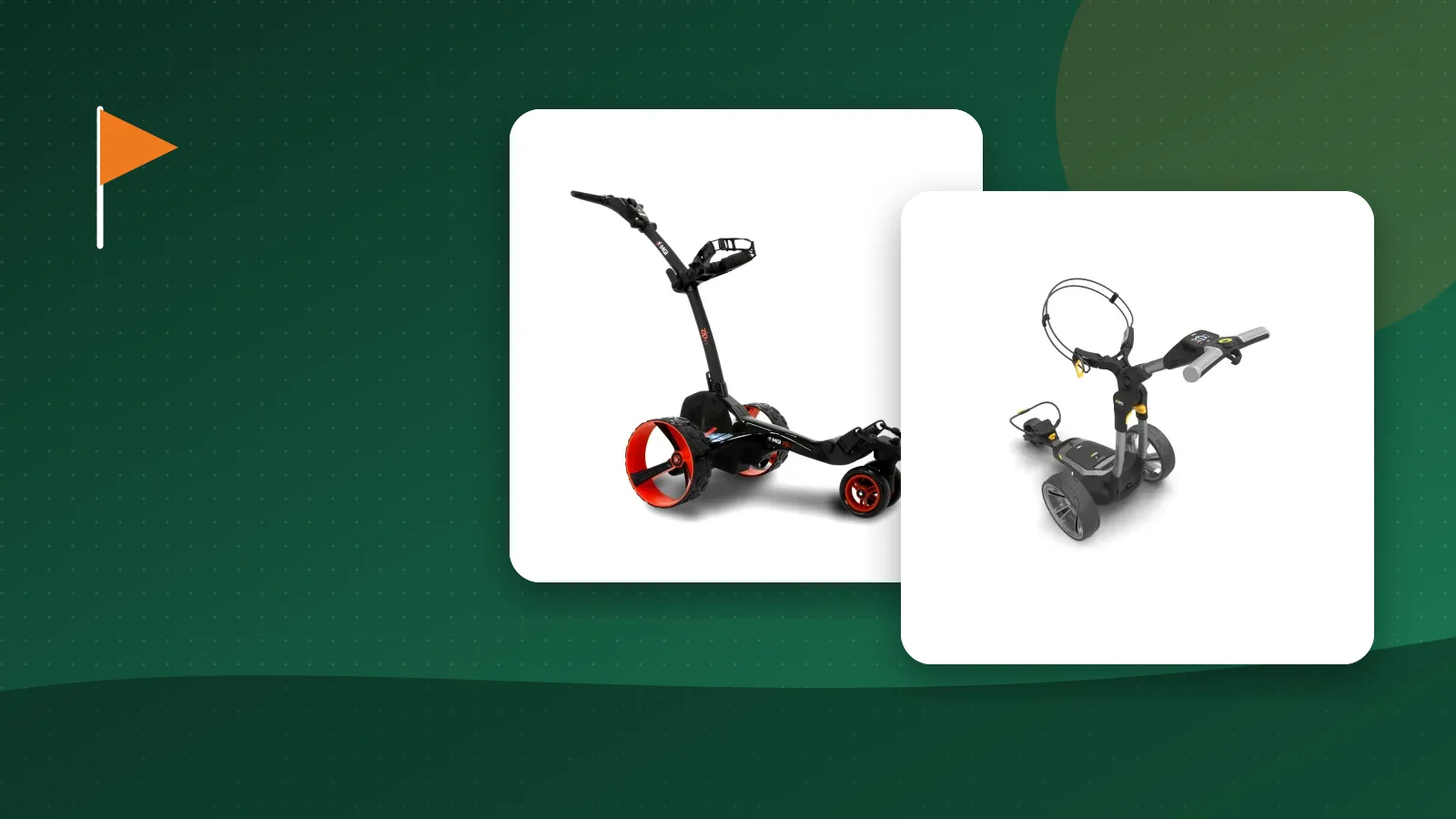
What is the best electric golf buggy Australia has to offer? Ask ten golfers and you will get ten different answers, because the best buggy depends on your course, your fitness, your budget and how you like to play. A hilly country course asks for something different from a flat links layout, and a golfer who walks eighteen holes every Saturday needs something different from one who wants to ride between shots. This guide does not crown a single winner. It explains what separates the types of electric golf buggy, which specifications actually matter, and how to match a model to the way you play, using only the models and figures we list.
What counts as an electric golf buggy?
An electric golf buggy is a powered carrier for your clubs. A motor drives the wheels, a rechargeable battery supplies the power and you steer with a handle or, on some models, a remote control. In Australia you will see three broad groups. The first is the standard electric trolley, where you walk behind and guide the buggy by hand. The second is the remote control buggy, which follows or drives on your command so your hands stay free. The third is the ride-on buggy, a small seated vehicle that carries you and your bag. Each group suits a different golfer, and the right answer to the question of the best electric golf buggy usually starts with choosing the group.
If you are still deciding between a powered buggy and a manual one, read our comparison of electric versus push golf buggies first. If you already know you want power, our electric golf buggies page lists the standard models, and the general background on the sport is covered in the golf article on Wikipedia.
Standard electric trolleys: the everyday choice
Most golfers who ask about the best electric golf buggy in Australia end up with a standard electric trolley, and for good reason. It is light, folds into a boot, costs less than the other types and does the one job that matters, which is taking the weight of the bag off your shoulders. You still walk, so you still get the exercise and the pace of a normal round.
Our range starts at the budget end with the Thomson E5000 Pro lithium electric golf buggy, listed at $636 including GST and weighing 12 kg. The PowerBug NX lithium electric golf buggy is listed at $862 and weighs 9.5 kg, and the PowaKaddy CT6 at $1,469 uses a 230W motor and 8 inch wheels. The MGI Zip family sits between them: the MGI Zip X1 is $1,273, the Zip X3 is $1,518 and the Zip X5 is $1,763, each listed with a 24V, 250Wh battery.

Remote control buggies: hands-free golf
A remote control golf buggy goes where you point it. You hold a small handset, send the buggy up the fairway or have it follow, and you carry only the club you need to the ball. Golfers with sore backs, shoulders or hips often prefer this style because there is nothing to push. It is also popular with golfers who like to keep their attention on the shot rather than the trolley.
We list a wide spread of remote models. The Stinger SG-4 Crossover is $1,469, the MGI AI 500 is $2,155, and the MGI Zip Navigator is $2,239. The QOD Q2 remote control all-terrain buggy is $2,254 and is listed at 35 kg with a 360W motor, a top speed of 8 km/h and a range of up to 20 km. The MGI AI Navigator GPS is $2,792 with a 24V, 380Wh battery. Our remote control golf buggies page lists them all, and our remote control golf buggy buyer's guide goes deeper on how they behave on the course.
Ride-on buggies: for golfers who want to sit
A ride-on golf buggy is a compact seated vehicle. It suits golfers who cannot walk a full round, private property owners and anyone who wants the comfort of a seat. The i-MotionCaddys IM4 ride-on electric golf buggy is listed at $6,355 with a 1200W motor, a 36V, 50Ah battery, a top speed of 19 km/h and a range of up to 50 km, and it weighs 178 kg. The Parmaker Spirit ride-on is $4,062 with a 12V, 38Ah battery. See our ride-on seated golf buggies page for the full list.

A ride-on is a bigger purchase than a trolley, and it brings more questions about transport and course rules. Many clubs restrict powered riding vehicles, so confirm with your club before you buy. For a larger vehicle that seats more people, look at our electric golf carts instead.
The specifications that actually matter
Product pages are full of numbers, but only a handful change how a buggy behaves on the course.
- Battery type: lithium batteries are lighter than lead-acid and charge quickly, which is why most of the trolleys we list use them. Our guide to lithium versus lead-acid batteries explains the trade-offs.
- Battery capacity: quoted in watt-hours (Wh) or amp-hours (Ah). A bigger number means more energy and usually a longer round before you need to recharge. Check that the capacity suits eighteen holes, or thirty-six if you play twice a day.
- Motor power: measured in watts. A stronger motor copes better with hills and soft ground, which matters on a hilly country course.
- Weight: you lift the buggy in and out of the boot, so a lighter frame is easier to live with. A 9.5 kg trolley is a very different lift from a 35 kg all-terrain remote model.
- Folded size: measure your boot. A trolley that does not fit is no use however good it is.
- Wheels: larger wheels roll more easily across rough ground and wet grass.
- Controls: a simple speed dial and a clear display are easier to use mid-round than a complicated menu.
Matching a buggy to your course
Think about the course you play most. A flat, firm course is kind to almost any electric trolley, and a lightweight model such as the PowerBug or Thomson will do the job. A hilly course is harder on the motor and the battery, so favour a stronger motor and a larger battery, or a model sold for rough ground such as the QOD Q2. A course with long walks between greens drains a battery faster, so choose the larger capacity options. A course with strict rules about wheels or powered vehicles may limit what you can use, so ask the club before you buy.
Matching a buggy to you
Be honest about what you want from a round. If you enjoy walking and want to save your back, a standard electric trolley is the sensible, lower-cost choice. If walking with a trolley is itself the problem, because of a hand, wrist or shoulder issue, a remote model removes the push. If you cannot walk a full round, a ride-on is the right category, and then the conversation moves to seating, speed and storage rather than just the bag.
Do not overlook accessories. A phone holder, umbrella holder and drink holder make a real difference over four hours, and a travel bag protects the buggy in the boot. Browse our golf cart accessories for fittings, and check that anything you buy suits your model.
Battery care and running costs
Electric buggies are cheap to run. The cost of charging a small lithium battery is tiny compared with the cost of the buggy itself, and there is no fuel, oil or exhaust to deal with. The main long-term cost is eventually replacing the battery, and the lithium-ion battery article on Wikipedia explains how these packs age. You can extend its life by charging after each round, avoiding long periods stored flat and keeping the buggy out of extreme heat. We list replacement batteries and chargers for many models, for example the MGI Zip 24V lithium battery at $538, and our lithium batteries page covers the full range.
A simple way to choose
Write three lines on a piece of paper. First, how you want to move: walking behind, walking free or riding. Second, your budget, including a spare battery or accessories if you want them. Third, the hardest thing about your home course, whether that is hills, soft ground or a long walk from the car park. Then match the lines to the groups above. Walking behind on a modest budget points to a standard trolley. Walking free points to a remote model. Riding points to a ride-on. Within each group, use the specifications to choose between models, and use the price to make the final call.
Buying an electric golf buggy from us
All of our prices are in Australian dollars and include GST. We confirm stock and freight to your postcode before you pay, and you can pay by bank transfer (Osko or EFT), PayID or crypto. Orders over $1,000 ship free to major metro and depot corridors, with a flat $95 freight charge below that, and there is a $250 minimum order. If you are unsure which buggy suits your course, call +61420128746 or message us on WhatsApp and tell us how you play. Start with our golf buggies range to see the lot.
Bottom line
There is no single best electric golf buggy in Australia, but there is a best buggy for you. Choose the type first, then the battery and motor that suit your course, then check weight and folded size against your car. A well-chosen standard trolley will carry you through years of weekend rounds, a remote model will give you a hands-free game, and a ride-on will keep you playing when walking is no longer an option.

