Buying guides · 9 min read
Golf Cars vs Golf Carts vs Golf Buggies: What Is the Difference?
Golf car, golf cart and golf buggy are used interchangeably, but they can mean very different vehicles. Here is how the terms differ and how to choose the right one.
By the Buggies For Sale team · Updated
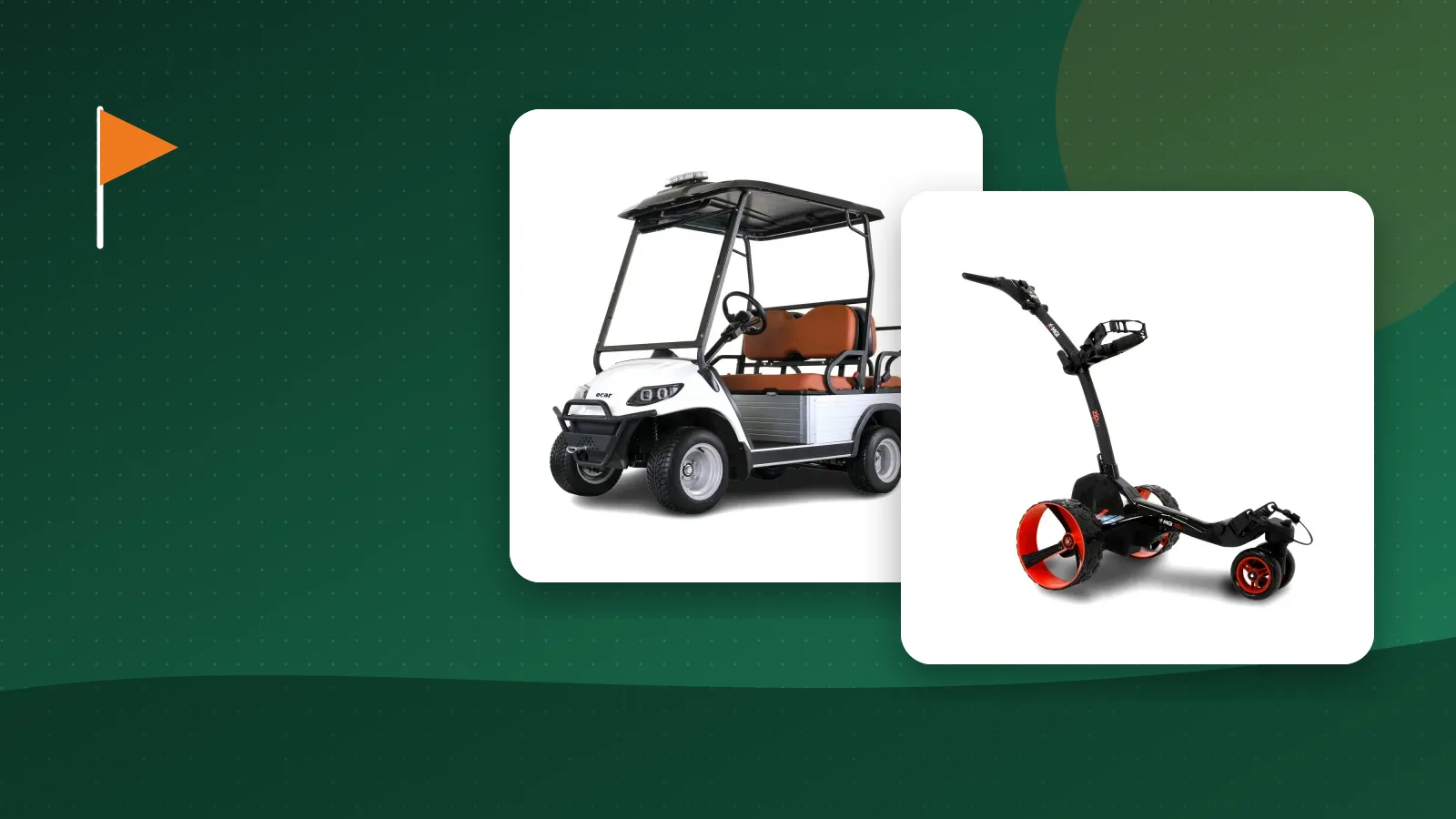
If you have searched for golf cars, golf carts and golf buggies and wondered whether they are the same thing, you are not alone. The three terms are used loosely, and in Australia the word you hear often depends on the person and the place. In practice they can describe very different vehicles, from a two-seat electric cart you sit in to a small trolley that follows you down the fairway. This guide explains how the terms are used, how the main types differ and how to choose the one that fits your needs and budget.
Golf car, golf cart and golf buggy: how the words are used
Golf car is the term many manufacturers and the golf industry use for a small motor vehicle designed to carry golfers and their clubs around a course. You will see it in brand literature and in North American writing. The general background on these vehicles is covered in the golf cart article on Wikipedia.
Golf cart is the everyday term in Australia for the same ride-on vehicle, usually electric, with two to six seats, a roof and a rear bag rack or cargo bed. It is also used for the resort, estate and utility versions of the same machine.
Golf buggy is where it gets confusing. In Australia and the UK, a golf buggy often means a walking aid: a push trolley or an electric trolley that carries your bag while you walk. Some people also use buggy for a ride-on cart. Because of this overlap, always check the product description to see whether a listing is a vehicle you sit in or a trolley you walk behind.
The main types you will see
### Ride-on golf carts
A ride-on golf cart is a small vehicle with a seat, steering wheel and pedals. Electric models are the most common today, and they range from two-seat course carts to four, six and eight-seat resort carts and utility versions with a cargo bed. Our golf carts range covers new, used, electric and petrol options, and you can compare them by seats and price. A cart like the ECAR Lithium IKON HD 4S is typical of a four-seat lithium cart.
### Electric golf buggies and caddies
An electric golf buggy is a motorised trolley. It carries your bag, usually folds for the boot of a car and drives itself at a set speed so you walk without pulling the weight. Many models are controlled from the handle, and some are controlled by a remote. The MGI ZIP X3 is an example. Our electric golf buggies page lists more.

### Remote control golf buggies
A remote control golf buggy follows you or responds to a handset, so you walk hands-free. Our remote control buggies page shows the current range, and our remote control buggy guide explains how to compare them.
### Push and pull golf trolleys
A push golf buggy is a manual trolley with two or three wheels. It is the lightest and cheapest option, it folds small and it has no battery to charge. Our push and pull trolleys page lists models from several brands.

Golf car vs golf cart vs golf buggy: a quick comparison
- Ride-on golf car or golf cart: you sit in it, it carries two or more people, it needs charging or fuel and it is the most expensive option.
- Electric golf buggy: you walk, it carries the bag, it is battery-powered and it costs far less than a ride-on cart.
- Push golf buggy: you walk and push it, it has no motor and it is the lightest and most affordable choice.
Which one should you choose?
Start with how and where you will use it.
- If you play a hilly course and want to save your legs: an electric golf buggy takes the weight off while you keep the exercise of walking.
- If you have limited mobility or want to ride: a ride-on golf cart or a seated buggy is more suitable. Always check the course rules, because many clubs have conditions on carts.
- If you want to carry people or cargo on a property, resort or estate: a multi-seat or utility golf cart is the practical choice.
- If you want the simplest, cheapest option: a push buggy is hard to beat.
Our guide to electric versus push golf buggies goes further on the trade-offs between those two.
If you are still undecided, think about the last few rounds or work days you have had. Count how many people you carried, how far you travelled, how hilly the ground was and whether you wished you had more storage or more seats. Those answers usually point to one category straight away, and they stop you paying for features you would rarely use. Write the list down before you compare prices, because it makes every product page easier to judge.
What drives the price?
Ride-on golf carts cost much more than trolleys, and the price rises with the number of seats, the battery size and the specification. Our guide to how much a golf cart costs in Australia breaks down the factors. For buggies, the price depends on whether the model is manual or electric, the battery capacity and extras such as GPS, remote control and a folding mechanism.
New or used?
A used golf cart can be a good way to get into a ride-on vehicle for less, but condition matters. Ask for the age, the battery type and age and any service records. Batteries are the most expensive part to replace, so a lithium upgrade can change the value of an older cart. Our used golf carts page lists the second-hand carts we currently have, with prices.
Can you drive a golf cart on the road?
In most of Australia a standard golf cart is intended for private property and golf courses, not public roads. Rules differ by state and territory, so confirm with your transport authority before you drive on a public road. We cover the details in our guide to driving a golf cart on the road in Australia.
Buying online in Australia
When you buy any of these vehicles online, check the item type in the title, the price including GST, the freight cost and the delivery time. We deliver Australia-wide from our Sydney base, orders over $1,000 ship free to major metro and depot corridors and we confirm freight to your postcode before you pay. If you are still unsure which type fits, call 0420 128 746 or message us on WhatsApp and tell us the course, the terrain and your budget.
Seating and capacity
Capacity is the clearest difference between the types. A ride-on golf cart is sold by seat count: two seats for a couple of golfers, four seats for a small group or family, and six or eight seats for resorts and estates. Utility versions swap the rear seat for a cargo bed. A walking golf buggy carries one bag and one person walking beside it, so it is not a way to move other people. If you need to carry passengers or cargo, you are shopping for a ride-on golf cart, not a trolley.
Electric or petrol?
Most golf carts and buggies sold today are electric, because they are quiet, simple to run and well suited to the low speeds on a course. Petrol golf carts exist for properties and larger sites where longer running time and fast refuelling matter, and we list them on our petrol golf carts page. For golf buggies and trolleys, electric motors are standard on powered models, and the choice is between powered and manual.
Batteries: lithium or lead-acid?
The battery type changes the weight, the charging habits and the long-term cost. Lithium batteries are lighter, charge faster and generally need no topping up with water. Lead-acid batteries are heavier and need more maintenance. Many owners of older carts upgrade to lithium later, and we list lithium battery packs for popular cart models. Our guide to lithium vs lead-acid golf cart batteries explains the differences in full.
Accessories worth budgeting for
Whatever you choose, a few accessories make it more useful. For ride-on carts, popular extras include seat belts, floor mats, mirrors, lights and rain covers. For buggies and trolleys, buyers often add an umbrella holder, a drink holder, a cooler bag or a travel bag. Browse our golf cart accessories and add them to the same order so freight is confirmed once.
Questions to ask before you buy
- Is it a ride-on vehicle or a walking trolley, and does the listing say so clearly?
- How many seats does it have, and what is the load limit?
- What type and size is the battery, and what is the real-world range?
- Is the price in Australian dollars including GST, and what is the freight to my postcode?
- Who provides warranty and servicing in Australia?
Bottom line
Golf car and golf cart usually mean the same ride-on vehicle, while golf buggy often means a walking trolley that is pushed or motorised. Decide whether you want to walk or ride, then compare the models in that category. A push trolley keeps cost low, an electric buggy saves effort and a ride-on cart is best when you want seats, cargo or mobility support.
